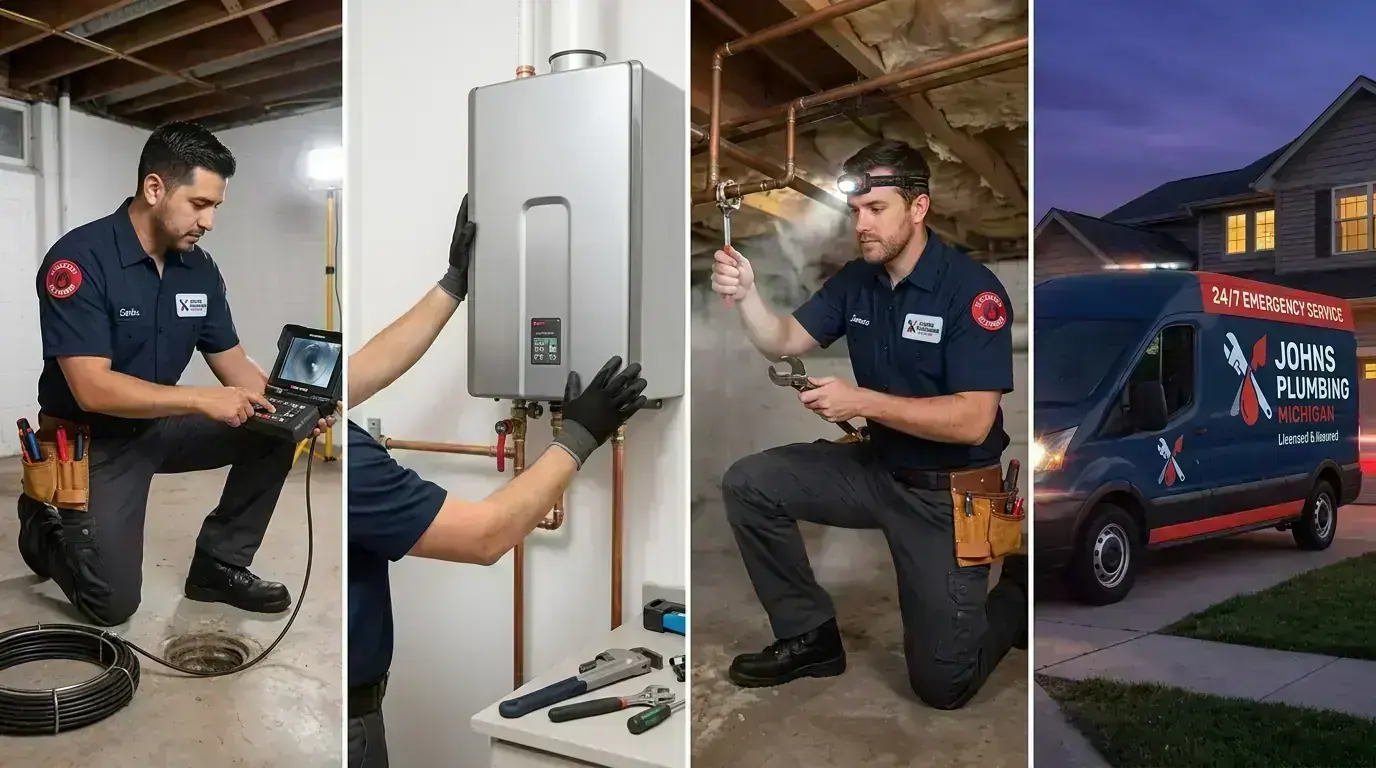
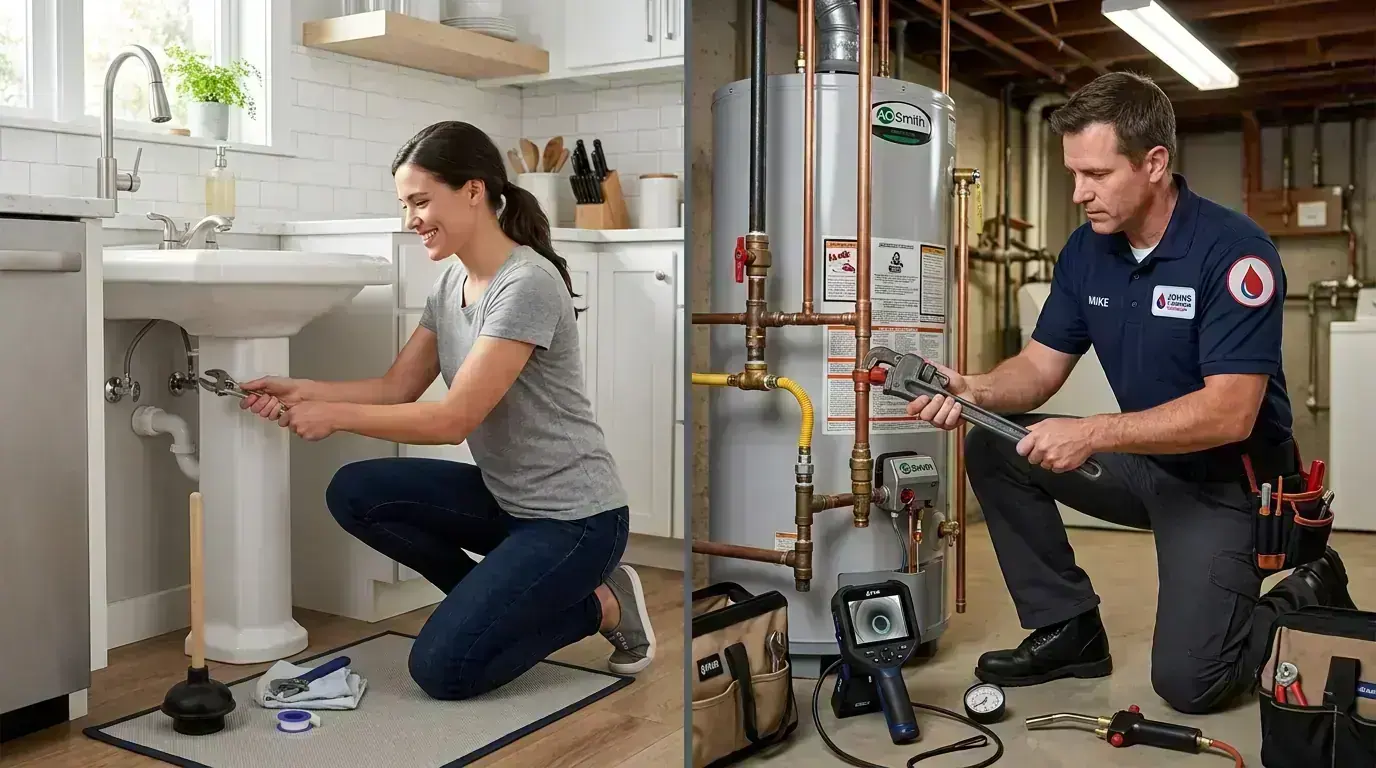
Johns Plumbing Michigan provides comprehensive residential plumbing services throughout Ann Arbor, covering emergency repairs, routine maintenance, and full system installations. Our licensed technicians handle drain and sewer line services, water heater repair and replacement, leak detection and pipe repair, fixture installation, and gas line work across all Washtenaw County neighborhoods. Below is detailed coverage of each service category, methods used, and when Ann Arbor homeowners typically need each service.
Drain Cleaning & Clog Removal Services in Ann Arbor
Drain clogs develop from accumulated soap scum, hair, food debris, grease buildup, and in Ann Arbor's older neighborhoods, decades of mineral deposits from hard water (303 ppm average). When a single drain slows, the problem usually sits within the fixture's trap or nearby pipe segment. When multiple drains throughout your home back up simultaneously, the blockage typically affects your main sewer line, a common issue in Ann Arbor homes with mature tree landscaping where roots infiltrate aging clay pipes.
For kitchen sink clogs caused by grease and food particles, we use cable snaking with appropriate cutting heads to break through the blockage while preserving pipe integrity. Bathroom drains accumulate hair and soap residue that often responds to cable clearing for isolated clogs.
When clogs recur weekly or when drain cleaners fail repeatedly, hydro jetting becomes necessary, this method uses high-pressure water streams (3,000-4,000 PSI) to scour pipe interiors clean, removing not just the clog but the buildup that caused it. Hydro jetting proves especially effective in Ann Arbor homes with hard water scale lining pipes or grease accumulation in kitchen drain lines.
Main sewer line cleaning requires different diagnostic approaches. We start with video camera inspection, threading a waterproof camera through your cleanout access point to identify the blockage type and location. In historic Ann Arbor neighborhoods like Burns Park and Old West Side where original clay sewer lines remain common, camera inspection frequently reveals root intrusion at pipe joints.
Tree roots seek moisture and infiltrate through cracks or separations in clay pipe segments. Once we've identified root intrusion, hydro jetting clears the biological growth, though roots will eventually return unless you replace the compromised pipe section or install root barriers. For homes built before 1980, cast iron sewer lines may show corrosion and scale buildup that hydro jetting can address temporarily, but full replacement becomes the long-term solution when pipes reach end-of-life.
Floor drains in Ann Arbor basements back up during heavy spring rains when the municipal storm system becomes overwhelmed, a frequent occurrence given the city's aging combined sewer infrastructure and proximity to the Huron River flood plain. If your floor drain backs up only during storms, the issue likely stems from the municipal system rather than your home's plumbing, though we can install backwater valves to prevent sewage from backing into your basement during overflow events.
Need drain cleaning in Ann Arbor? Call (313) 736-9553 for camera inspection and hydro jetting service.
Water Heater Repair & Replacement Services
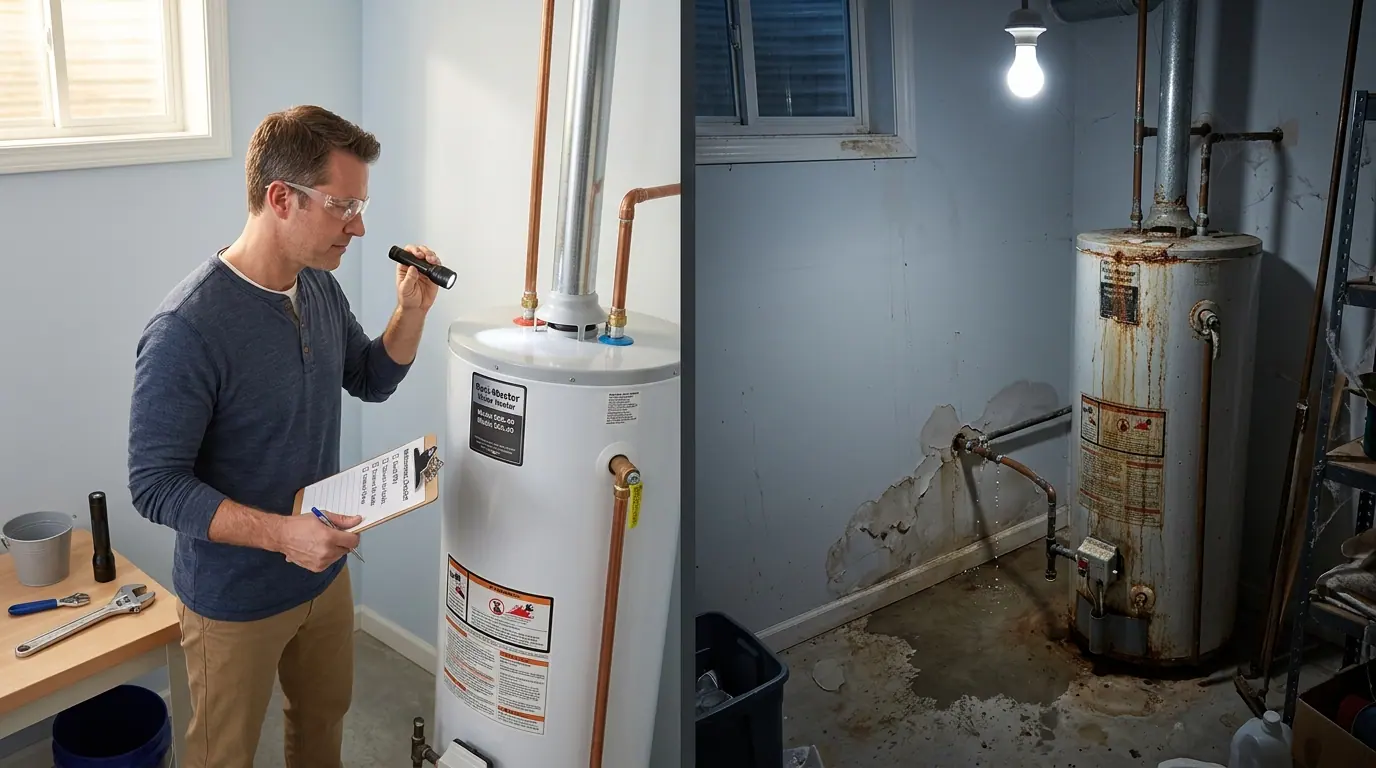
Water heater decisions in Ann Arbor homes depend on the unit's age, repair history, and energy costs. Tank water heaters typically last 8-12 years in Ann Arbor's hard water environment. Mineral buildup accelerates anode rod depletion and causes sediment accumulation that reduces efficiency and creates the banging sounds homeowners hear when heating elements activate.
When your tank unit reaches 10+ years and shows signs of failure (insufficient hot water, rust-colored water, moisture around the base), replacement usually makes more financial sense than repair since multiple component failures often cascade within 12-18 months of the first breakdown.
For tank units under 8 years old, many problems prove repairable. Pilot light issues on gas units often trace to thermocouple failure, the safety device that shuts off gas flow when the pilot extinguishes. We replace thermocouples and clean pilot assemblies to restore reliable ignition.
Electric water heaters suffering from insufficient hot water often need thermostat adjustment or heating element replacement, upper elements heat the top third of the tank while lower elements handle the remainder, and when the lower element fails, you'll get a small amount of hot water that runs out quickly. We test both elements and thermostats with multimeters to identify the failed component.
Tankless water heaters appeal to Ann Arbor homeowners seeking energy efficiency and unlimited hot water supply, particularly valuable for families with high simultaneous hot water demand. Tankless units heat water on-demand rather than maintaining 40-50 gallons at temperature continuously, reducing standby energy loss. However, Ann Arbor's hard water creates maintenance requirements, mineral buildup on heat exchanger surfaces reduces efficiency and eventually causes failure if not flushed annually with descaling solution.
Tankless installation costs more than tank replacement ($1,000-$3,000 versus $1,300-$2,000) because units require larger gas lines, upgraded venting, and sometimes electrical service upgrades for pump operation. For Ann Arbor homes heated with natural gas, tankless units make economic sense over 15+ year lifespans despite higher upfront costs.
Sizing water heaters correctly matters. A household of four typically needs a 50-gallon tank or a tankless unit rated for 8-10 gallons per minute at Ann Arbor's 45-50°F incoming water temperature during winter months.
Undersized units produce insufficient hot water; oversized units waste energy heating water you won't use. We calculate your household's peak demand based on bathroom count, appliance usage patterns, and simultaneous usage scenarios to recommend appropriate capacity.
Leak Detection & Pipe Repair Services
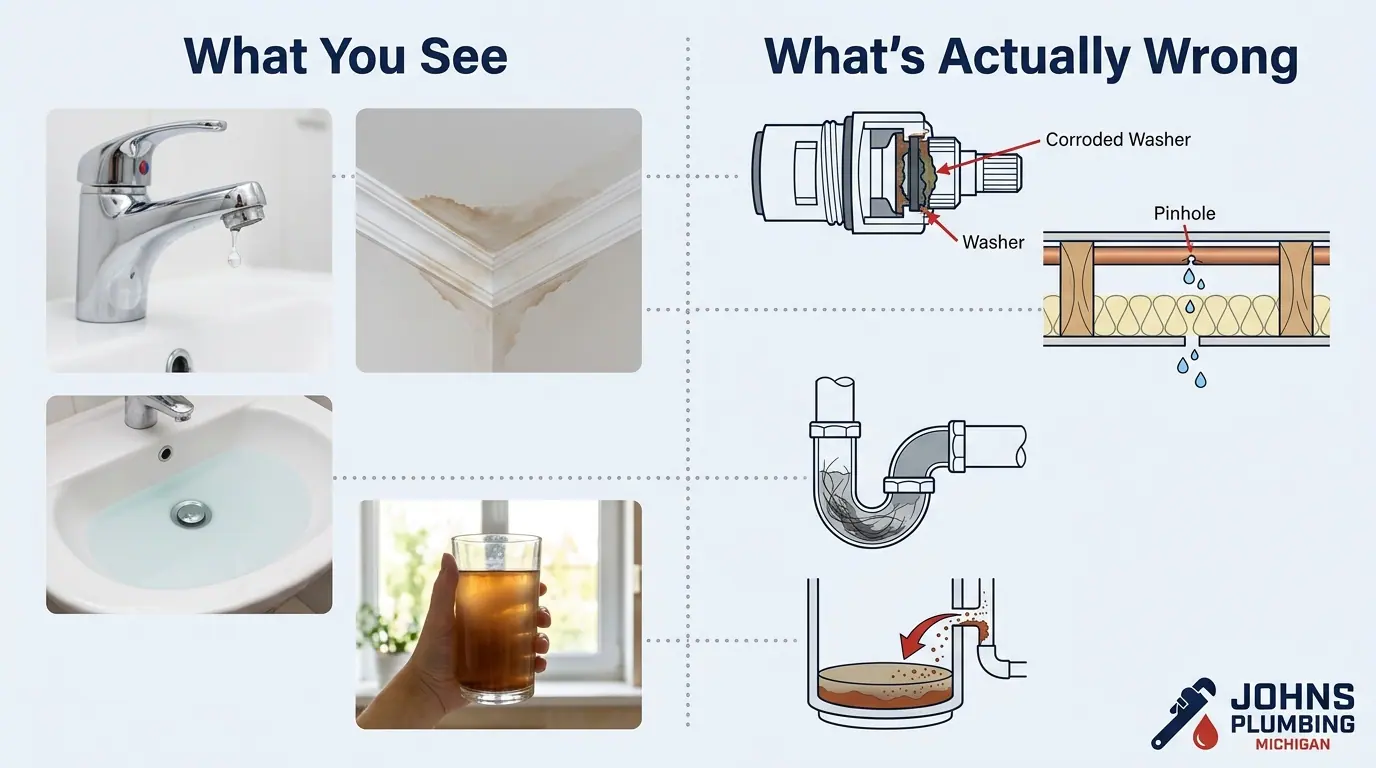
Leak detection begins with symptom recognition. Unexplained water bill increases of 20%+ often signal hidden leaks. A toilet with a worn flapper can waste 200 gallons daily without obvious signs.
We use dye tablets in toilet tanks to confirm suspected flapper leaks, watching for color appearing in the bowl without flushing. For leaks in walls, ceilings, or underground, we employ acoustic leak detection equipment that amplifies the sound of water escaping under pressure, allowing us to pinpoint leak locations without destructive exploratory demolition.
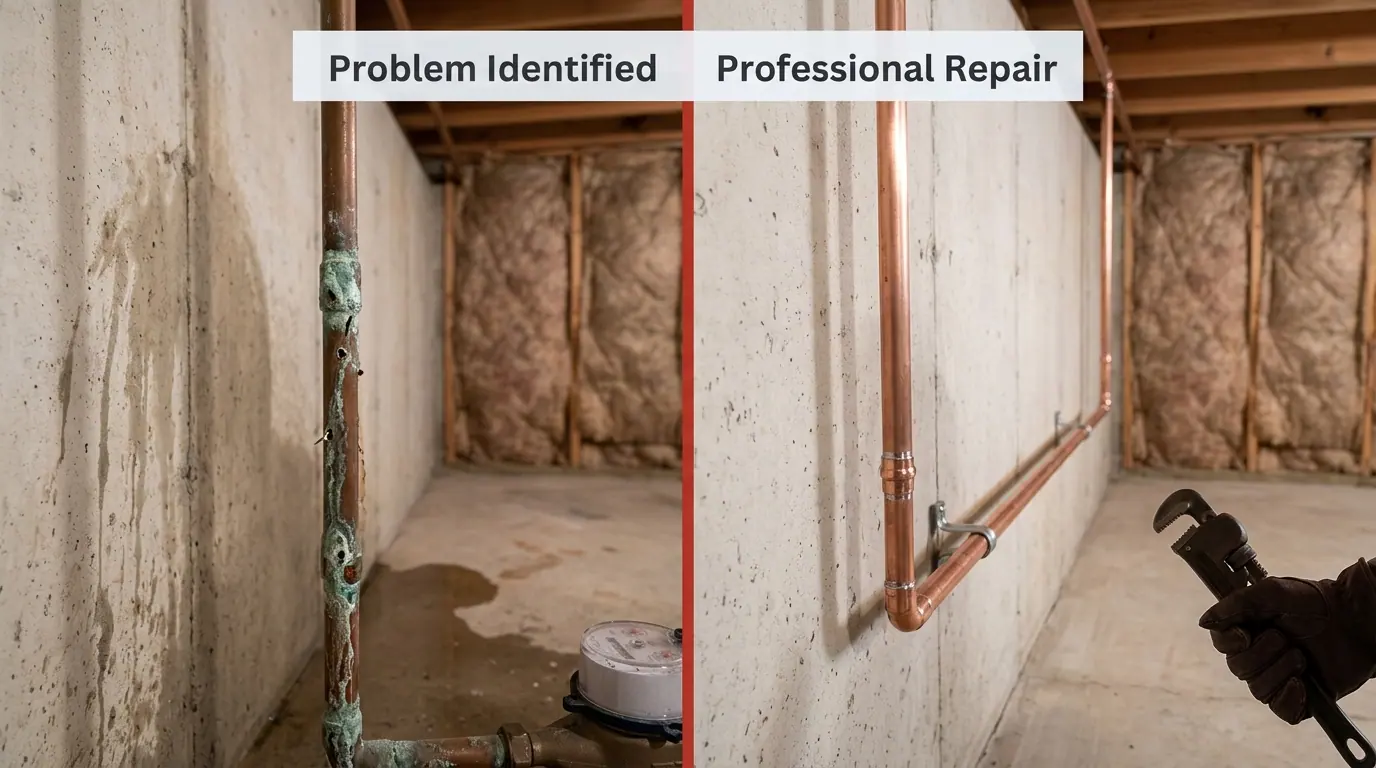
Slab leaks affect Ann Arbor homes built on concrete foundations, particularly those constructed during the 1960s-1980s building boom when copper pipes were run through slab pours. Decades of contact with alkaline concrete and Michigan's freeze-thaw ground movement create pinhole leaks in copper.
We identify slab leaks through pressure testing, isolating sections of your plumbing system and monitoring pressure drop, then use thermal imaging cameras to detect temperature anomalies where hot water leaks beneath the slab. Repair options range from accessing the pipe through the slab to abandoning the damaged line and rerouting new pipe through walls or crawlspaces, depending on leak location and access feasibility.
Frozen pipe repair spikes in Ann Arbor during January-February cold snaps and again during March-April spring thaws when temperatures fluctuate above and below freezing daily. Pipes in exterior walls, unheated crawlspaces, and attached garages freeze first. When water expands into ice, it creates pressure that cracks copper or bursts galvanized steel.
We thaw frozen pipes using heat tape and infrared heating rather than open flames that risk fire or pipe damage, then pressure-test to confirm integrity before restoring water service. Prevention measures include pipe insulation, heat cable installation, and ensuring adequate heat circulation in vulnerable areas, critical in Ann Arbor's climate where sustained sub-zero temperatures occur multiple times each winter.
Main water line leaks between the street connection and your home require immediate attention. You're paying for water that never reaches your fixtures, and leaks near foundations can undermine structural support.
We locate main line leaks using ground-penetrating equipment and pressure testing, then repair using pipe section replacement or trenchless methods depending on soil conditions and access constraints. Ann Arbor's clay and loam soils generally support traditional excavation, though tree root networks in established neighborhoods sometimes necessitate careful hand-digging near root zones to prevent landscape damage.
Sewer Line Services in Ann Arbor
Sewer line problems in Ann Arbor typically stem from aging pipe materials, tree root intrusion, or bellied sections where ground settlement creates low spots that collect debris. Camera inspection reveals the problem. We insert a waterproof camera through your cleanout, recording the condition of your entire sewer line from home to street connection.
In Burns Park, Old West Side, and other pre-1970 neighborhoods, clay sewer lines predominate. Clay pipes were laid in 4-foot sections with compression joints that separate over time, creating entry points for tree roots seeking moisture. Once roots infiltrate, they grow into dense mats that catch toilet paper and solid waste, causing recurring backups.
Hydro jetting clears root masses and restores flow, but roots regrow within 12-36 months unless you address the underlying pipe damage. For sewer lines with isolated root intrusion or small cracks, trenchless pipe lining offers repair without excavation. We insert a resin-saturated felt liner through the existing pipe, inflate it to conform to pipe walls, then cure the resin to create a new pipe inside the old one.
This method works when the existing pipe structure remains sound enough to support the liner. When pipes have collapsed sections, severe offset joints, or extensive corrosion, trenchless pipe bursting or traditional excavation replacement becomes necessary.
Trenchless pipe bursting pulls a cone-shaped bursting head through the old pipe, fracturing it outward while simultaneously pulling new HDPE pipe into place, minimal excavation at entry and exit points, no destruction of driveways, sidewalks, or landscaping along the pipe route. Traditional excavation remains appropriate when we need to correct grade problems (bellied sections that collect standing water) or when the sewer line runs beneath structures that would be damaged by bursting forces.
Ann Arbor's municipal sewer connections require permit coordination, the city mandates inspection of the connection point where your private sewer line meets the public main, ensuring proper grade and structural integrity. We handle permit applications and coordinate required inspections throughout the replacement process.
Dealing with recurring drain clogs? Call (313) 736-9553 for camera inspection and hydro jetting service.
Fixture Installation & Repair Services
Toilet repairs address Ann Arbor's most common fixture complaint. When your toilet runs continuously, the flapper (rubber seal between tank and bowl) has worn and no longer seats properly.
Water leaks from tank to bowl, triggering the fill valve to run constantly. We replace flappers and inspect fill valve condition simultaneously, since mineral buildup from hard water often degrades both components.
Toilets that won't flush completely or require multiple flushes indicate clogged rim jets (mineral deposits blocking the small holes under the rim) or insufficient tank water level. We clean rim jets with descaling solution and adjust fill valves to ensure proper water volume.
When toilet repairs exceed $150-200 or the unit is 15+ years old with multiple problems, replacement makes economic sense. Modern WaterSense toilets use 1.28 gallons per flush versus 3.5-7 gallons in pre-1994 models common in Ann Arbor's historic homes, water savings pay for the new toilet within 2-3 years for a family of four.
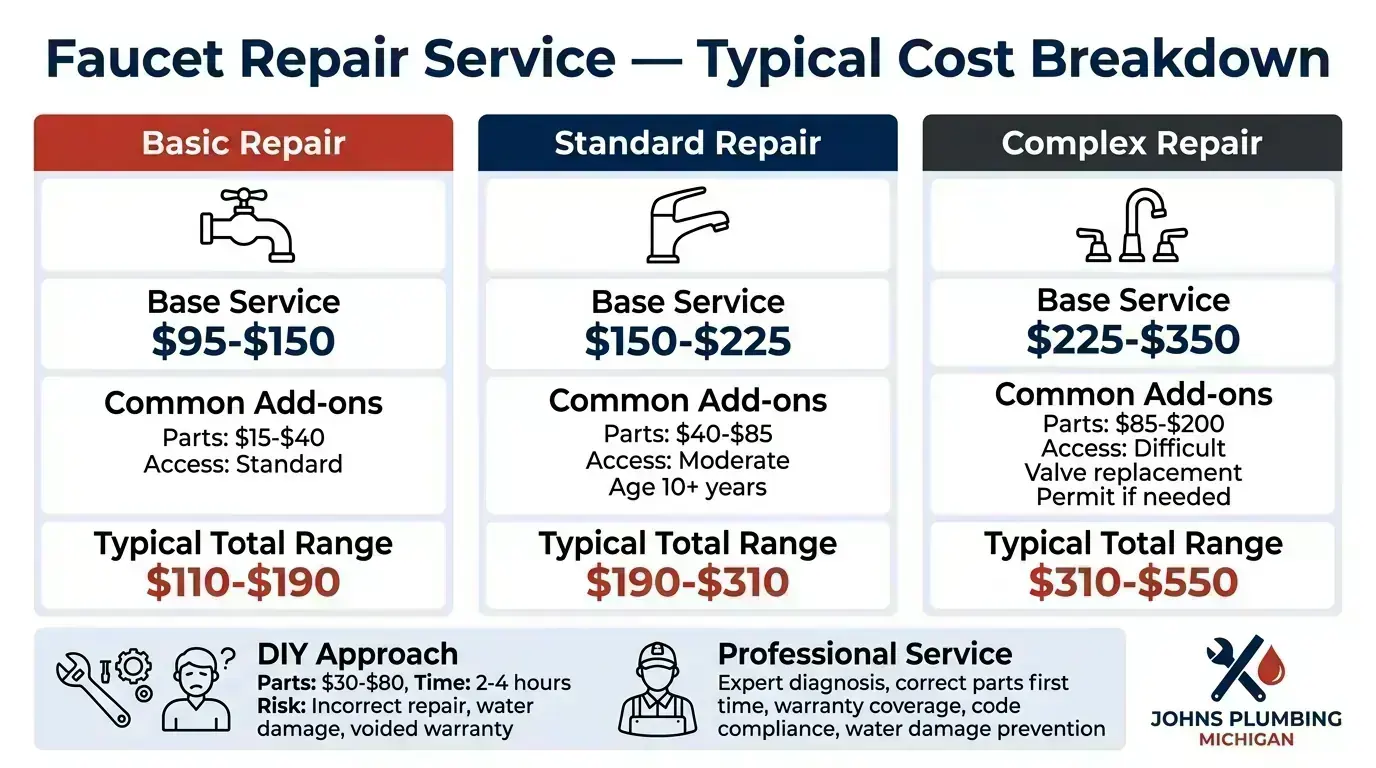
Faucet repair versus replacement depends on the fixture's age and quality. Builder-grade faucets installed in Ann Arbor homes during construction typically cost $50-100 and feature plastic internal components that fail after 5-8 years. Replacement exceeds repair cost at that point.
Quality faucets with brass bodies and ceramic disc cartridges justify repair. We replace cartridges, O-rings, and aerators to restore function for another 10-15 years. Low water pressure from a single faucet usually indicates aerator clogging from mineral deposits; we unscrew the aerator, flush debris, and reinstall.
Garbage disposal installation follows sink drain configuration. Disposals require dedicated circuits for code compliance and connect to your sink's drain tailpiece. We install continuous-feed models (activated by wall switch) rather than batch-feed types for typical residential applications.
When garbage disposals jam, we first attempt to free the impeller using the manual wrench inserted through the bottom port; if the motor hums without spinning, the unit has failed and requires replacement. Disposal leaks originate from the sink flange connection, discharge pipe connection, or cracked body. Flange and pipe leaks we repair; cracked bodies require replacement since the housing can't be patched reliably.
Sump pump installation proves critical for Ann Arbor homes in flood-prone areas near the Huron River or with high water tables. We install primary pumps with battery backup systems.
During spring storms when sump pumps run continuously, power outages leave homes vulnerable to basement flooding without backup power. Pump sizing depends on your basement's water infiltration rate and vertical lift to discharge point; we calculate these factors during site assessment to ensure adequate capacity.
Gas Line Services
Gas line work requires Michigan master plumber licensing and specialized training. Gas leaks create immediate life-safety hazards requiring evacuation and emergency response. If you smell natural gas (rotten egg odor due to mercaptan additive), hear hissing near gas lines, or experience physical symptoms (nausea, headache, dizziness), evacuate immediately, call 911 from outside your home, then contact us at (313) 736-9553 once the fire department has secured the scene.
Gas line installation for appliances (water heaters, dryers, ranges, fireplaces) requires proper sizing for BTU demand and pressure testing to confirm leak-free connections. Ann Arbor homes typically receive natural gas service from DTE Energy; homes outside municipal gas service areas use propane.
Natural gas appliances cannot operate on propane without conversion kits that adjust orifice sizes for different gas pressures. We install black steel pipe for gas lines (corrugated stainless steel tubing for short final connections to appliances), ensuring proper support and protection from physical damage.
Gas line pressure testing follows installation. 5x operating pressure using compressed air or nitrogen, then monitor gauges for pressure drop over 15-30 minutes.
Zero pressure drop confirms leak-free installation; any drop indicates a leak that we locate using electronic detection equipment or soap solution. Ann Arbor building department inspectors verify pressure test results before authorizing gas service activation.
Gas shut-off valve installation at each appliance allows isolation for maintenance or emergency shutoff without affecting other gas appliances. We install ball valves rated for gas service in accessible locations where homeowners can reach them quickly during emergencies.
For work requiring permits or involving gas lines, call (313) 736-9553 for licensed service.