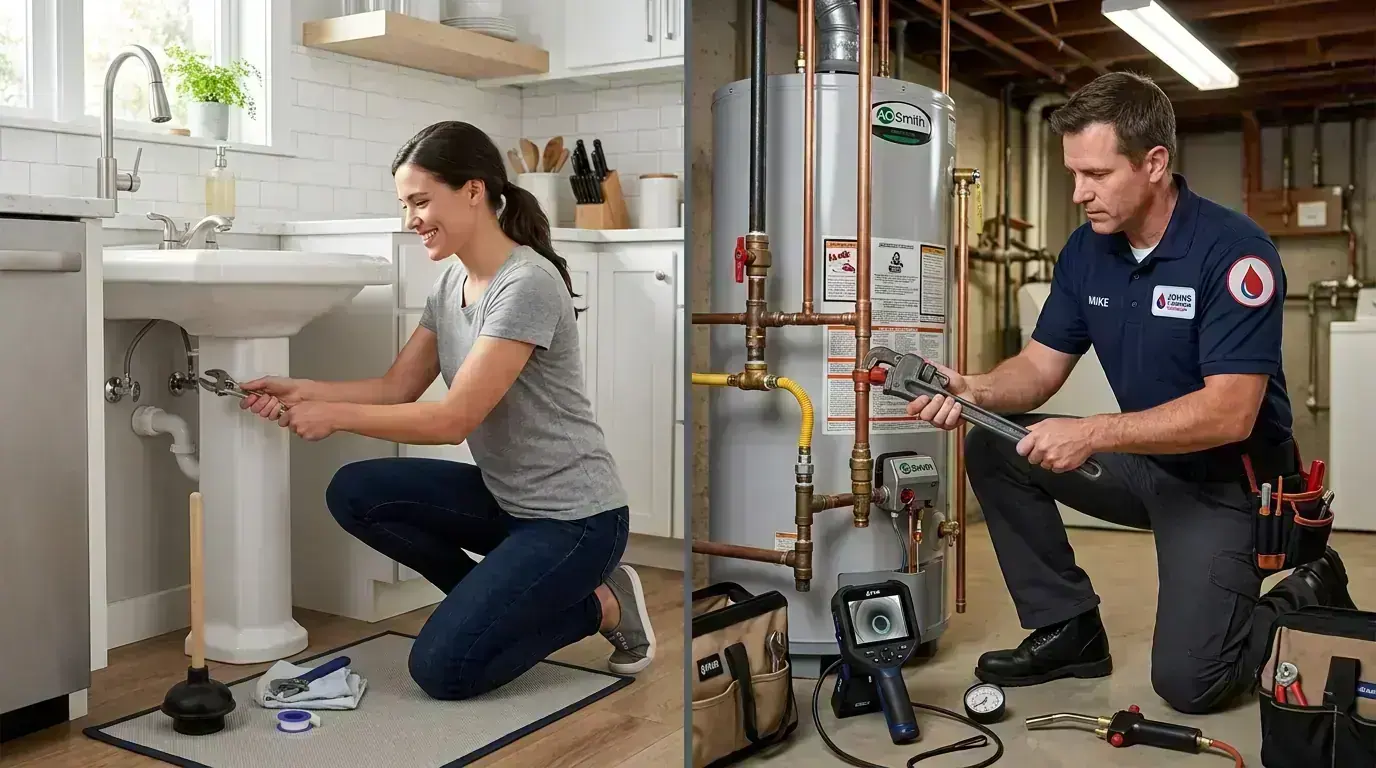
Johns Plumbing Michigan provides comprehensive residential plumbing services throughout Lansing, covering emergency repairs, routine maintenance, and full system installations. Our licensed technicians handle drain and sewer line services, water heater repair and replacement, leak detection and pipe repair, fixture installation, and gas line work across Ingham County. Below is detailed coverage of each service category, methods used, and when Lansing homeowners typically need each service.
Drain Cleaning & Clog Removal Services in Lansing
Lansing homeowners need professional drain cleaning when kitchen sinks drain slowly from grease buildup, bathroom fixtures back up from hair and soap accumulation, or multiple drains clog simultaneously, a pattern indicating main sewer line blockage rather than isolated fixture problems. We service kitchen sink drains, bathroom sink and tub drains, shower drains, toilet clogs, main sewer lines, and floor drains using cable snaking for standard clogs and hydro jetting for stubborn blockages caused by grease, scale, or root intrusion.
Cable snaking works for most routine clogs, a rotating cable with cutting head breaks through obstructions and restores flow. Hydro jetting uses high-pressure water streams (up to 4,000 PSI) to scour pipe walls clean, removing years of accumulated grease, mineral scale, and soap residue that cable snaking leaves behind. We recommend hydro jetting when drains clog repeatedly despite snaking, when video inspection reveals heavy buildup coating pipe interiors, or when tree roots have infiltrated the main line, common in older Lansing neighborhoods where mature trees send roots through aging clay sewer pipes seeking moisture.
When deciding between cleaning and pipe replacement, we consider drain age and condition. If pipes are structurally sound with occasional clogs, cleaning restores function.
If video inspection shows corroded cast iron, collapsed sections, or severe root damage in homes built before 1980, replacement prevents recurring problems. Hard water prevalent in Lansing accelerates mineral buildup inside drains, requiring more frequent professional cleaning than soft-water areas, typically every 18-24 months for preventive maintenance versus waiting for complete blockage.
Water Heater Repair & Replacement Services
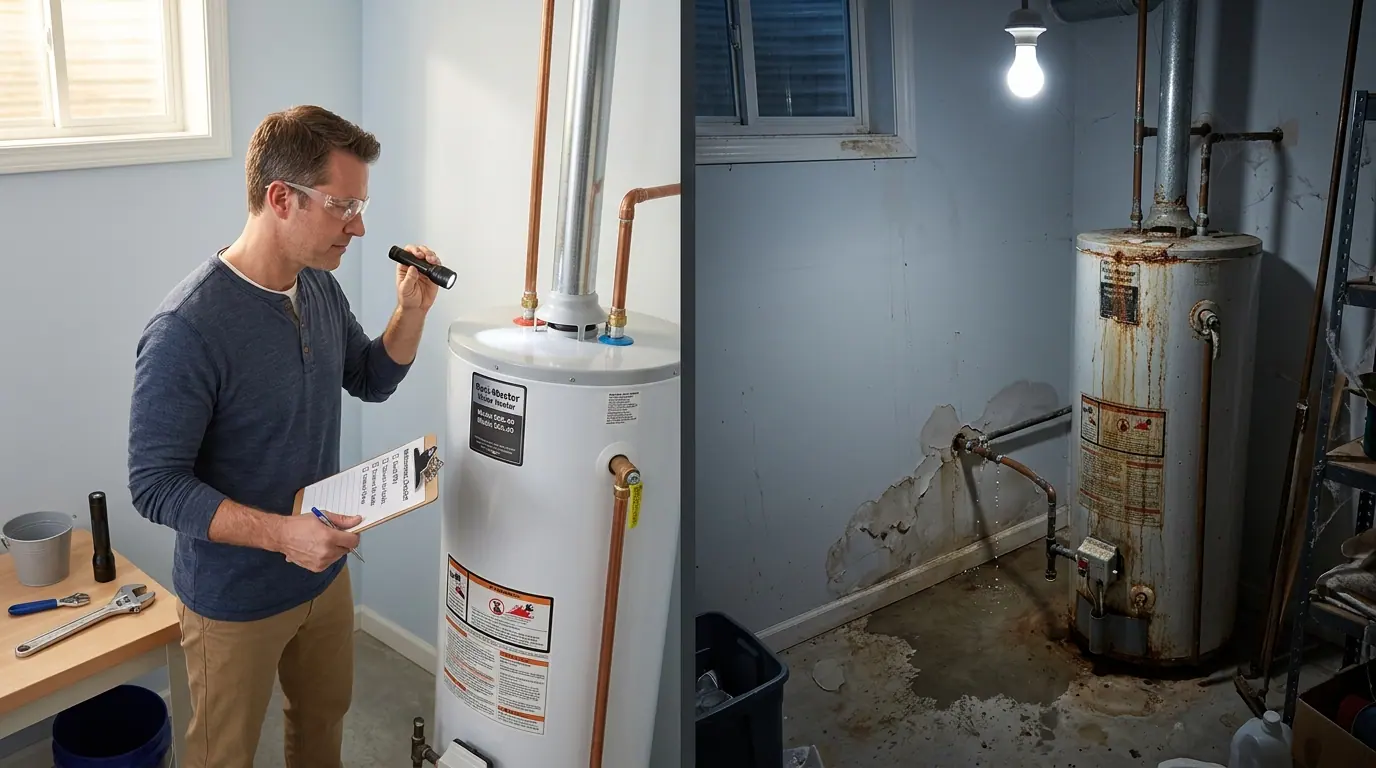
Water heater service becomes necessary when units reach 10-12 years old, show visible corrosion or leaking, produce insufficient hot water, make banging or popping noises from sediment buildup, or fail entirely during Lansing's harsh winters when hot water demand peaks. We repair tank water heaters (addressing thermostat failures, pilot light issues, and anode rod corrosion), install tankless systems for endless hot water and space savings, and replace aging units before catastrophic failure floods basements.
Tank water heater repair makes sense when units are under 8 years old with isolated component failures, replacing a faulty thermostat, heating element, or temperature-pressure relief valve costs $150-400 versus $1,200-2,000 for full replacement. We replace rather than repair when tanks show rust staining indicating internal corrosion, when leaks develop at the tank body (not repairable), or when 10+ year old units require major component work, at that age, additional failures follow quickly.
Tankless water heaters eliminate standby heat loss from maintaining 40-50 gallons of hot water 24/7, reducing energy costs 20-30% in typical Lansing homes. Tankless units require adequate gas line sizing (larger diameter than tank heaters) and electrical circuits for ignition systems. We size replacements based on simultaneous hot water demand.
2-3 bathroom homes typically need 40-50 gallon tank capacity or 8-10 GPM tankless flow rate. In Lansing's hard water conditions, we recommend annual tankless descaling to prevent mineral buildup that reduces efficiency and lifespan. Tank versus tankless choice depends on upfront budget ($850-1,400 for tank installation versus $2,200-3,500 for tankless) and long-term energy savings priorities.
Leak Detection & Pipe Repair Services
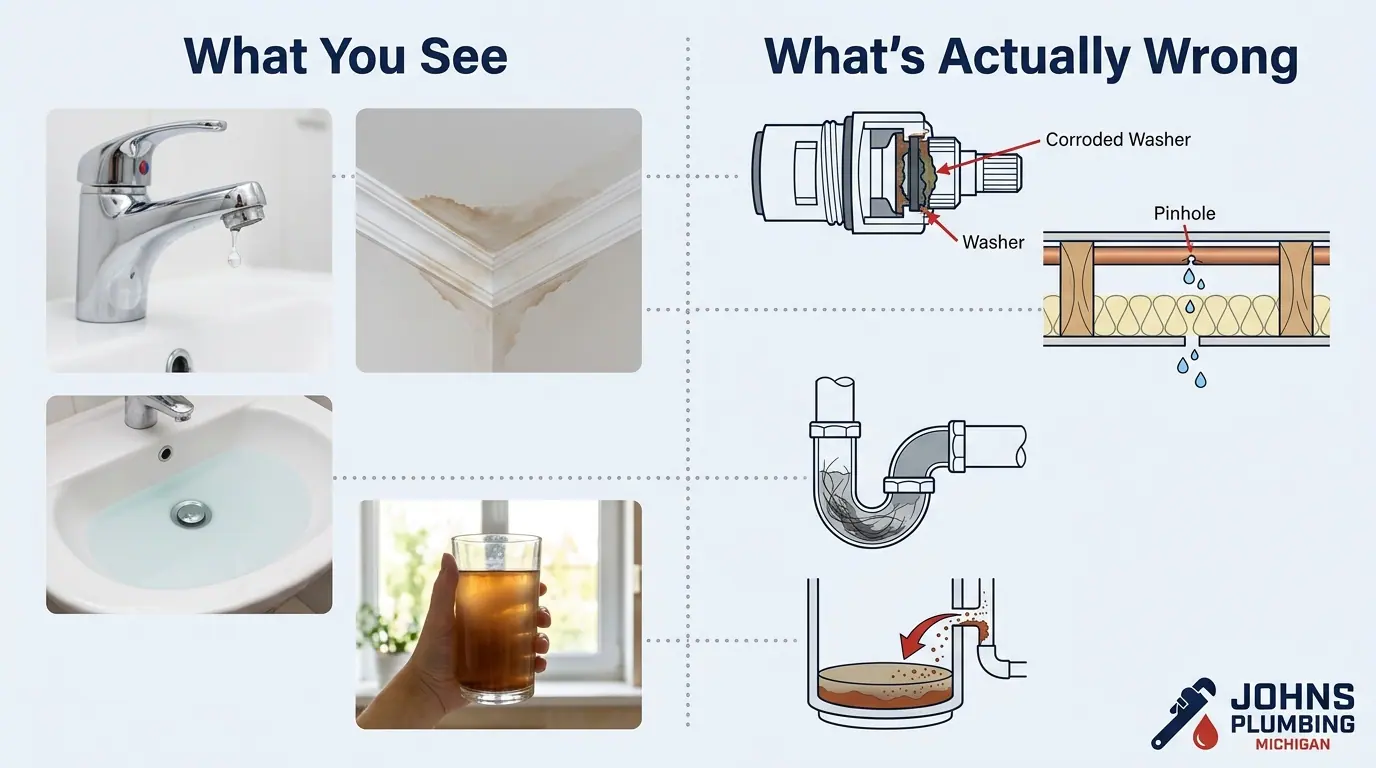
Professional leak detection becomes critical when water bills increase unexpectedly without usage changes, you hear running water when all fixtures are off, wet spots appear on walls or ceilings, mold develops in unexpected areas, or water pressure drops throughout the house. We locate hidden leaks using visual inspection for obvious signs, acoustic detection equipment that amplifies the sound of water escaping under pressure, and thermal imaging cameras that reveal temperature differences where water saturates building materials behind walls or under slabs.
Slab leaks, water lines breaking beneath concrete foundation slabs, show as warm floor spots (hot water leaks), foundation cracks, or pooling water near the home's perimeter. Underground leaks create soggy yard patches, unexplained erosion, or sinking ground.
Wall and ceiling leaks cause discoloration, bubbling paint, or visible water stains. Lansing's freeze-thaw cycles stress underground pipes as soil expands when frozen and contracts during thaw, creating joint separations and cracks in aging copper or galvanized lines installed before 1990.
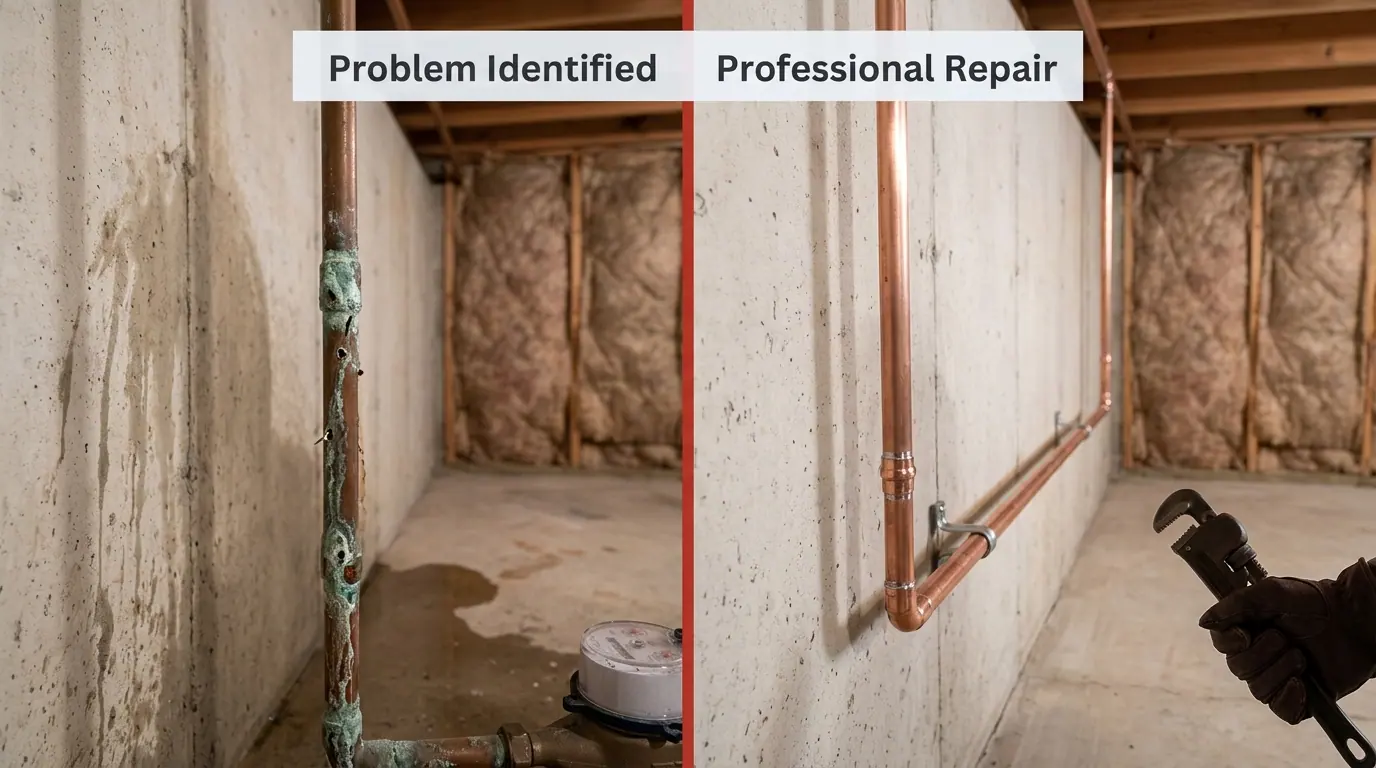
Pipe repair techniques include spot patching for small pinhole leaks, epoxy lining that coats pipe interiors to seal minor corrosion, and section replacement cutting out damaged pipe segments and installing new copper or PEX. We recommend repair when leaks are isolated to one or two locations in otherwise sound pipes. Re-piping the entire home makes sense when multiple leaks indicate systemic corrosion (common in pre-1970 galvanized steel pipes), when pinhole leaks keep appearing in different locations, or when inspection reveals widespread corrosion inside copper pipes from aggressive water chemistry.
Frozen pipe repair addresses burst pipes common in Lansing homes during January-February cold snaps. We thaw frozen sections, repair splits, and recommend insulation for exposed pipes in basements, crawl spaces, and exterior walls to prevent recurrence.
Sewer Line Services in Lansing
Sewer camera inspection reveals exactly what's blocking your main line, tree roots infiltrating joints, collapsed pipe sections, grease buildup, or foreign objects. We insert a waterproof camera on a flexible rod through cleanout access points, transmitting real-time video showing pipe interior condition, blockage locations, and structural damage. Common findings in Lansing include root intrusion where mature trees send roots through clay pipe joints seeking moisture, bellied sections where soil settling creates low spots that trap debris, and corroded cast iron pipes in homes built 1940-1970 now reaching end-of-life.
Sewer line cleaning and hydro jetting remove tree roots, grease accumulation, and scale buildup restoring full flow capacity. For root-infested lines, we follow jetting with root treatment chemicals that discourage regrowth for 12-18 months. When cleaning reveals structural damage (cracks, collapses, or severe corrosion) repair or replacement prevents sewage backups into basements.
Repair methods divide into traditional excavation (digging up damaged sections and replacing them) versus trenchless techniques. Pipe bursting pulls a new pipe through the old one while simultaneously fracturing the damaged pipe outward.
Pipe lining inserts an epoxy-saturated liner that cures in place, creating a new pipe inside the old one without excavation. Trenchless costs more upfront ($8,000-15,000 versus $5,000-10,000 for excavation) but avoids destroying landscaping, driveways, and sidewalks, valuable in established Lansing neighborhoods where mature landscapes surround homes.
When to repair versus replace depends on damage extent and pipe age. Repair works for isolated damage in one or two locations.
Full replacement makes sense when inspection shows multiple problem areas along the line's length, when clay pipes installed before 1970 show widespread joint separation, or when tree root intrusion recurs annually despite cleaning. Indicating roots have compromised the entire line's integrity.
Fixture Installation & Repair Services
Toilet repair addresses running toilets wasting 200+ gallons daily from worn flapper valves, toilets that won't flush from clogged jets or failed fill mechanisms, and constantly refilling tanks from faulty float valves. We replace internal components (flappers, fill valves, flush valves) for $150-250 when toilet bowls remain crack-free. Toilet replacement becomes necessary when porcelain cracks (unrepairable), when repeated repairs fail to fix chronic problems, or when upgrading to water-efficient models that use 1.28 gallons per flush versus older 3.5-gallon units, saving 7,000+ gallons yearly in typical households.
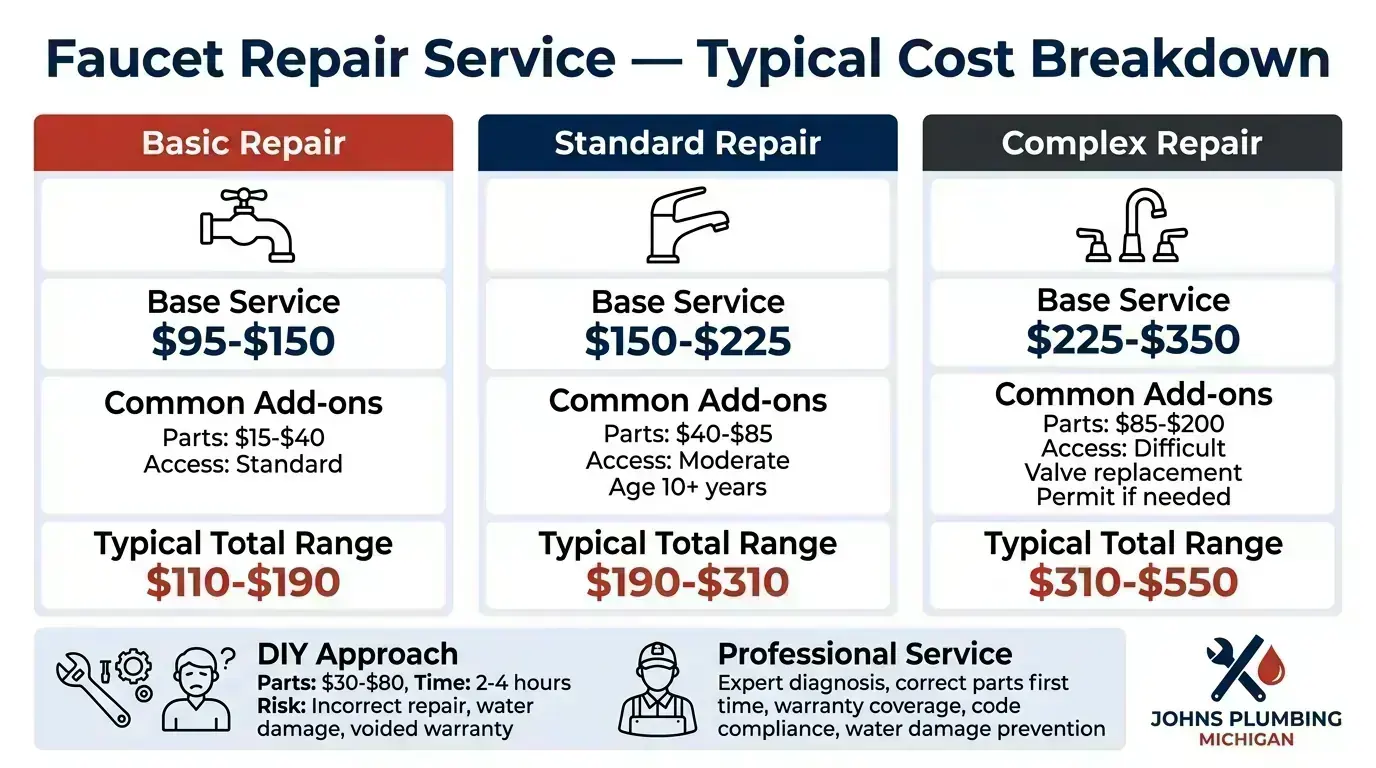
Faucet repair fixes dripping stems, low flow from mineral-clogged aerators, and handle leaks. Repair costs $120-200 for cartridge or washer replacement.
Faucet replacement makes sense when corrosion damages the faucet body, when repairs cost half or more of new faucet price, or when updating outdated fixtures during remodeling. Modern pull-down kitchen faucets and single-handle bathroom faucets with ceramic disc valves last 15-20 years versus older compression faucets requiring service every 3-5 years.
Garbage disposal installation provides convenient food waste grinding. We mount the unit, connect drainage and electrical, and ensure proper venting prevents slow draining. Disposal repair addresses jammed impellers from utensils or bones, failed motors, and leaking seals. Sump pump installation and repair protects Lansing basements from spring flooding when snowmelt and heavy rains overwhelm drainage. We install primary pumps with battery backup systems that operate during power outages common in severe weather. Call (313) 736-9553 for fixture installation, repair estimates, or emergency service when toilets overflow or disposals jam completely.
Gas Line Services in Lansing
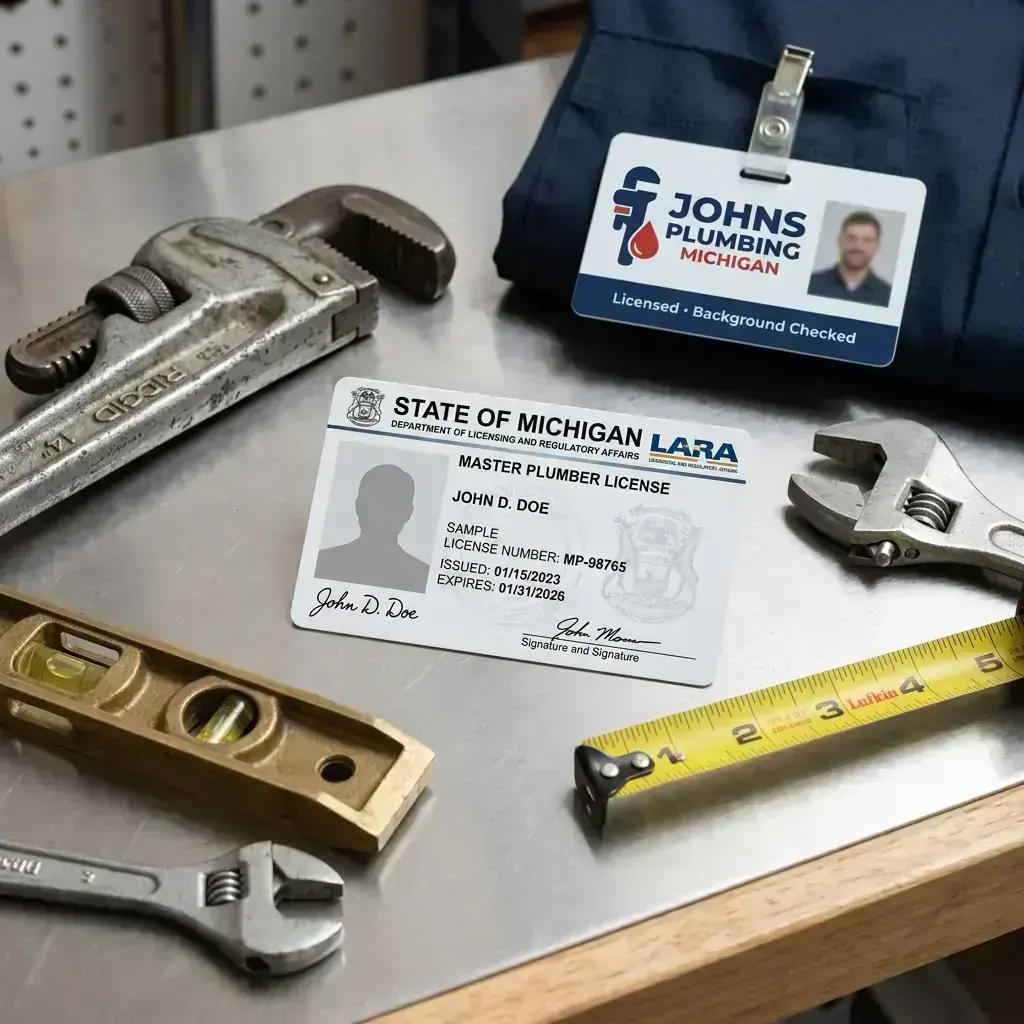
Gas line installation connects natural gas or propane to water heaters, dryers, stoves, ranges, fireplaces, and other appliances. We size lines for appliance BTU demand, run copper or CSST (corrugated stainless steel tubing) through walls and floors, and obtain required permits for code-compliant installations. Gas line installation requires licensed professionals because improper work creates catastrophic fire and explosion risks, violates Michigan code, and voids homeowner insurance.
Gas leak detection uses electronic sniffers, soap bubble testing at connections, and pressure testing to locate leaks at joints, valves, or corroded pipe sections. If you smell gas (mercaptan added to natural gas produces distinctive rotten egg odor), evacuate immediately, call 911 from outside the home, then call (313) 736-9553 for emergency gas line repair after the utility company secures the gas supply. Never attempt DIY gas work. Pressure testing and proper connection techniques require professional training.
Gas line pressure testing verifies system integrity before new appliance installation, after repairs, or when converting from natural gas to propane (or vice versa). Gas line replacement addresses corroded black iron pipes in older homes, upgrades undersized lines when adding new appliances, and converts older brass fittings to modern connections.
Safety protocols include proper ventilation, combustible gas detectors, and permit inspections confirming all work meets current code. Gas work permitted in Lansing requires Michigan-licensed plumbers and Building Safety Office inspection before use.