Emergency Plumbing
Emergency repair for active leaks, burst pipes, sewage backups, gas odors and sudden loss of water.
See emergency plumbing detailsResidential plumbing services
Pick the service that matches what you are seeing. Every job is quoted before work starts, and we handle the permits and inspections your city requires.
Call to confirm current coverage, provider credentials, pricing and arrival timing.
Emergency repair for active leaks, burst pipes, sewage backups, gas odors and sudden loss of water.
See emergency plumbing detailsHelp distinguishing a single-fixture clog from a branch or main-line drainage problem.
See drain cleaning detailsRepair and replacement for leaking tanks, inconsistent hot water, unusual noises, plus new installation.
See water heaters detailsPractical checks for visible and hidden water leaks before damage spreads.
See leak detection detailsCamera inspection, cleaning and repair for recurring main-line clogs, sewage backups and root intrusion.
See sewer lines detailsTesting, repair and replacement for primary pumps, discharge piping and battery backup protection.
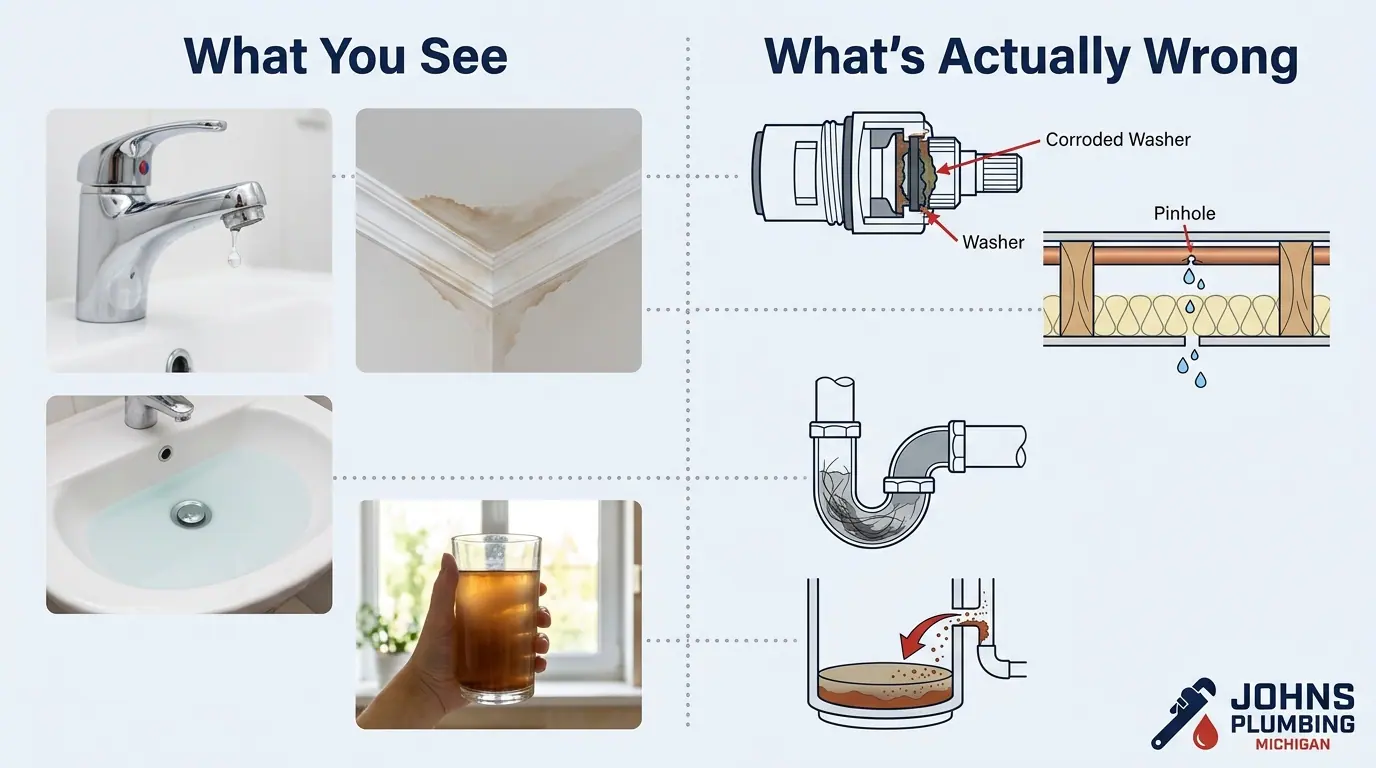
See sump pumps detailsWhen you call, tell us what you can observe: which fixtures are affected, whether water is still running, when the problem started and whether another fixture sets it off. That gets the right technician and the right parts to your door the first time.
If you smell gas, see sewage, have active flooding or water near electrical equipment, get clear of the area and call us from outside.