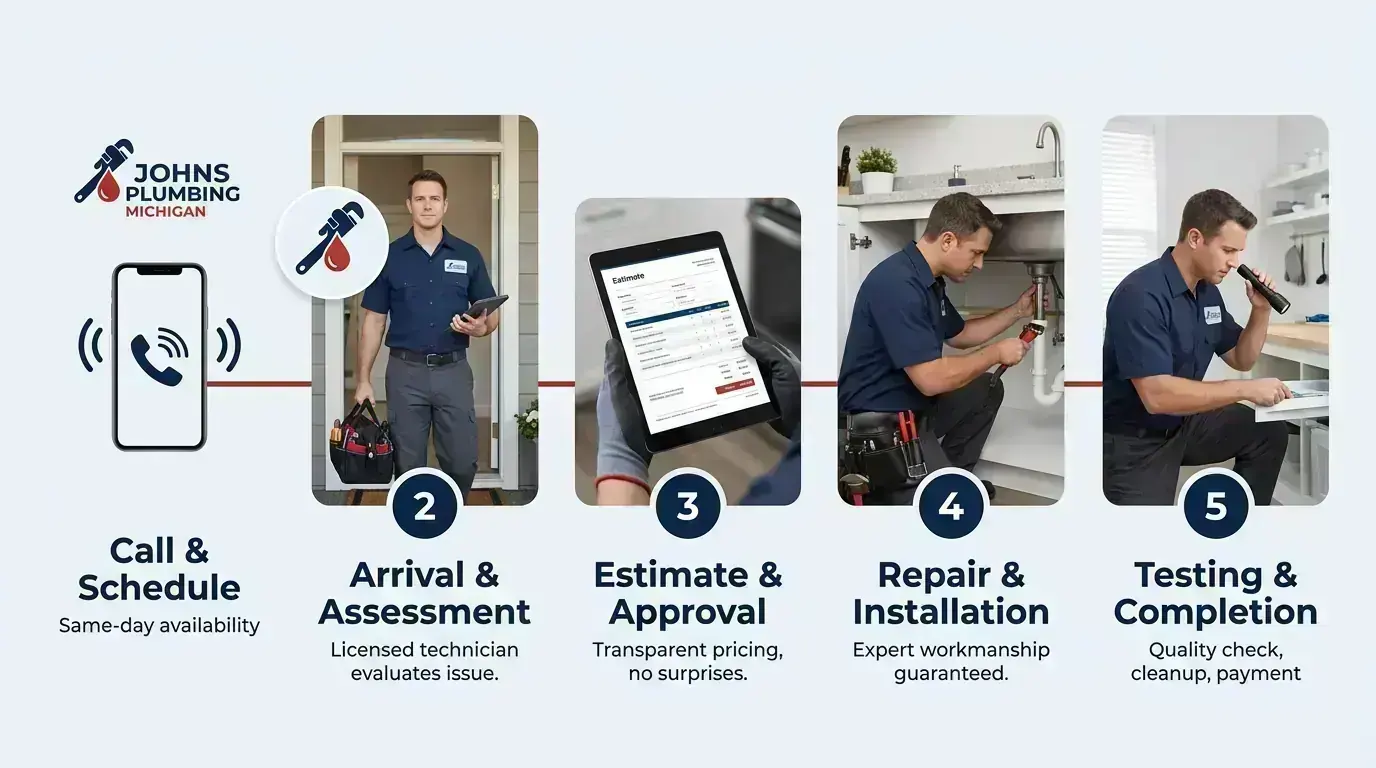
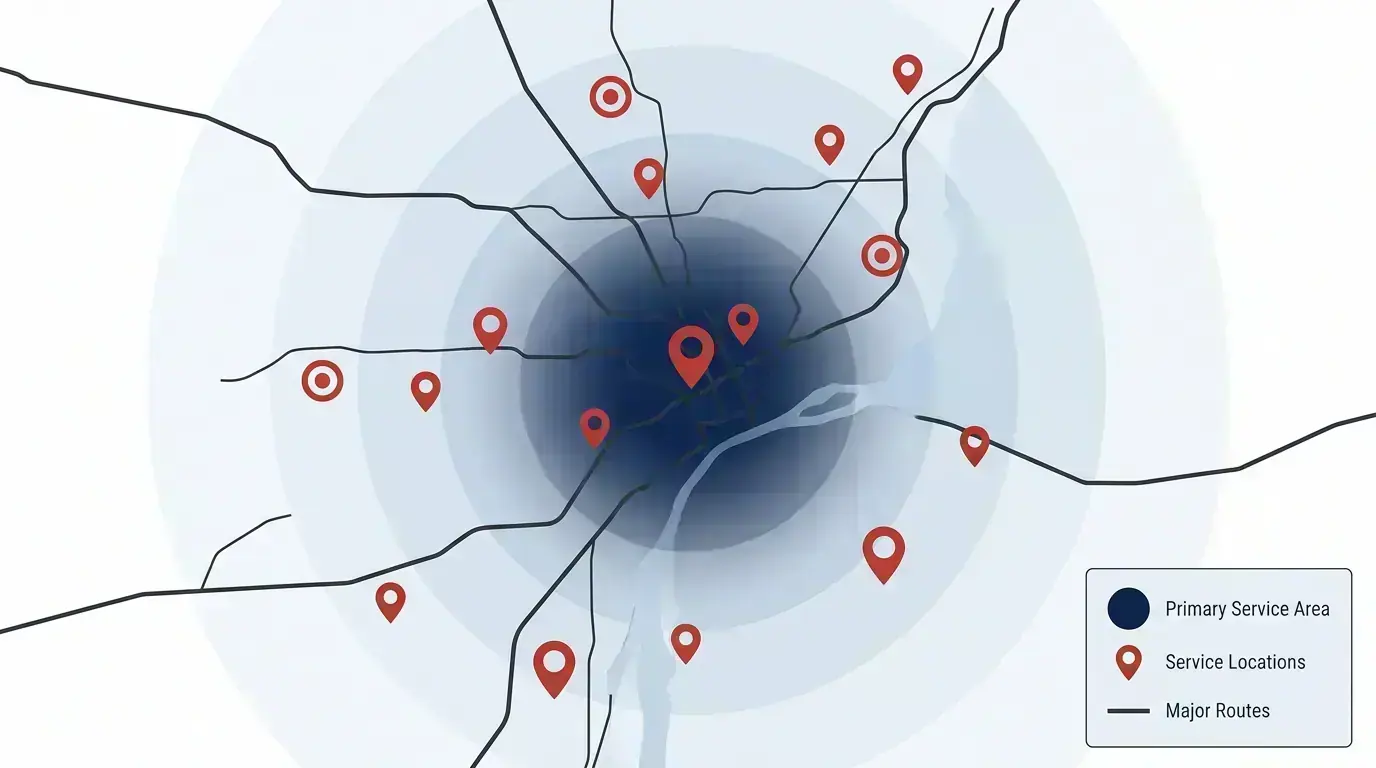
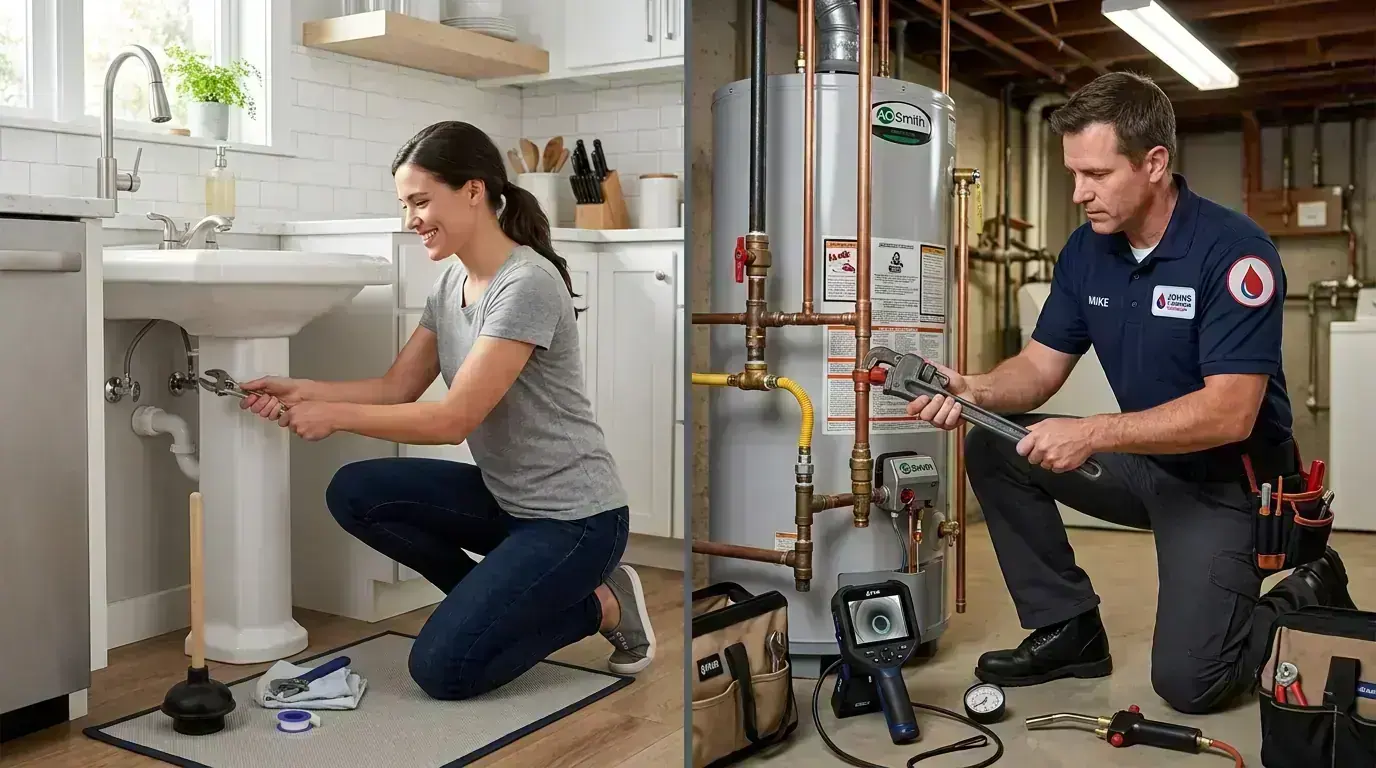
Johns Plumbing Michigan provides comprehensive residential plumbing services throughout Battle Creek, covering emergency repairs, routine maintenance, and full system installations. Our licensed technicians handle drain and sewer line services, water heater repair and replacement, leak detection and pipe repair, fixture installation, and gas line work. Below is detailed coverage of each service category, methods used, and when Battle Creek homeowners typically need each service.
Drain Cleaning & Clog Removal Services in Battle Creek
When drains slow or stop completely, professional cleaning restores flow and prevents recurring backups. Kitchen sinks accumulate grease and food debris, bathroom drains collect hair and soap residue, and main sewer lines face root intrusion and sediment buildup, especially in Battle Creek's older neighborhoods where mature trees infiltrate aging clay pipes.
Cable snaking uses a rotating metal cable to break through clogs in individual fixtures and branch lines. This method works for most kitchen and bathroom drain blockages within 50 feet of the access point.
Hydro jetting uses high-pressure water streams (up to 4,000 PSI) to scour pipe walls clean, removing grease buildup, scale deposits, and tree roots from main sewer lines. We use hydro jetting when camera inspection reveals heavy buildup or when recurring clogs indicate the pipe interior needs thorough cleaning, not just a hole punched through the blockage.
Video camera inspection shows exactly what's blocking the line (whether it's a simple clog, collapsed pipe section, or root mass) before we recommend cable snaking, hydro jetting, or pipe replacement. For Battle Creek homes built before 1980, camera inspection often reveals clay pipe joints separated by freeze-thaw cycles or sections crushed by soil settlement in the area's glacial till.
Multiple slow drains throughout the house typically signal main line blockage, not individual fixture problems. When the kitchen sink, bathroom tub, and basement floor drain all back up simultaneously, the clog sits in the main sewer line between the house and street connection.
Single slow drains usually mean localized clogs treatable with cable snaking. Gurgling sounds when you run water indicate venting issues or partial main line blockage, both require professional diagnosis.
Call (313) 736-9553 when drains remain slow after attempting plunging, when water backs up into other fixtures, or when you notice sewage odors indoors. Recurring clogs in the same drain every few weeks mean the underlying cause (scale buildup, root intrusion, or pipe deterioration) needs professional attention beyond temporary clearing.
Water Heater Repair & Replacement Services
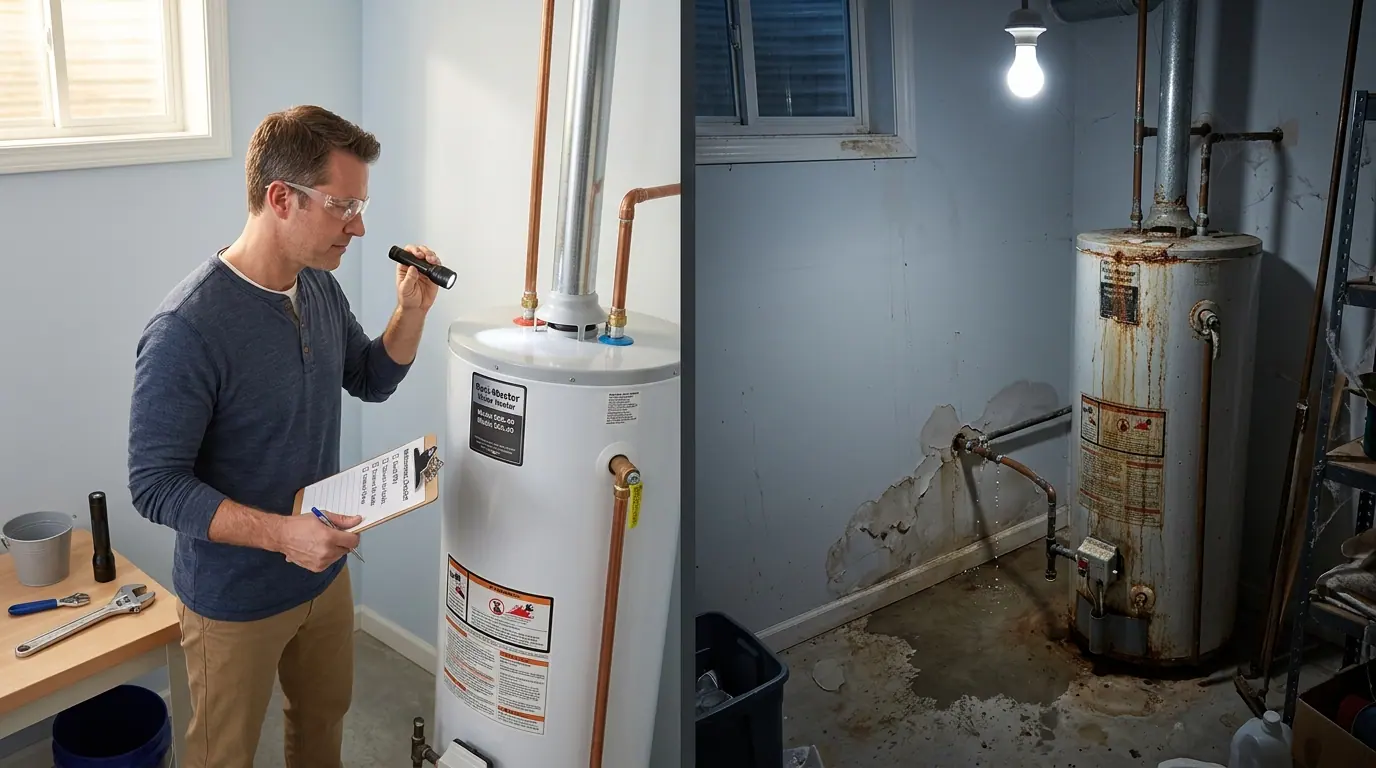
Water heaters fail gradually through sediment accumulation, component wear, and tank corrosion, or suddenly when a relief valve fails or the tank develops a major leak. Battle Creek's hard water accelerates sediment buildup, reducing efficiency and shortening lifespan. Most tank water heaters last 8-12 years; units approaching this age range with declining performance usually need replacement rather than repair.
Tank water heater repair addresses pilot light failures, thermostat malfunctions, heating element burnout, and minor leaks from valve connections. We replace anode rods (sacrificial metal bars that prevent tank corrosion) when they've deteriorated to the core wire, typically every 3-5 years in hard water areas.
Thermostat and heating element replacement restores hot water when the tank itself remains sound. Pilot light issues in gas water heaters usually involve thermocouple failure, gas valve problems, or blocked pilot tubes.
Tankless water heater installation provides endless hot water by heating water on-demand rather than storing a tank. Tankless units require higher gas line capacity (for gas models) or significant electrical service (for electric models), plus annual descaling in Battle Creek's hard water to prevent mineral buildup in the heat exchanger. The upfront cost runs higher than tank models, but energy savings and 20-year lifespan offset the difference for many homeowners.
Replacement timing depends on age, repair frequency, and operating cost. Water heaters over 10 years old with rust-colored water, rumbling noises from sediment, or moisture around the base typically need replacement.
Repair makes sense for newer units (under 7 years) with simple component failures. For units in the 8-10 year range, compare repair cost against replacement cost, if repair exceeds 50% of replacement price and the unit shows other wear signs, replacement provides better value.
Sizing matters: undersized water heaters run out of hot water during showers; oversized units waste energy heating water you don't use. Battle Creek homes typically need 40-50 gallon tanks for 2-3 people, 50-60 gallons for 4-5 people.
Tankless units are sized by flow rate (gallons per minute) based on simultaneous fixture use. Two showers plus dishwasher requires higher capacity than one shower alone.
For water heater replacement in Battle Creek, call (313) 736-9553 for sizing consultation and permit-compliant installation. Michigan requires permits and inspections for water heater replacement to ensure safe installation, proper venting, and code compliance.
Leak Detection & Pipe Repair Services
Hidden leaks inside walls, under slabs, or underground waste water and cause structural damage before homeowners notice obvious signs. We use acoustic leak detection (listening devices that amplify water sounds), thermal imaging cameras (showing temperature changes from water movement), and pressure testing (measuring pressure drops that indicate leaks) to locate hidden leaks without destructive exploratory demolition.
Slab leaks occur when pipes beneath the concrete foundation corrode or crack, often from soil settlement, poor initial installation, or freeze-thaw ground movement. Signs include warm spots on floors (hot water leaks), wet carpet or flooring, foundation cracks, and water bills creeping upward despite unchanged usage. Slab leak repair requires accessing the pipe through the slab or, for widespread pipe deterioration, rerouting new lines through walls and attic spaces.
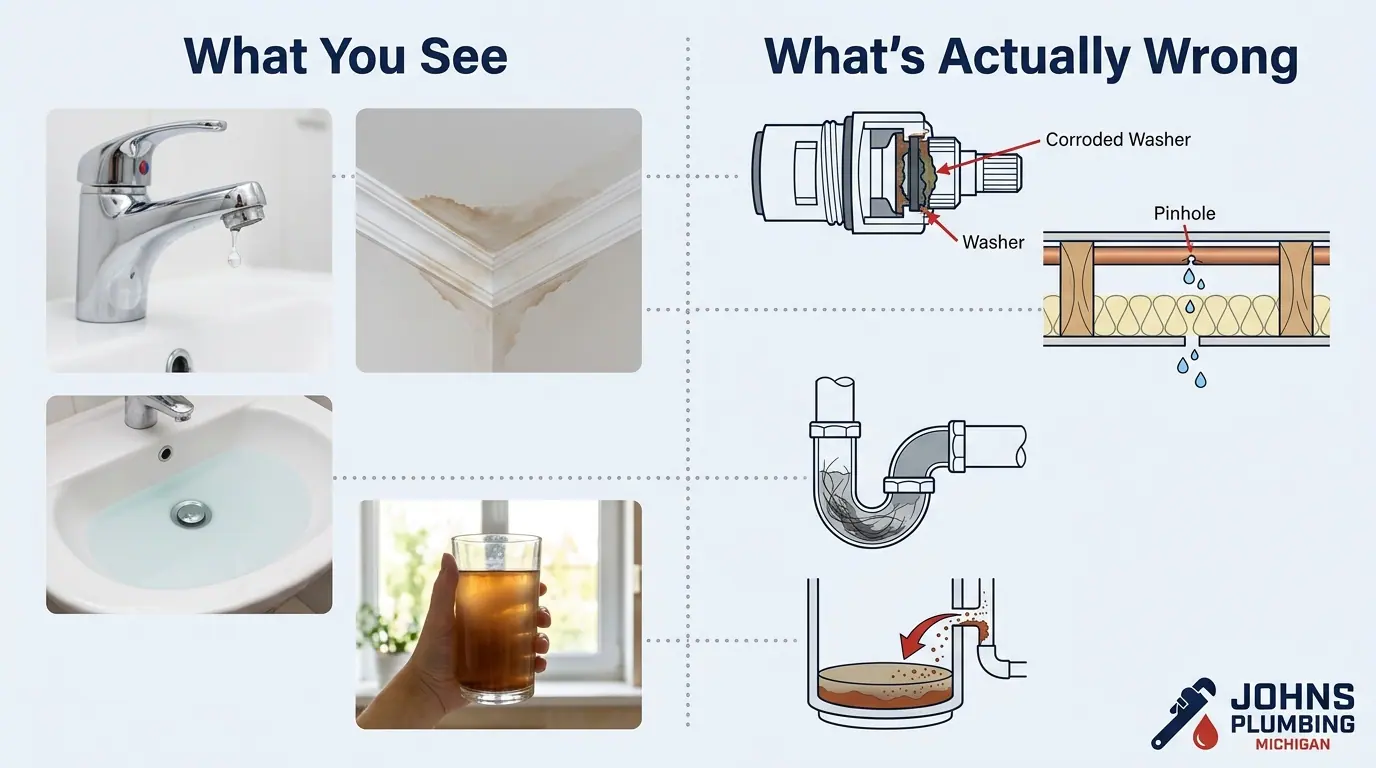
Wall and ceiling leaks show as water stains, bubbling paint, or mold growth. The visible damage usually sits downstream from the actual leak location. Water follows framing members before breaking through drywall.
We trace the water path backward to find the leak source, then determine whether the pipe can be repaired in place or requires section replacement. Battle Creek's older homes with galvanized steel pipes often have multiple pinhole leaks developing as the entire pipe system reaches end-of-life.
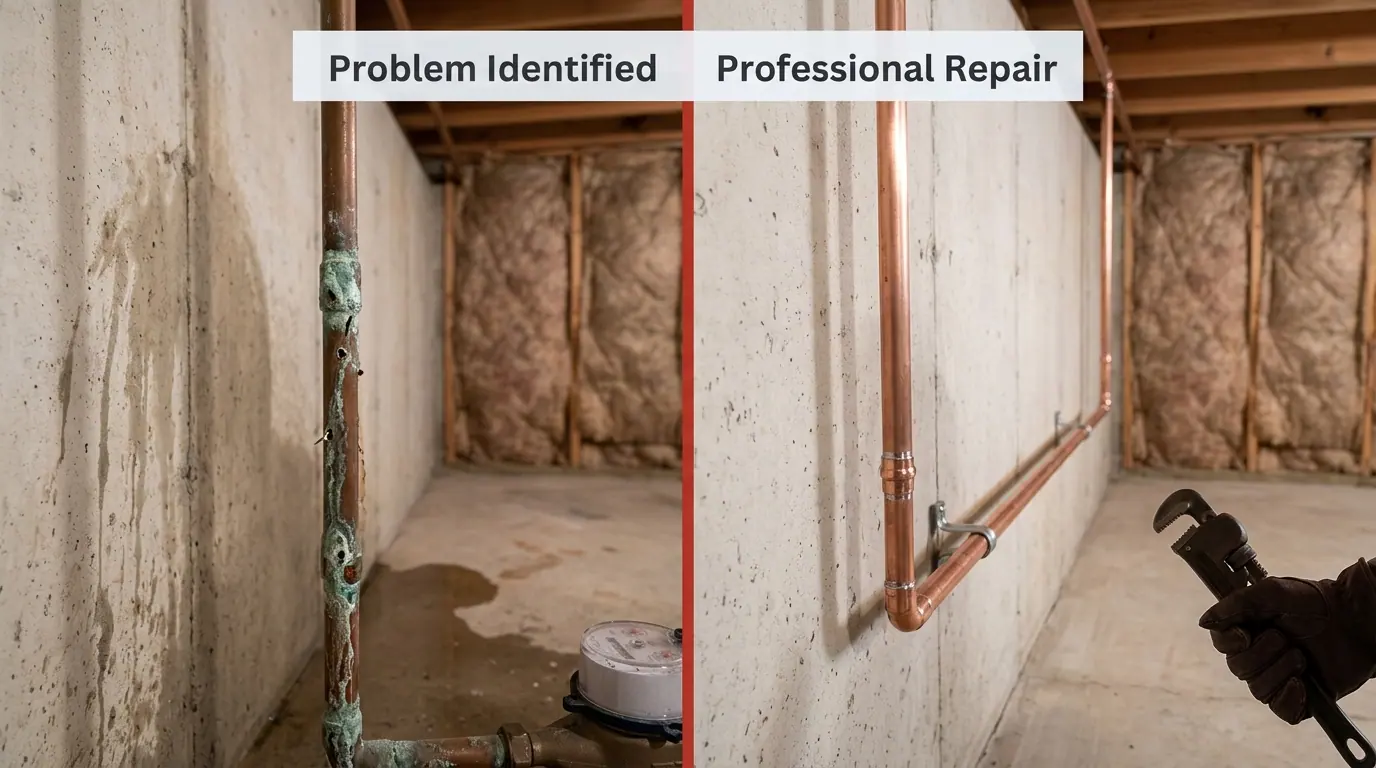
Pipe repair techniques range from patching small sections with epoxy or compression fittings to replacing entire runs. Copper pinhole leaks in short sections can be patched; multiple pinholes in aging copper suggest pipe replacement before the next leak appears.
Galvanized pipe corrosion usually indicates whole-house re-piping rather than piecemeal repairs. PVC and PEX repairs involve cutting out damaged sections and installing new fittings, straightforward for accessible pipes, more complex when pipes run inside finished walls.
Frozen pipe repair addresses Battle Creek's winter freeze damage. Pipes in exterior walls, unheated crawl spaces, and uninsulated basements freeze when temperatures drop and wind chill accelerates heat loss. Frozen sections expand, cracking pipes that leak once they thaw.
We thaw frozen pipes with electric heat tape or controlled heat application (never open flame), then test for cracks. Burst frozen pipes require section replacement and insulation upgrades to prevent recurring freezes.
Main water line leaks between the street connection and house foundation cause soggy yard areas, foundation settling, and utility bill spikes. Clay and cast iron main lines in Battle Creek's older neighborhoods often fail at joints or crack from soil movement. Repair involves excavating to the damaged section and replacing it with durable PEX or copper.
Sewer Line Services in Battle Creek
Sewer lines carry wastewater from your home to the municipal system connection, typically running 4-6 feet underground from foundation to street. Battle Creek's aging infrastructure includes many clay sewer lines installed before 1970. These lines crack from freeze-thaw cycles, separate at joints, and allow tree roots to infiltrate, causing blockages and backups.
Sewer camera inspection reveals the condition inside your sewer line without digging. We insert a waterproof video camera through a cleanout or toilet drain, recording the pipe interior while noting blockage locations, pipe material, crack locations, and root intrusion severity.
The camera transmits its position to a locator device above ground, marking exactly where damage exists for targeted repair. Inspection typically costs $200-$400 and prevents unnecessary excavation by showing whether you need simple cleaning or full replacement.
Sewer line cleaning and hydro jetting removes tree roots, grease buildup, and debris blocking the line. For root-filled clay pipes, we first use a root-cutting auger to clear the mass, then follow with hydro jetting to flush remaining debris and scour the pipe walls.
This two-step approach restores flow but doesn't prevent roots from returning, tree roots regrow into the pipe within 1-3 years through the same cracks and joints. Many Battle Creek homeowners schedule preventive root cleaning every 2-3 years for mature trees near sewer lines.
Traditional excavation sewer line replacement involves digging a trench along the pipe route, removing the old line, and installing new PVC pipe. This method costs less per foot than trenchless approaches but requires landscaping restoration afterward. For Battle Creek homes with sewer lines running under driveways, patios, or established landscaping, excavation costs add up through concrete removal and replacement or landscape restoration.
Trenchless sewer line replacement avoids most digging through pipe bursting or pipe lining methods. Pipe bursting splits the old pipe while pulling new pipe through the same path, it requires access pits at each end but leaves the space between undisturbed.
Pipe lining inserts an epoxy-coated fabric tube inside the old pipe, inflates it, and cures it in place to create a new pipe within the old one. Trenchless costs more upfront but saves thousands in restoration work and completes in hours rather than days of excavation.
When multiple drains back up simultaneously, sewage odor permeates your home, or toilets gurgle when running water elsewhere, you're likely facing main sewer line blockage. Call (313) 736-9553 for camera inspection and same-day cleaning. For older Battle Creek homes that have never had sewer line inspection, schedule preventive camera inspection to identify developing problems before they cause emergency backups.
Fixture Installation & Repair Services
Plumbing fixtures (toilets, faucets, sinks, tubs, showers, and garbage disposals) handle daily use that eventually wears internal components and causes leaks, drips, or operational failures. Fixture repair makes sense for newer units (under 7 years) with isolated component failures; replacement suits older fixtures with multiple issues or when upgrading to water-efficient models.
Toilet repair addresses running toilets (flapper valve, fill valve, or flush valve failures), toilets that won't flush (clogged trapway, weak flush mechanism), and leaking base seals. Running toilets waste hundreds of gallons monthly, listen for the sound of water running continuously after flushing. Leaks at the toilet base indicate wax ring seal failure, which allows sewage gases and water to escape.
Replacing the wax ring requires removing and resetting the toilet with a new seal. 28 gallons while improving flush performance.
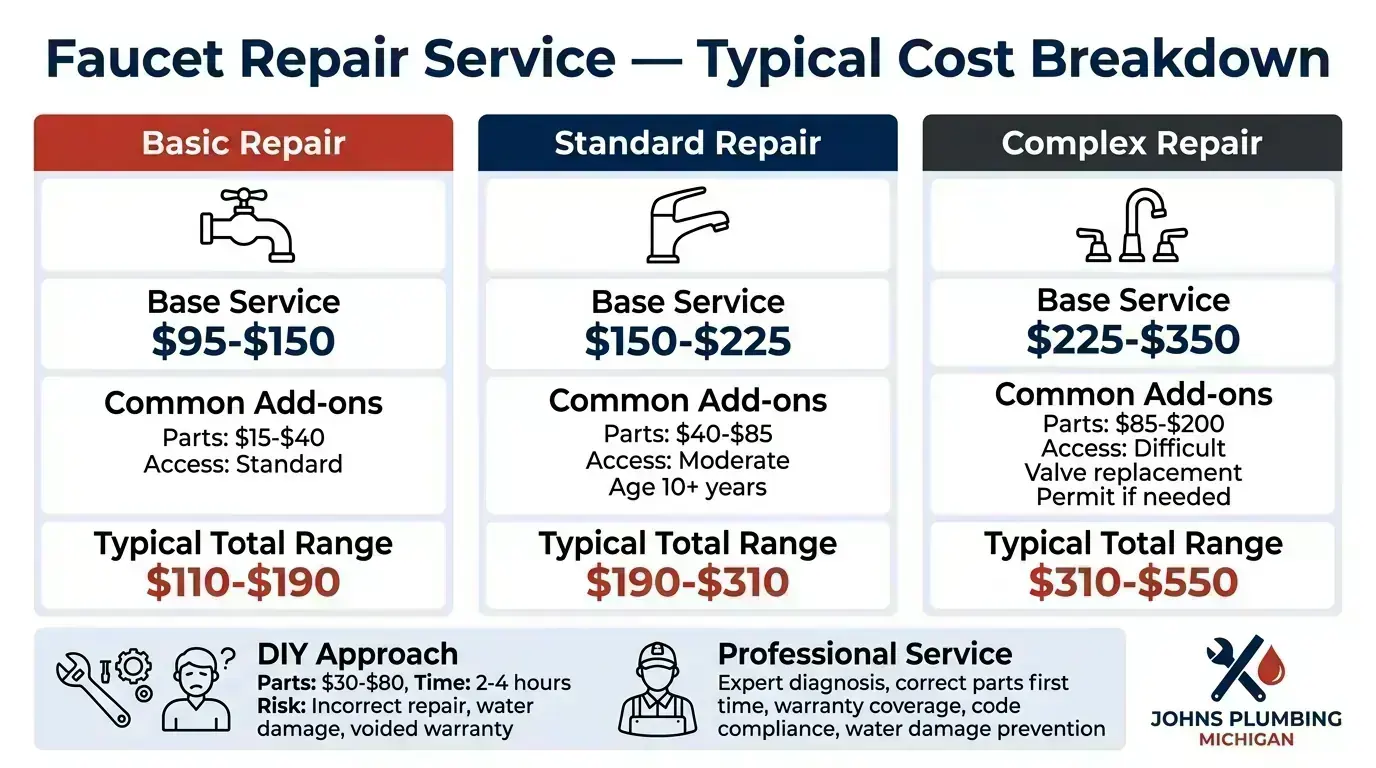
Faucet repair replaces worn washers, O-rings, cartridges, or ceramic discs, the internal components that seal water flow when you turn the handle off. Dripping faucets waste water and indicate seal failure.
Most cartridge faucets can be repaired with replacement cartridges; severely corroded faucets or those with outdated replacement parts need full replacement. Battle Creek's hard water accelerates mineral buildup inside faucets, shortening their lifespan.
Garbage disposal repair addresses jams (foreign objects or fibrous material lodged in the grinding chamber), motor failures, and leaking seals. We clear jams with the manual wrench socket under the unit, reset tripped circuit breakers, and replace leaking gaskets. Disposals typically last 8-12 years; units making loud grinding noises, leaking from multiple points, or frequently jamming usually need replacement rather than continued repairs.
Sump pump installation and repair prevents basement flooding during heavy spring rains and rapid snowmelt, common in Battle Creek when winter snow accumulates then melts during temperature swings. Sump pumps sit in basement floor pits, automatically pumping water out before it rises enough to flood the basement. We install battery backup sump pumps in homes where power outages occur during storms, ensuring flood protection continues even when electricity fails.
Gas Line Services
Natural gas powers water heaters, furnaces, stoves, dryers, and fireplaces throughout Battle Creek. Gas line work requires Michigan Master Plumber licensing due to the explosion and carbon monoxide poisoning risks from improper installation or leaks. We install new gas lines when homeowners replace electric appliances with gas versions, add gas fireplaces, or run gas lines to outdoor kitchens or pool heaters.
Gas leak detection uses electronic gas detectors and pressure testing to locate leaks in gas piping. If you smell natural gas (rotten egg odor.
Utilities add this scent to normally odorless gas), hear hissing sounds near gas lines, or experience nausea and headaches indoors, evacuate immediately and call 911, then (313) 736-9553 once outside. We respond 24/7 to gas leak emergencies, shutting off gas supply, locating the leak, and making repairs or replacements before restoring service.
Gas line pressure testing confirms new installations and repairs hold pressure without leaks. Michigan code requires pressure testing for all gas line work, with inspections to verify safe installation. Gas line installation for new appliances involves running black iron pipe or CSST (corrugated stainless steel tubing) from the existing gas supply to the appliance location, sizing the pipe diameter for the appliance's BTU demand, and pressure testing before final connection.
Gas shut-off valve installation provides emergency shutoff capability at each appliance and at the main gas meter. Modern safety standards recommend seismic-rated shut-off valves that automatically close during earthquakes or significant ground movement, less common in Michigan than West Coast but good practice for new installations.
Never attempt DIY gas line work. Michigan law requires licensed plumbers for all gas line installation, repair, and modification.
Improper gas line work creates explosion risk, carbon monoxide poisoning, and insurance liability. For gas line installation or if you suspect gas leaks, call (313) 736-9553 for licensed service and permit-compliant work.