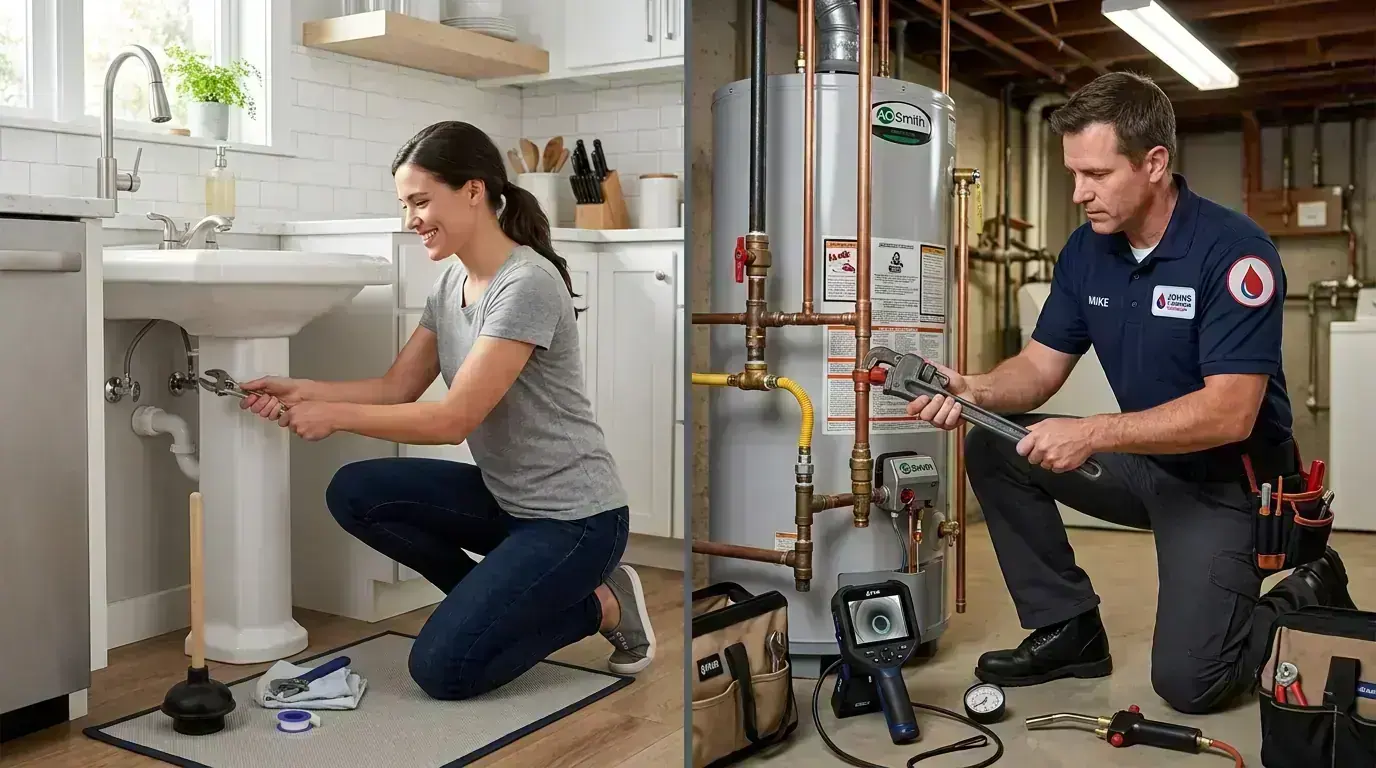
Johns Plumbing Michigan provides comprehensive residential plumbing services throughout East Lansing, covering emergency repairs, routine maintenance, and full system installations across all major plumbing categories. Our licensed technicians handle drain and sewer line services, water heater repair and replacement, leak detection and pipe repair, fixture installation, and gas line work for homeowners in Ingham County. Below is detailed coverage of each service category, methods used, and when East Lansing homeowners typically need each service.
Drain Cleaning & Clog Removal Services in East Lansing
Drain cleaning addresses clogs in kitchen sinks, bathroom fixtures, showers, toilets, and main sewer lines using cable snaking for typical blockages or hydro jetting for stubborn obstructions and mineral buildup from East Lansing's hard water (14+ GPG). Kitchen sink clogs typically result from grease accumulation and food particles, while bathroom drains clog from hair and soap residue. Toilet clogs often indicate foreign objects or excessive paper, though recurring toilet backups may signal a main line problem rather than fixture-level issue.
Hydro jetting uses high-pressure water streams (3,000-4,000 PSI) to scour pipe walls clean of scale, grease, and tree roots, particularly effective for East Lansing's aging cast iron and clay sewer lines where mineral deposits accumulate faster due to hard water. Cable snaking works for simple clogs within 50 feet of the drain opening but won't remove scale buildup. Video camera inspection identifies the exact clog location and pipe condition, revealing whether cleaning will solve the problem or whether pipe replacement is necessary.
Multiple slow drains throughout a home indicate main sewer line blockage rather than individual fixture clogs, common in East Lansing properties near mature trees where root intrusion penetrates clay pipe joints. Floor drain backups during heavy use signal main line capacity issues.
Call for drain cleaning when kitchen sinks drain slowly despite clearing the trap, when plunging doesn't resolve toilet backups, when you hear gurgling sounds from drains (indicates venting problems or partial main line obstruction), or when chemical drain cleaners fail to clear the blockage. Professional cleaning prevents repeated clogs and identifies underlying pipe deterioration before it causes sewage backups.
Water Heater Repair & Replacement
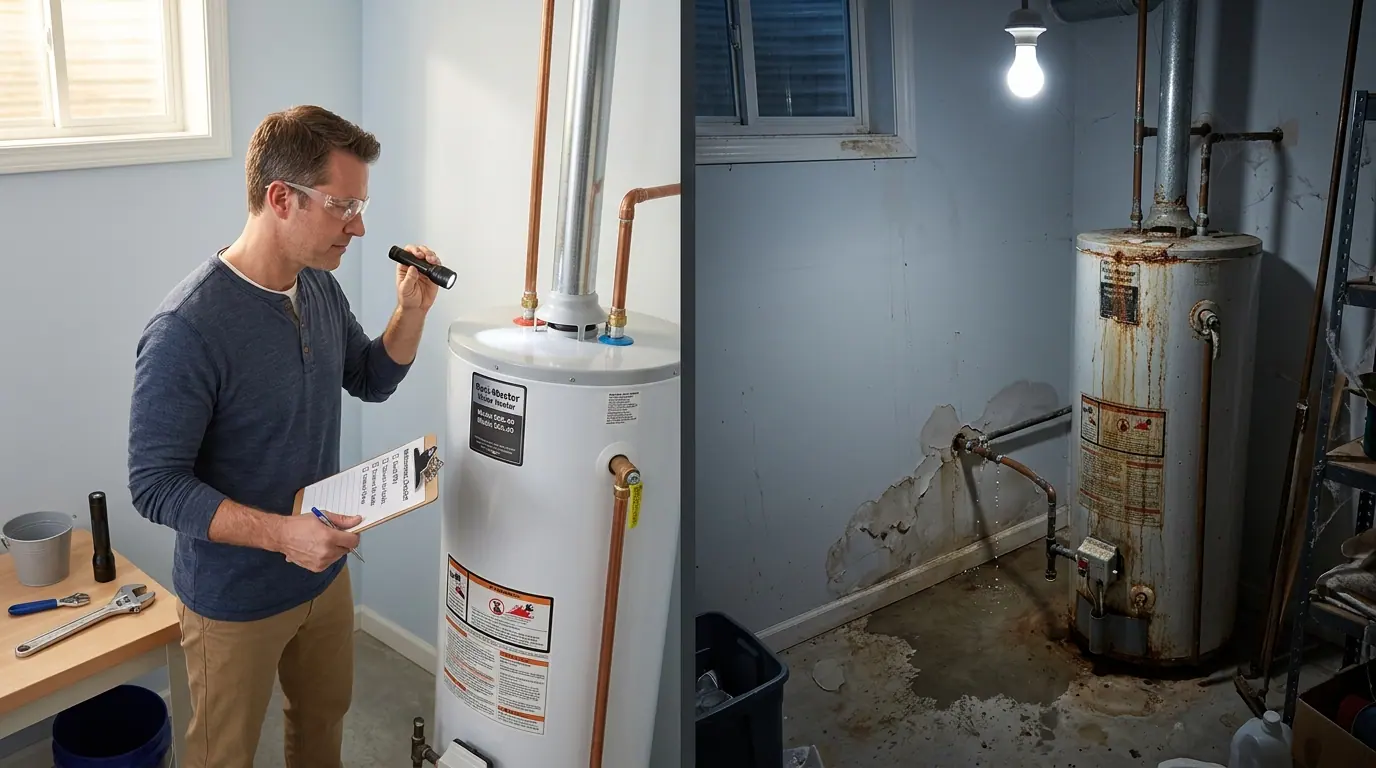
Tank water heaters dominate East Lansing homes, with repair making sense for units under 8 years old experiencing minor issues like pilot light problems, thermostat failures, or anode rod corrosion. Replacement becomes necessary when tanks rust through, develop pinhole leaks, or approach 10-12 years of age, though East Lansing's hard water often cuts that lifespan to 6-9 years due to accelerated mineral buildup and tank corrosion. Mineral sediment settles at tank bottoms, reducing heating efficiency and creating popping or rumbling sounds during operation.
Tankless water heaters provide continuous hot water and avoid the space requirements of 40-50 gallon tanks, making them suitable for East Lansing's older homes with limited basement space. Tankless installation requires adequate gas line capacity (120,000-200,000 BTU for whole-house units) and often needs electrical upgrades for electronic ignition and flow sensors. Sizing depends on simultaneous fixture use, a family running shower, dishwasher, and washing machine simultaneously needs higher flow capacity than a couple using one fixture at a time.
Pilot light failures in tank heaters often indicate thermocouple wear or draft problems from basement air circulation. Thermostat replacement addresses temperature inconsistency without tank replacement.
Anode rod replacement extends tank life by 3-5 years when performed before the rod corrodes completely, hard water depletes anode rods faster than soft water, making 3-year inspection intervals critical in East Lansing. Expansion tank installation prevents pressure relief valve leaks caused by thermal expansion in closed plumbing systems.
East Lansing homeowners typically need water heater service when hot water runs out faster than normal, when water temperature fluctuates during single fixture use, when rusty or discolored water appears only from hot taps, or when the unit makes loud banging noises during heating cycles. Call immediately if you see water pooling around the tank base, smell gas near the unit, or experience no hot water during winter months.
For homes with units approaching 8-10 years old, schedule inspection even without symptoms. Catching tank corrosion before a catastrophic leak prevents basement flooding and water damage.
Leak Detection & Pipe Repair Services
Leak detection uses acoustic listening devices to hear water escaping through pipe walls, thermal imaging cameras to identify temperature differences from water seepage, and pressure testing to confirm system integrity. Slab leaks beneath concrete floors manifest as warm spots on flooring, unexplained water bill increases, or foundation cracks from soil erosion. Underground leaks between the street and home appear as soggy yard patches, unusually green grass strips, or water meter activity when all fixtures are off.
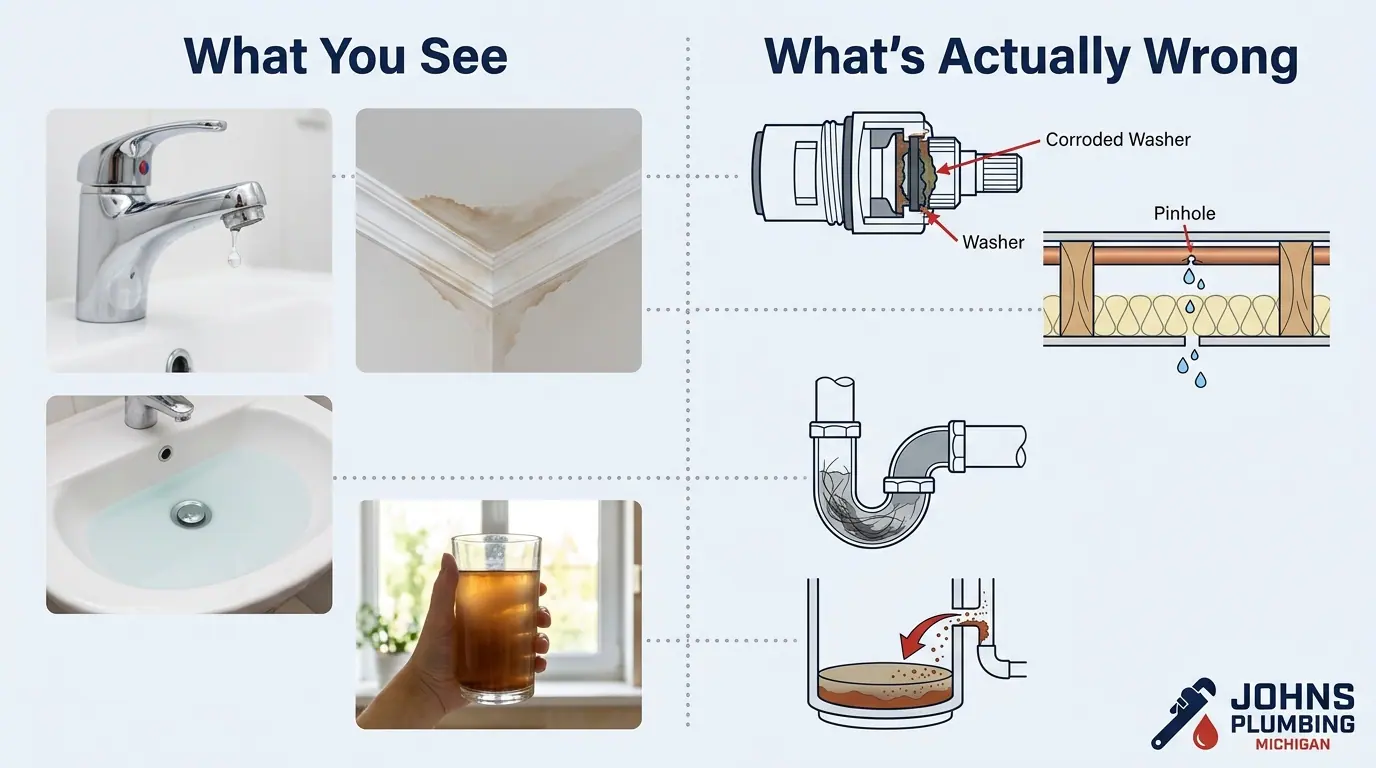
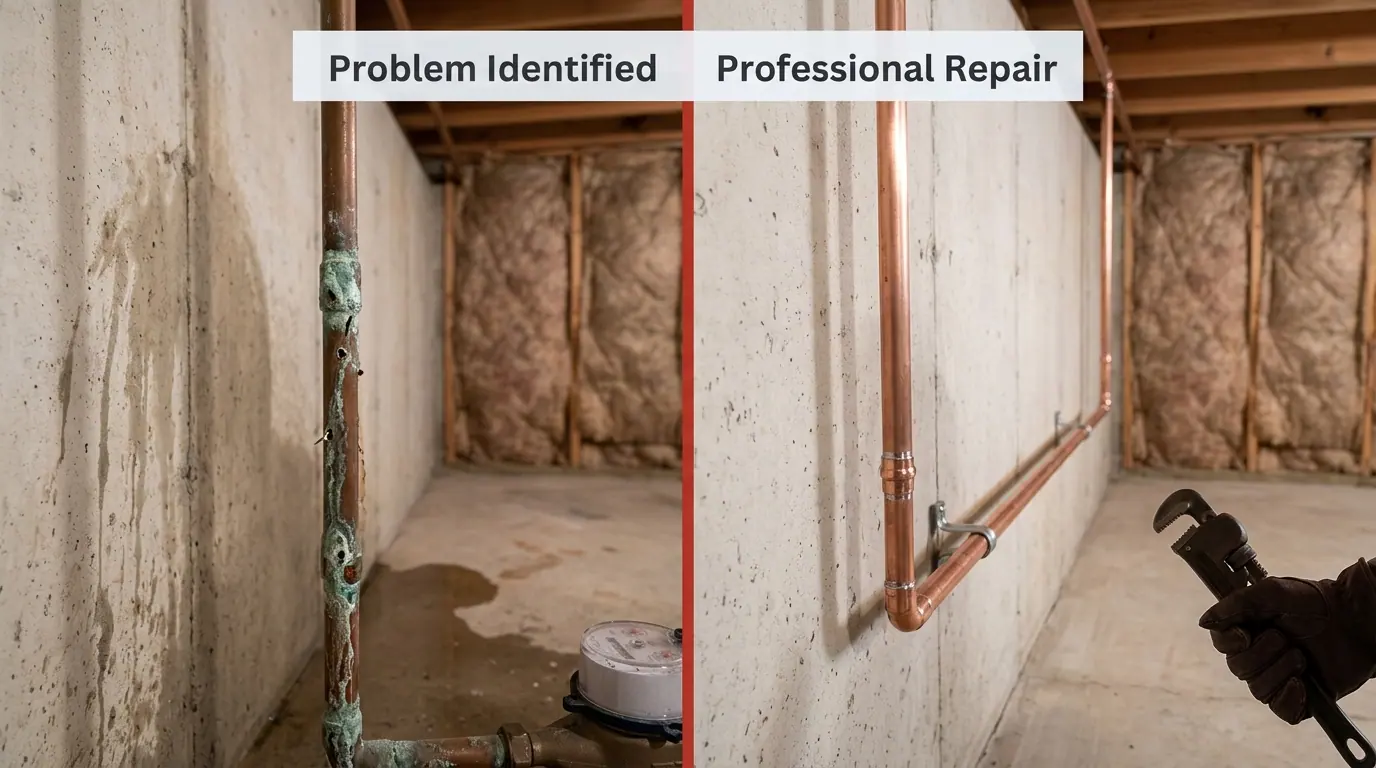
Wall and ceiling leaks create visible water stains, peeling paint, or drywall bulging, though the leak source often sits several feet from the visible damage due to water traveling along framing before emerging. Pipe repair ranges from epoxy patching for pinhole leaks in accessible copper pipes, to cutting out damaged sections and soldering in replacements, to complete re-piping when corrosion affects multiple locations. East Lansing's 1950s-70s neighborhoods with galvanized steel pipes face widespread corrosion as pipes rust from the inside out, reducing water pressure and creating rough interior surfaces that accelerate clog formation.
Re-piping replaces all water supply lines, typically using PEX (cross-linked polyethylene) flexible tubing that resists freeze damage and installs faster than rigid copper. Re-piping makes sense when multiple leaks occur within a year, when water pressure drops throughout the home despite clear aerators, or when pipe corrosion appears during any repair.
Frozen pipe repair requires thawing without rupturing the pipe, applying heat too quickly to copper or PEX causes thermal stress failures. Main water line repair involves coordinating with the city to shut off street supply and often requires permit approval in East Lansing for work affecting the public right-of-way.
Call for leak detection when your water bill increases 20% or more without usage changes, when you hear running water with all fixtures off, when walls feel damp or show discoloration, or when mold appears in areas without moisture sources. Hidden leaks cause more damage than visible ones because they erode foundations and promote mold growth before homeowners notice symptoms. East Lansing's clay and sandy soil shifts with freeze-thaw cycles, putting stress on underground pipes that eventually crack at joints or develop stress fractures along straight runs.
Sewer Line Services
Sewer camera inspection inserts a waterproof video camera on a flexible cable through cleanout access points, revealing pipe interior condition, clog locations, root intrusion extent, and structural defects like bellied sections or separated joints. Cameras identify whether problems require simple cleaning or full pipe replacement before excavation begins. Sewer line cleaning uses hydro jetting to cut through tree roots and flush out accumulated debris, restoring flow capacity without pipe replacement.
Tree root removal addresses East Lansing's most common main line problem, mature oaks, maples, and elms send roots through clay pipe joints seeking moisture, eventually creating dense root masses that catch paper and waste. Hydro jetting cuts roots at pipe walls but doesn't prevent regrowth; root barriers or pipe lining provide long-term solutions. Traditional excavation replacement involves digging a trench from the foundation to the street connection, removing the old clay or cast iron pipe, and installing new PVC sewer line, necessary when pipes collapse, when joints separate creating voids that collect soil, or when root damage exceeds 40% of pipe interior.
Trenchless sewer line replacement uses pipe bursting (pulling a new HDPE pipe through while fracturing the old pipe outward) or pipe lining (inserting an epoxy-coated liner that hardens into a new pipe inside the old one). Trenchless methods cost 30-50% more than excavation but avoid destroying landscaping, driveways, and sidewalks, significant savings when replacing lines under established yards or hardscaping. East Lansing's clay soil and property setbacks often favor trenchless repair for lines under driveways or near foundation plantings.
Sewer line problems require immediate attention when multiple drains back up simultaneously, when sewage odor appears indoors, when toilets gurgle during sink drainage, or when basement floor drains overflow during fixture use. These symptoms indicate main line blockage that prevents waste from reaching the street connection. Call for inspection when drains slow throughout the home, when you see soggy patches in the yard between house and street, or when tree roots penetrate the cleanout cap.
Roots inside the cleanout indicate heavy intrusion downstream. Preventive camera inspection every 3-5 years identifies developing problems before they cause backups, particularly in East Lansing homes with clay pipes and mature trees.
Need drain cleaning, water heater service, or sewer line inspection in East Lansing? Call (313) 736-9553 for camera inspection and expert repair recommendations.
Fixture Installation & Repair Services
Toilet repair addresses running water (usually flapper valve failure or fill valve wear), incomplete flushing (clogged rim jets from mineral buildup or inadequate tank water level), and constant refilling (flapper seal deterioration or overflow tube cracks).
Toilet replacement makes sense when cracks appear in porcelain, when the fixture rocks despite tightened bolts (indicating flange damage), or when water efficiency upgrades would cut water bills, modern 1.28 GPF toilets use 20% less water than older 1.6 GPF models and 70% less than pre-1994 3.5 GPF toilets common in East Lansing's older homes.
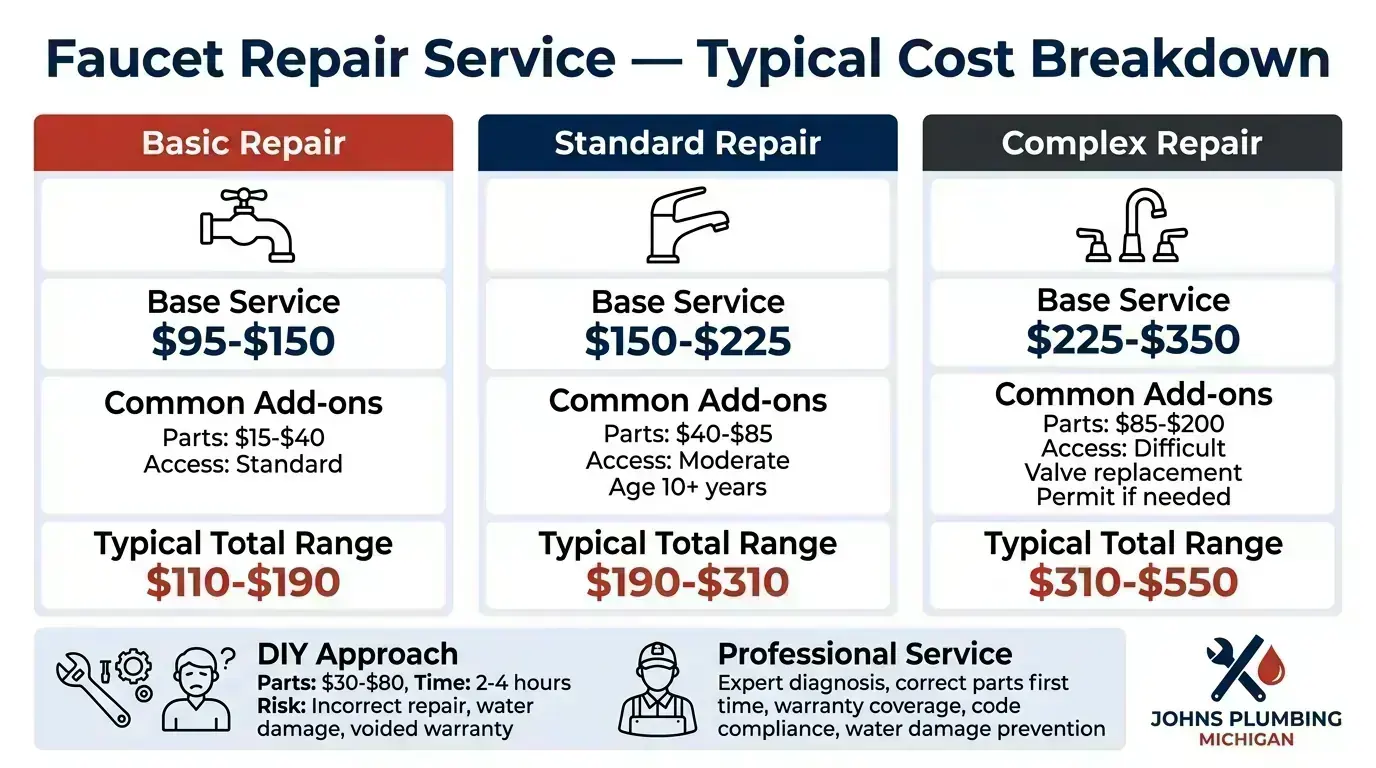
Faucet repair fixes drips (worn washers or cartridge seals), low flow (aerator mineral buildup from hard water or cartridge obstruction), and handle operation problems (cartridge wear or O-ring deterioration). Faucet replacement becomes cost-effective when repairs approach 50% of new fixture cost, when finish deteriorates from hard water exposure, or when homeowners want upgraded features like pull-down spray heads or touchless activation.
East Lansing's hard water deposits on faucet aerators monthly. Cleaning or replacing aerators restores flow without full faucet replacement.
Garbage disposal repair addresses jams (usually from fibrous materials or hard objects), motor hum without grinding (flywheel obstruction or worn mounting), and leaks (loose mounting or worn internal seals). Disposal installation requires adequate under-sink space, dishwasher drain integration, and proper electrical connection, typically hardwired or plugged into a switched outlet. Disposal sizing (1/3 to 1 HP) depends on household size and cooking habits, with 3/4 HP units recommended for families using the disposal daily.
Sink, bathtub, and shower fixture installation addresses style updates, leak repairs, and accessibility improvements. Sump pump installation prevents basement flooding during East Lansing's spring thaw and heavy rain events when high water tables push water through foundation cracks and floor drains. Sump pump repair addresses float switch failure (pump doesn't activate when water rises), check valve failure (water flows back into pit after pump stops), or motor failure (no operation despite power).
Sump pumps require annual testing and 5-7 year replacement intervals. Battery backup systems prevent flood damage during power outages common in Michigan storms.
Gas Line Services in East Lansing
Gas line installation connects natural gas appliances (water heaters, dryers, ranges, fireplaces) to the home's gas supply, requiring proper pipe sizing based on appliance BTU demand and distance from the meter. East Lansing homes on municipal natural gas require licensed installation with permit and pressure testing before the utility activates service. Gas line installation requires black iron pipe or CSST (corrugated stainless steel tubing), never copper or PEX which corrode or melt under gas exposure.
Gas leak detection uses electronic sniffers and soap solution testing to identify leaks at connections, valves, and pipe joints. Gas leaks create a distinctive sulfur or rotten egg odor (added odorant.
Natural gas is odorless), hissing sounds near pipes or appliances, and dead vegetation near underground gas lines from soil oxygen displacement. Physical symptoms of gas exposure include headaches, dizziness, nausea, and difficulty breathing, evacuate immediately and call 911, then contact the gas utility and a licensed plumber once safe.
Gas line pressure testing verifies system integrity after installation or repair, using air or inert gas to pressurize lines and monitoring for pressure drop indicating leaks. Michigan code requires pressure testing before burying lines or closing walls, with specific hold times and pressure thresholds based on system size.
Gas line replacement addresses corrosion in older black iron pipes, outdated pipe materials, or capacity upgrades for additional appliances. Gas shut-off valve installation provides emergency shutoff capability at individual appliances and at the meter, critical for East Lansing homeowners with multiple gas appliances.
Never attempt DIY gas line work. Michigan law requires licensed plumbers with gas endorsements for all gas piping installation and repair. Gas work requires city permits in East Lansing, with inspections before covering pipes and before utility connection. Call immediately if you smell gas, hear hissing near gas lines, or experience unexplained physical symptoms indoors.
Call for routine gas line service when installing new gas appliances, when upgrading to higher-BTU equipment, or when seeing corrosion on exposed gas pipes. East Lansing's soil moisture fluctuations and freeze-thaw cycles stress underground gas lines. Schedule inspection if your home has galvanized gas lines over 40 years old.
For gas line installation, leak detection, or pressure testing in East Lansing, call (313) 736-9553, licensed, insured, and experienced with Ingham County gas line regulations and permit requirements.