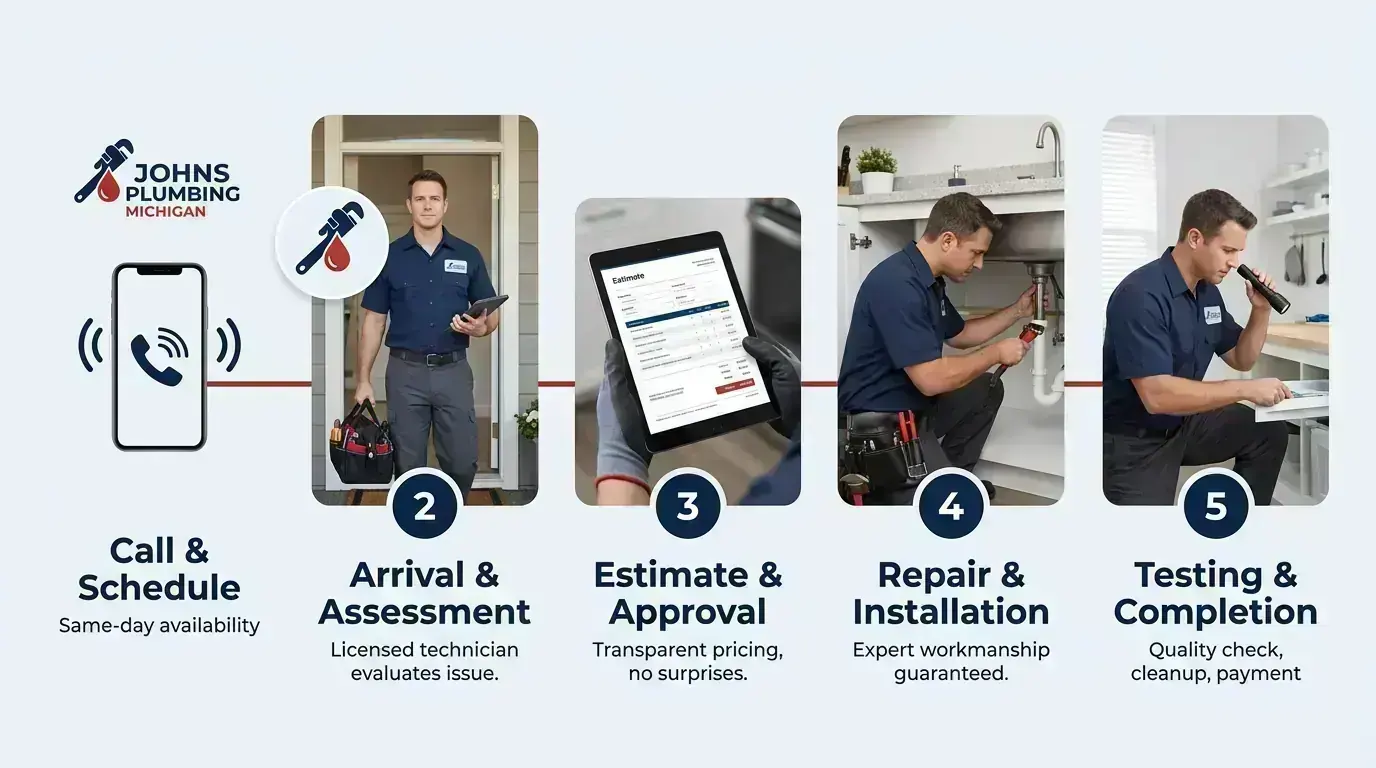
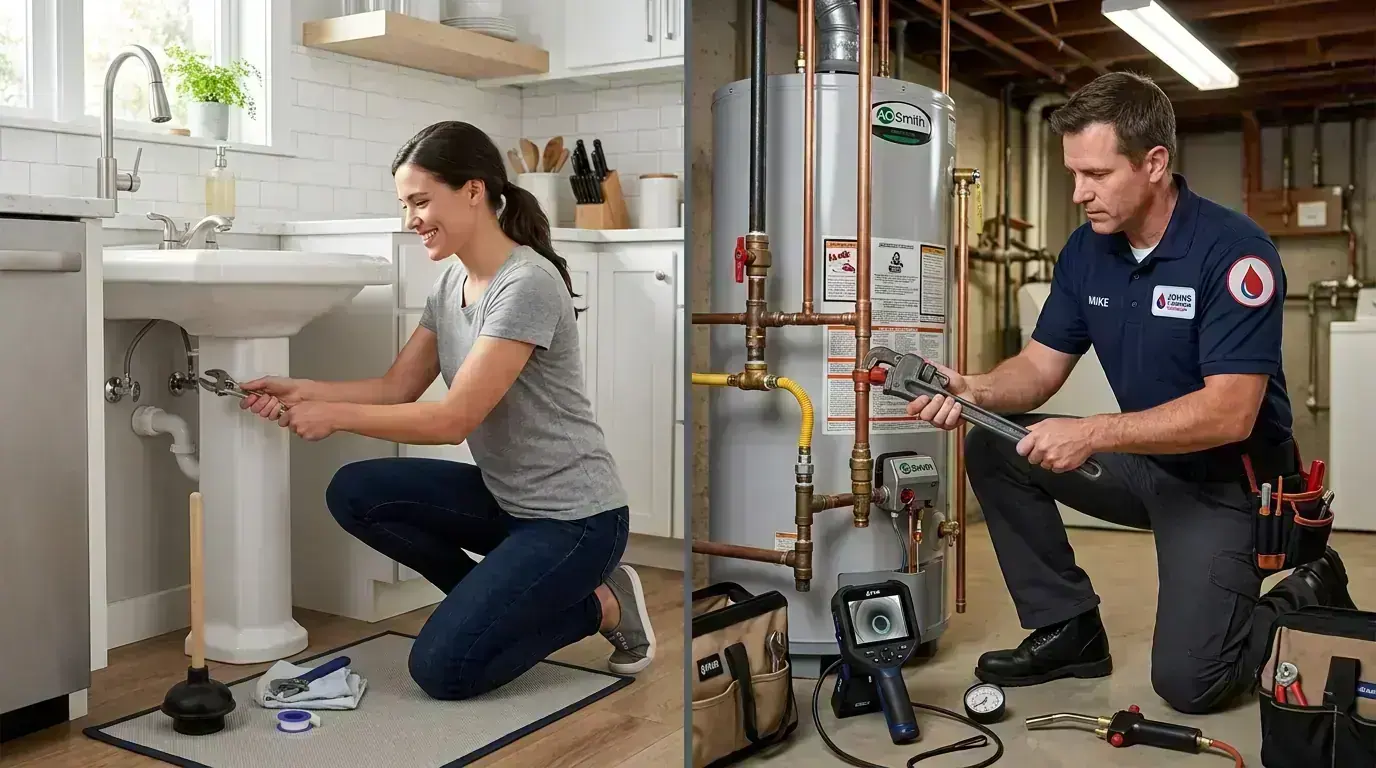
Johns Plumbing Michigan provides comprehensive residential plumbing services throughout Hartford, covering emergency repairs, system installations, and preventive maintenance. Our licensed technicians handle drain and sewer line services, water heater repair and replacement, leak detection and pipe repair, fixture installation, and gas line work. Below is detailed coverage of each service category, methods used, and when Hartford homeowners typically need each service.
Drain Cleaning & Clog Removal Services in Hartford
Drain cleaning addresses blockages in kitchen sinks, bathroom fixtures, showers, toilets, and main sewer lines. Kitchen drains typically clog from grease accumulation and food debris.
Hot water and dish soap mask the problem temporarily, but grease solidifies further down the line, creating blockages that require professional removal. Bathroom sinks collect hair, soap scum, and toothpaste residue that cable snaking removes effectively for accessible traps.
Shower and tub drains accumulate hair and soap buildup at the P-trap and further down the vertical stack. Cable snaking works for accessible clogs; hydro jetting clears the entire line when buildup extends beyond mechanical cable reach. Toilet clogs from excessive paper, foreign objects, or main line backpressure usually respond to closet augers for simple blockages, but if multiple toilets gurgle or drain slowly simultaneously, the issue sits in the main sewer line, not individual fixtures.
Main sewer line cleaning requires video camera inspection to locate blockages before treatment. Tree roots infiltrate clay or cast iron sewer lines through joints and cracks, creating catching points for waste.
Hydro jetting uses high-pressure water streams to cut roots and flush debris, restoring full flow capacity. Cable snaking punches through blockages but leaves residue; hydro jetting removes scale and buildup for longer-lasting results.
Floor drains in basements clog from sediment, lint, and debris washing into the system. These connect to the main house drain or dedicated floor drain lines, a clogged floor drain during spring thaw or heavy rain can flood basements when water has nowhere to go. Clearing floor drains prevents water backup during washing machine discharge or sump pump overflow scenarios.
When multiple drains slow simultaneously, or when water backs up into lower fixtures when upper fixtures drain, the blockage sits in the main line rather than individual branch lines. Single slow drains indicate localized clogs; system-wide symptoms point to shared pipe problems requiring main line access and clearing.
Water Heater Repair & Replacement Services
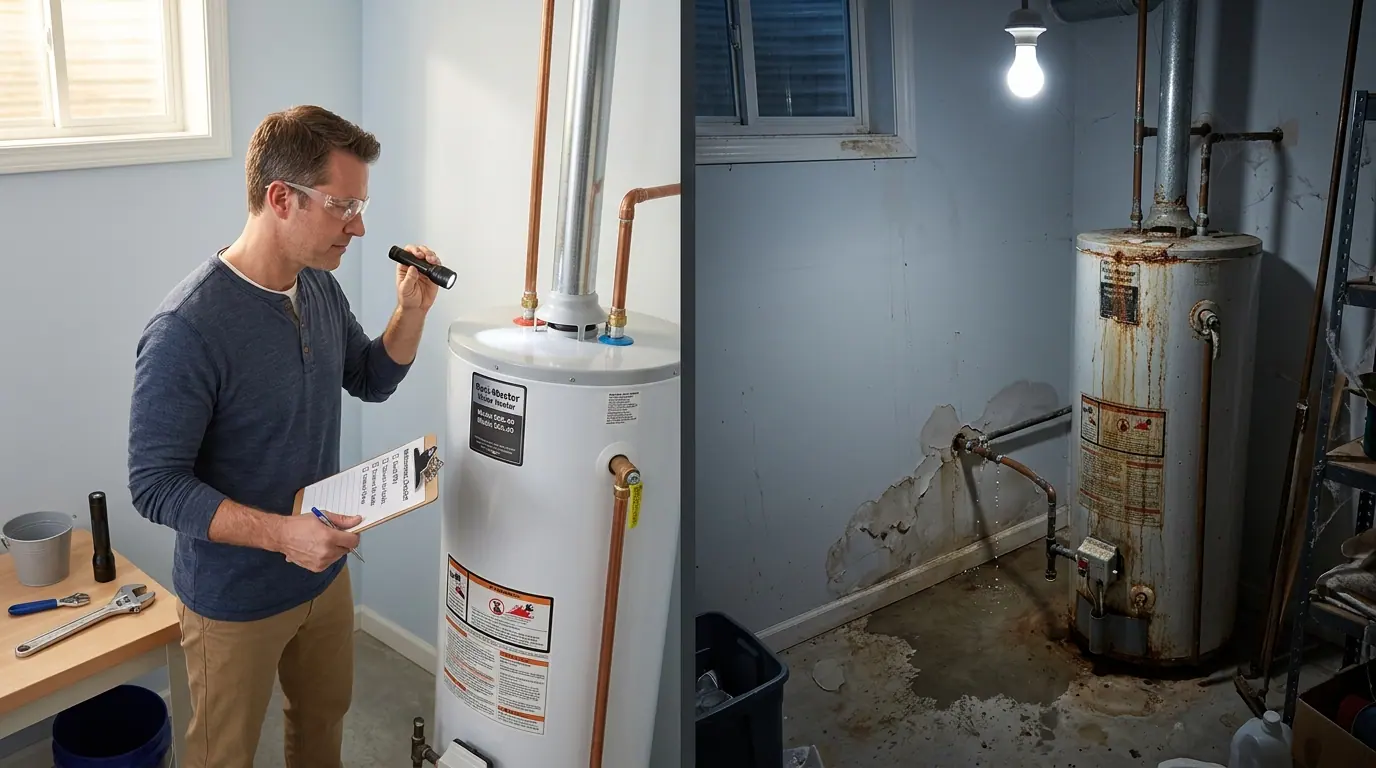
Water heater service decisions depend on unit age, failure mode, and repair cost relative to replacement value. Tank water heaters last 8-12 years in typical Hartford homes.
Units approaching or exceeding this range warrant replacement consideration rather than repair, especially when multiple components fail. Pilot light issues, thermostat failures, and minor element replacements make economic sense on units under 6 years old with otherwise sound tanks.
Tankless water heaters provide endless hot water by heating on demand rather than storing heated water. Installation requires adequate gas line capacity or electrical service upgrades, proper venting, and sometimes water pressure adjustments. Tankless units work well for Hartford homes with consistent demand patterns but cost more upfront than tank replacements.
Sizing depends on simultaneous fixture use. Two showers plus dishwasher requires higher flow capacity than single-fixture homes.
No hot water scenarios split between simple fixes and full replacements. Gas water heaters with pilot light problems often need thermocouples ($20 part, 30-minute repair). Electric water heaters with failed heating elements need element replacement if the tank remains sound.
When tanks leak from corrosion, replacement is the only option. Leaking tanks cannot be repaired, and failure accelerates once corrosion breaches the steel.
Anode rod replacement extends tank life by sacrificing the rod to corrosion instead of the tank itself. Rods last 3-5 years depending on water chemistry.
Replacing rods before complete deterioration adds years to tank lifespan. When rods fully corrode, the tank becomes the corrosion target, leading to leaks within 1-2 years.
Water heater noise (banging, popping, or rumbling) comes from sediment accumulation at the tank bottom. Heating trapped water beneath sediment creates steam bubbles that collapse loudly. Flushing removes sediment before noise starts; once noise begins, flushing helps but may not eliminate it completely if scale has hardened.
Michigan's hard water accelerates sediment buildup and shortens tank life compared to soft water regions. Annual flushing counters this. Homes with well water or very hard municipal supply benefit from water softeners to reduce mineral load on heaters and fixtures.
For water heater service (repair, replacement, or maintenance) call (313) 736-9553 for assessment and recommendations based on your unit's age and condition.
Leak Detection & Pipe Repair Services
Leak detection combines visual inspection, acoustic methods, and thermal imaging to locate water escaping from supply or drain lines. Visible leaks under sinks or at fixture connections get immediate repair.
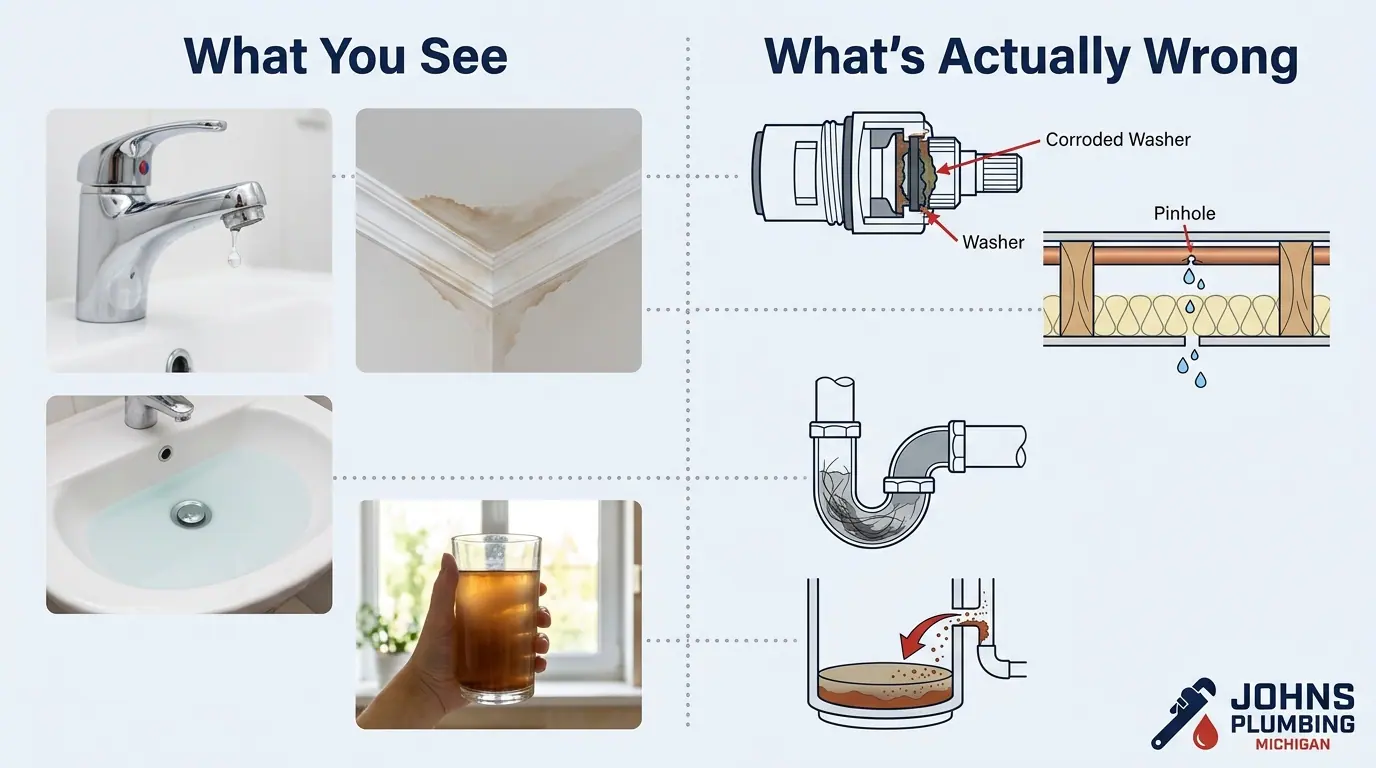
Tightening connections or replacing washers stops most accessible drips. Hidden leaks behind walls, under slabs, or in crawlspaces require detection equipment before repair.
Acoustic leak detection uses sensitive listening devices to hear water escaping pressurized supply lines. Underground leaks create distinct sounds as water forces through pipe cracks into surrounding soil. Thermal imaging cameras show temperature differentials where hot water leaks warm surrounding materials or cold water leaks cool them, particularly effective for slab leaks beneath concrete floors where visual access is impossible.
Slab leaks occur when copper supply lines beneath concrete foundations develop pinhole leaks from corrosion or pressure stress. Symptoms include warm floor spots, unexplained water bills, or foundation cracks from soil erosion.
Repairing slab leaks requires accessing the pipe through the slab or rerouting supply lines above ground. Decision depends on leak location and whether other pipes show corrosion signs indicating multiple future failures.
Wall and ceiling leaks show as water stains, bubbling paint, or mold growth. Supply line leaks behind walls require opening drywall for access.
Repair involves cutting out the damaged section and installing couplings or new pipe segments. Drain line leaks behind walls come from corroded pipe or failed joints and may not show symptoms until significant water accumulates.
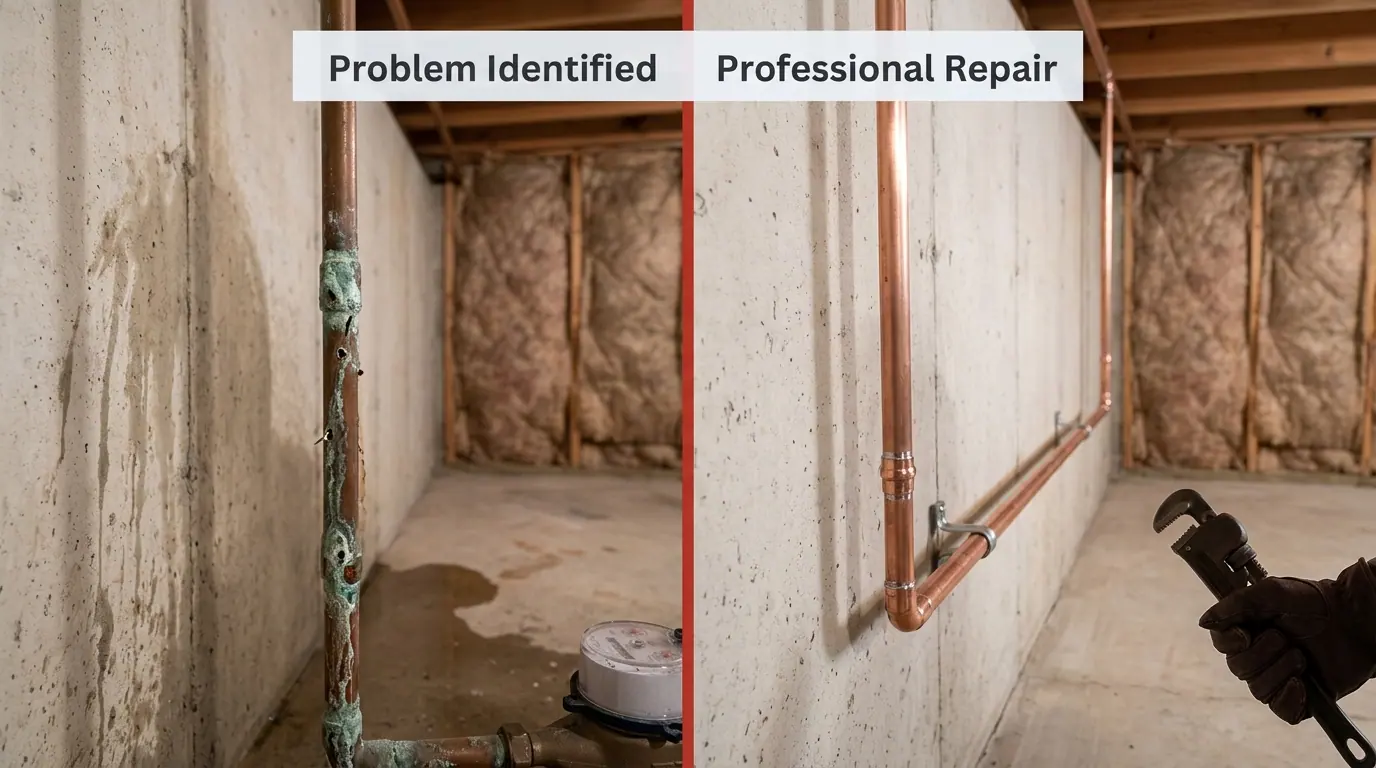
Pipe repair methods include epoxy lining for accessible pipes with pinhole leaks, section replacement for localized failures, and full re-piping when multiple leaks indicate system-wide corrosion. Galvanized pipes corrode from inside out, if one section fails, others likely follow within months. Copper pipes with multiple pinhole leaks signal water chemistry problems or installation defects affecting the whole system.
Frozen pipe repair addresses burst pipes from ice expansion. Michigan winters freeze exposed pipes in unheated crawlspaces, exterior walls, and uninsulated basements. Burst pipes spray water once thawed.
Emergency shutoff and repair prevent flooding. Prevention involves insulation, heat tape, and allowing faucets to drip during extreme cold.
Main water line repair connects your home to the municipal supply at the street. Leaks in this section show as soggy yard spots, water pooling near the curb, or pressure drops throughout the house.
Repair requires excavation unless trenchless methods apply. Decision depends on pipe material, break location, and soil conditions.
Sewer Line Services in Hartford
Sewer camera inspection reveals blockage causes, pipe condition, and failure locations without excavation. A flexible camera on a push cable travels through the sewer line, transmitting video that shows root intrusion, pipe belly sags, cracks, offsets at joints, or complete collapses. Inspection identifies problem scope before recommending cleaning, repair, or replacement.
Sewer line cleaning removes tree roots, grease buildup, and debris using cable augers or hydro jetting. Tree roots seek moisture and nutrients, infiltrating sewer lines through microscopic cracks or joint gaps.
Once inside, roots expand, catching waste and toilet paper, creating blockages. Cutting roots with rotating blades clears flow temporarily; hydro jetting scours pipe walls and flushes root fragments, providing longer-lasting results.
Traditional sewer line repair requires excavating over the damaged section, cutting out the failed pipe, and installing new pipe with proper bedding and backfill. Excavation costs include digging, shoring if deep, breaking through driveways or landscaping, then restoration after pipe installation. This method remains most cost-effective for single localized failures in accessible areas.
Trenchless sewer line repair includes pipe bursting and pipe lining. Pipe bursting pulls a new pipe through the old one while simultaneously fracturing the existing pipe outward, minimal excavation at entry and exit points, no full-length trench.
Pipe lining (cured-in-place pipe) installs an epoxy-saturated liner inside the existing pipe, inflates it, and cures the epoxy, creating a new pipe within the old one. Trenchless methods cost more per foot but avoid landscape destruction and extensive restoration.
When multiple sewer line problems appear (offsets, cracks, root intrusion at several points) full replacement often makes more economic sense than patching individual failures. Clay pipe common in older Hartford neighborhoods becomes brittle over decades, cracking from settling or root pressure. Replacing clay with PVC eliminates future root problems since PVC joints seal completely.
Main sewer line connection to the municipal system at the street property line defines responsibility. Homeowners own the line from house to property line, municipality owns from property line to main. Blockages or breaks on the homeowner's side require private repair; issues on the city side need municipal crew response.
Fixture Installation & Repair Services
Toilet repair addresses running toilets, weak flushes, constant refilling, and leaks at the base. Running toilets waste water when the flapper fails to seal or the fill valve doesn't shut off. Flapper replacement costs under $20 and takes 15 minutes. Most homeowners can handle this.
Fill valve or flush valve failures need component replacement if the toilet is otherwise sound. Leaks at the toilet base indicate wax ring failure, the seal between toilet and drain flange. Replacing wax rings requires removing and resetting the toilet with proper flange bolts.
Toilet replacement makes sense when porcelain cracks, when older 3.5-gallon-per-flush models waste water compared to modern 1.28-GPF high-efficiency units, or when repair costs approach 50% of replacement cost. Modern toilets flush more effectively while using less water. Upgrading saves on utility bills.
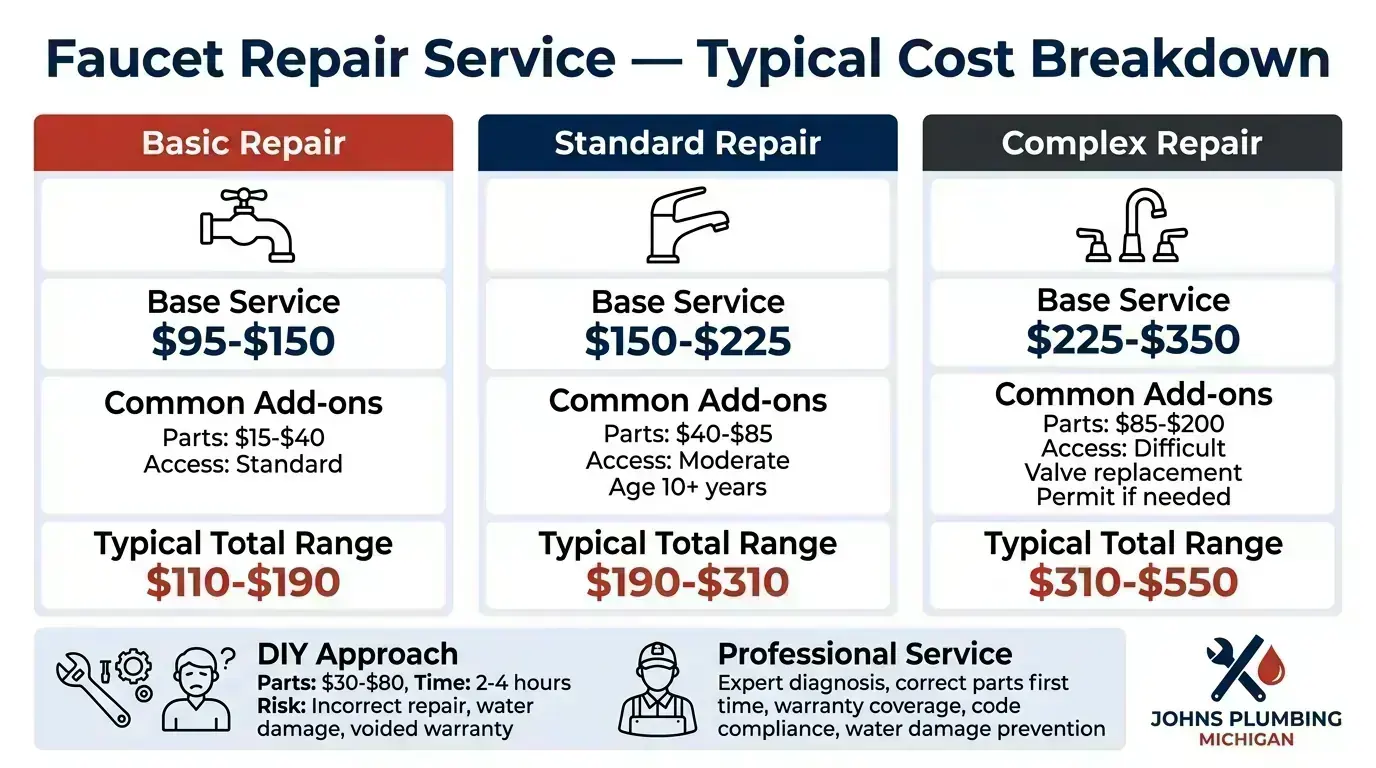
Faucet repair versus replacement depends on age and failure mode. Dripping faucets usually need cartridge, washer, or O-ring replacement.
Parts cost $10-$30, labor adds $80-$120. Faucets over 10 years old with multiple leak points, corrosion, or broken handles often cost more to repair than replace with new units that include warranties.
Garbage disposal repair addresses jams, leaks, and motor failures. Jams from silverware or hard objects often clear by turning the disposal manually with an Allen wrench inserted in the bottom reset socket. Leaks at mounting flanges or drain connections need gasket replacement or re-tightening.
Motor failure or broken flywheel components require disposal replacement. Disposals last 8-12 years under normal use.
Sink, bathtub, and shower fixture installation includes setting basins, connecting supply and drain lines, and ensuring proper seals. Undermount sinks require solid countertop support and careful sealing to prevent water intrusion.
Drop-in sinks use rim clips and plumber's putty for watertight installation. Shower valve replacement requires wall access, either through the back side or by cutting into the shower wall itself, then patching tile or surround after valve installation.
Sump pump installation and repair prevents basement flooding in areas with high water tables or poor drainage. Sump pumps sit in basement floor pits, activating when water reaches float switch level. Primary pumps handle normal inflow; battery backup pumps operate during power outages.
Pump failure during spring thaw or heavy rain leads to flooded basements. Annual testing before wet season confirms operation.
Gas Line Services
Gas line installation for appliances (water heaters, dryers, ranges, fireplaces) requires proper sizing, pressure testing, and code-compliant connections. Undersized gas lines deliver insufficient fuel, causing poor appliance performance.
Gas line sizing calculations account for total BTU demand, pipe length, and number of elbows. Black iron pipe remains standard for permanent installations; flexible CSST (corrugated stainless steel tubing) simplifies routing in finished spaces.
Gas leak detection uses electronic sniffers, soap bubble testing, and pressure decay testing to locate escaping gas. Natural gas smells like rotten eggs from added mercaptan odorant. If you smell gas, evacuate immediately, call 911 from outside, then contact (313) 736-9553 after emergency crews secure the scene.
Gas leaks at appliance connections often need tightening or new flare fittings. Leaks in pipe threads require disassembly, fresh thread sealant, and reassembly.
Gas line pressure testing confirms system integrity before activating new installations or after repairs. Technicians pressurize the line above operating pressure, isolate it, and monitor for pressure drop over 15-30 minutes. Pressure loss indicates leaks requiring location and repair before gas service activation.
Gas line replacement addresses corroded pipes, undersized lines for new appliances, or code violations from previous unlicensed work. Replacing gas lines requires permits, pressure testing, and inspection before utility companies restore service.
Licensed plumbers understand gas code requirements. Amateur gas work creates explosion and carbon monoxide hazards.
Gas shut-off valves at each appliance allow isolating individual units for service without shutting off the whole house. Main shut-off valves at the meter control gas supply to the entire home.
Homeowners should know this location for emergency shutoff. During earthquakes or house fires, shutting the main valve prevents gas-fed fires.
Michigan requires licensed plumbers for all gas line work. Permits verify work meets code. Inspections confirm safe installation before utilities restore service. Never attempt DIY gas line modifications or repairs. The explosion and asphyxiation risks far exceed any cost savings from avoiding professional service.