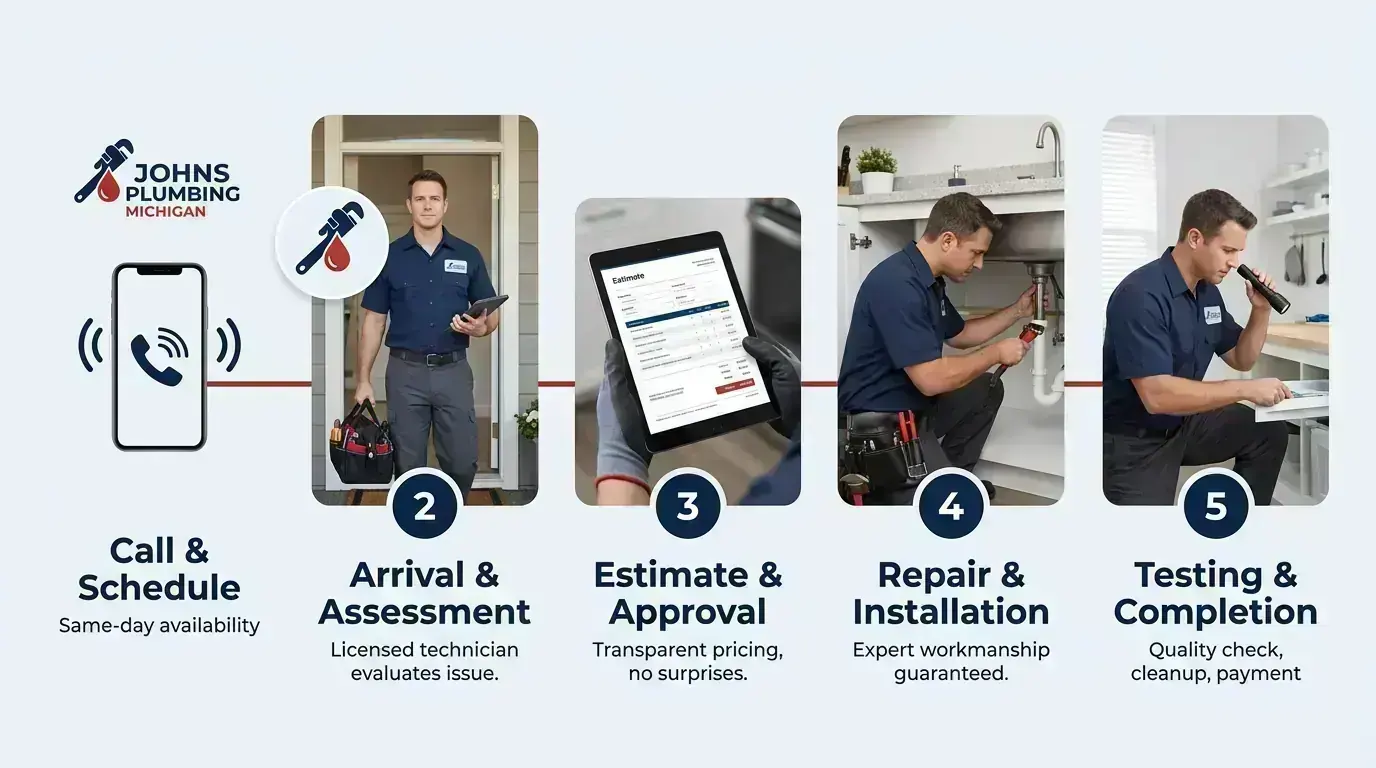
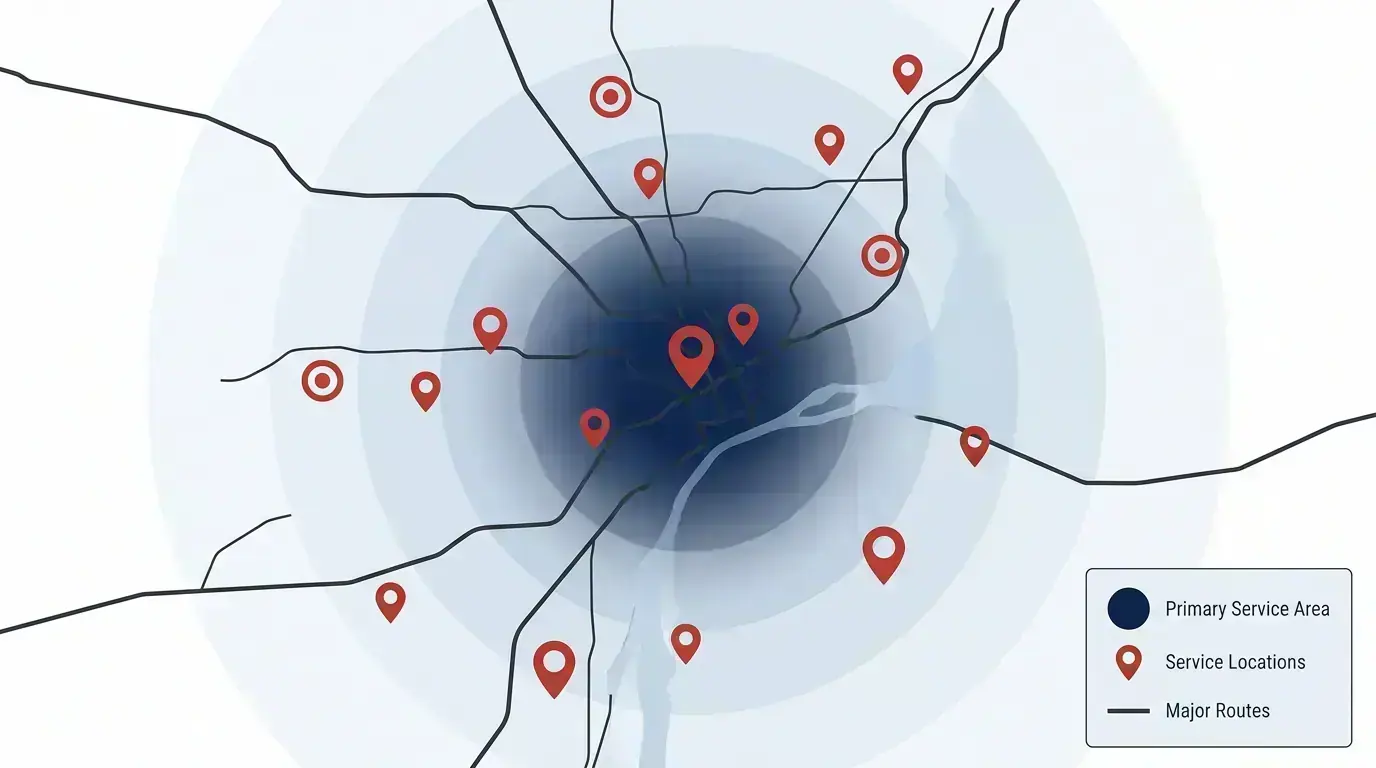
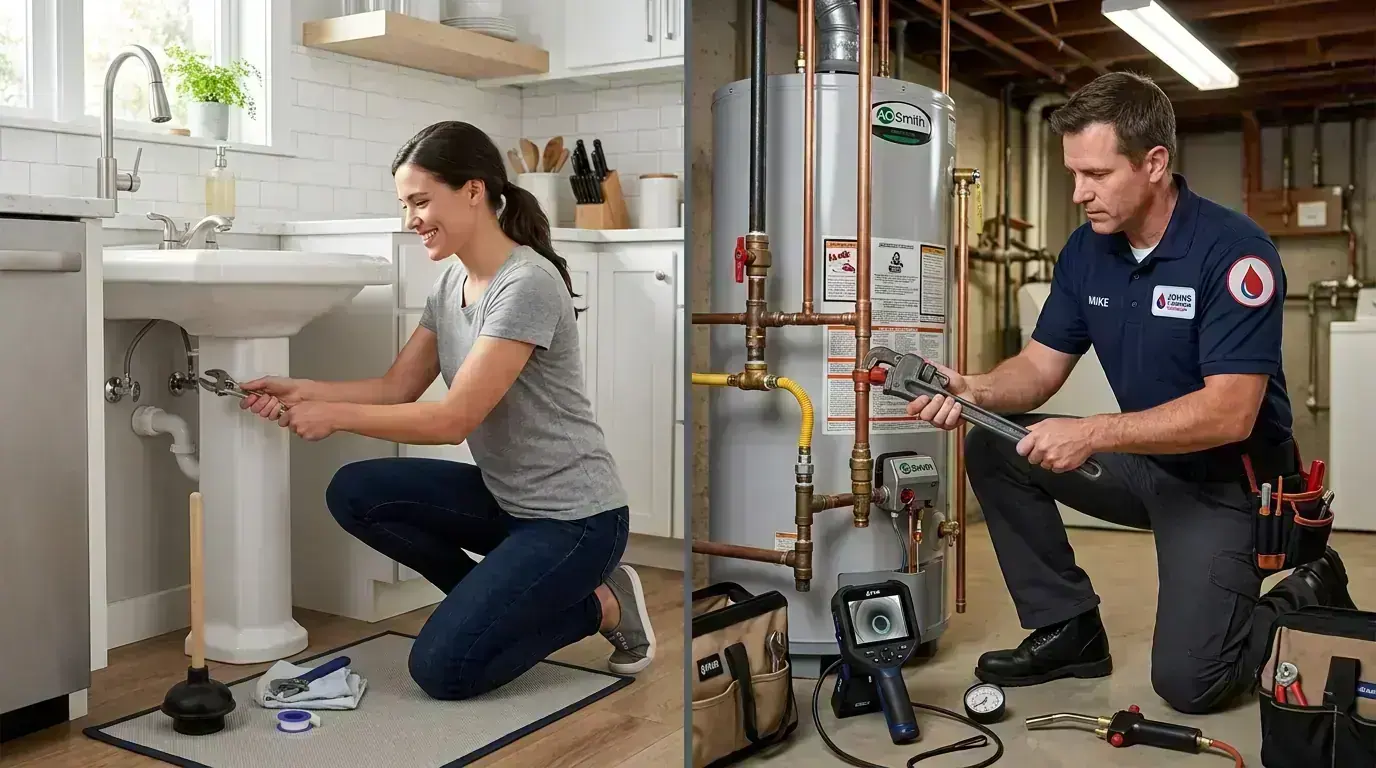
Johns Plumbing Michigan provides comprehensive residential plumbing services throughout Jackson, covering everything from routine fixture repairs to complex sewer line replacements. This section details the full scope of services available to Jackson homeowners, including technical methods, service variations, and when each service is appropriate for your home's plumbing system.
Drain Cleaning & Clog Removal Services
Drain cleaning addresses clogs in kitchen sinks, bathroom sinks, tubs, showers, toilets, floor drains, and main sewer lines. When a single drain slows, the blockage typically sits in that fixture's trap or branch line, but when multiple drains back up simultaneously, the clog has moved to the main line where all branch lines converge.
Cable snaking uses a flexible steel cable with a cutting head to bore through clogs in branch lines and fixture traps. The rotating cable breaks apart hair, soap buildup, and organic matter, restoring flow in most single-fixture clogs within 30-45 minutes. Cable snaking works well for soft blockages within 50 feet of the access point but struggles with hardened scale, grease buildup, or root intrusions that require more aggressive clearing.
Hydro jetting employs high-pressure water streams (3,000-4,000 PSI) to scour pipe walls clean, removing not just the immediate blockage but also the buildup clinging to pipe interiors. Jackson homes with recurring kitchen drain clogs benefit from hydro jetting because it eliminates grease deposits that cable snaking pushes aside but doesn't remove. Main sewer line cleaning almost always requires hydro jetting when tree roots have infiltrated the line, the water pressure cuts through roots and flushes debris completely from the system.
Video camera inspection identifies the exact location and nature of blockages before clearing work begins. In older Jackson neighborhoods where clay sewer lines deteriorate over decades, camera inspection reveals whether roots have penetrated pipe joints, whether the line has developed bellies where waste collects, or whether sections need replacement rather than just cleaning. The camera footage shows what caused the clog and whether clearing alone will solve the problem or if pipe repair is necessary.
When cleaning solves the immediate problem but recurring clogs return within weeks, the underlying pipe may have collapsed sections, severe scale buildup, or root damage requiring repair. Jackson's aging infrastructure often means drain problems connect to deteriorating sewer lines rather than simple fixture clogs.
Water Heater Repair & Replacement Services
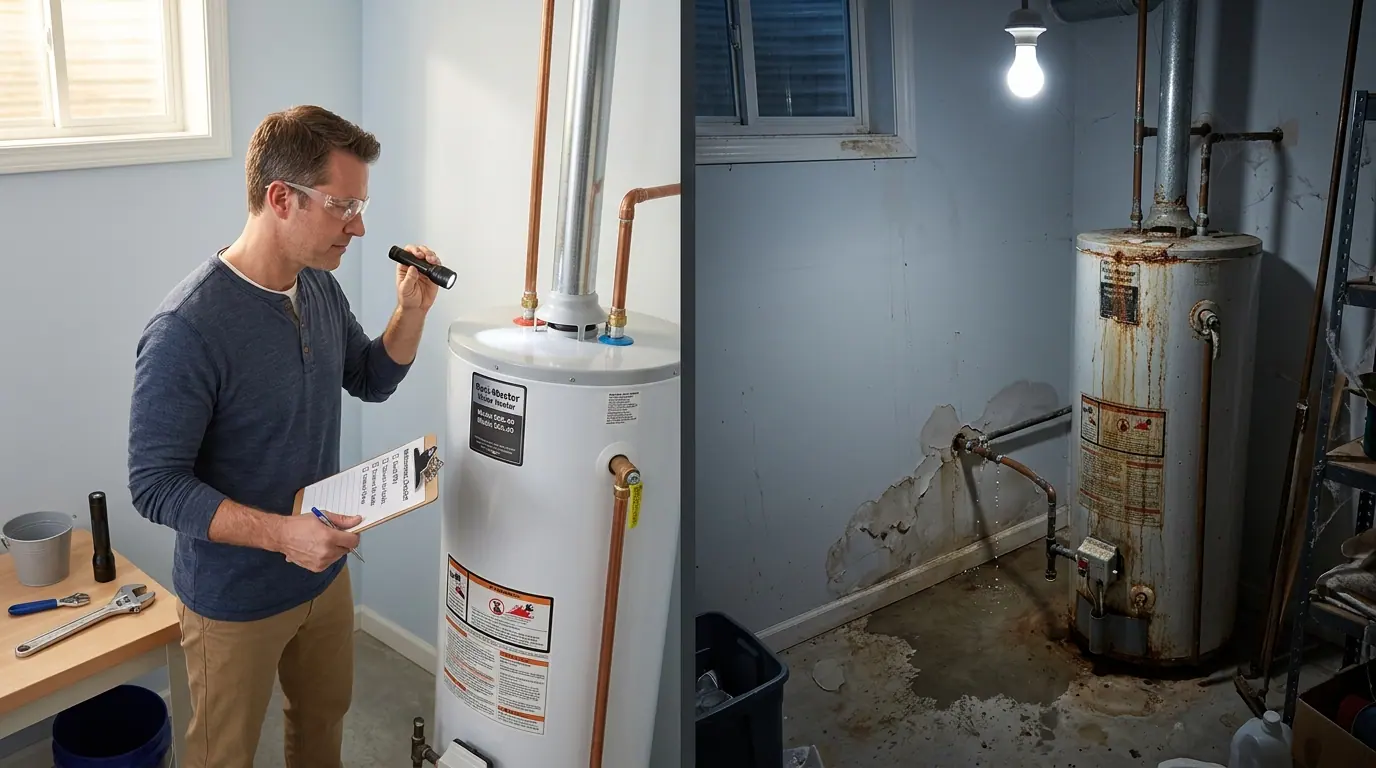
Water heater service decisions hinge on the unit's age, the nature of the problem, and whether repair extends the unit's useful life or just delays inevitable replacement. Tank water heaters typically last 8-12 years in Jackson homes; units approaching or exceeding this range usually warrant replacement when significant problems develop because multiple components (heating elements, thermostats, anode rods) fail in close succession as the tank ages.
Pilot light and ignition issues affect gas water heaters when the thermocouple fails, the pilot orifice clogs, or the ignition system malfunctions. These repairs restore hot water quickly when the tank itself remains sound, but if the unit is 10+ years old and showing other wear signs (rusty water, tank corrosion, sediment noise), replacement becomes the more cost-effective choice.
Thermostat problems cause water temperature fluctuations, either insufficient hot water or scalding temperatures indicating a stuck thermostat. Thermostat replacement is straightforward on units under eight years old, but older tanks with thermostat failures often have sediment buildup restricting heat transfer, meaning the thermostat replacement may not fully restore performance.
Anode rod replacement extends tank life by 3-5 years when performed before the rod fully depletes. The anode rod attracts corrosive elements that would otherwise attack the steel tank lining.
Jackson's hard water accelerates anode rod depletion, making replacement every 3-4 years critical for tank longevity. Once the rod depletes completely and the tank lining begins corroding, rust-colored water and leaks develop, at that stage, replacement is necessary because internal corrosion cannot be reversed.
Tankless water heater installation provides unlimited hot water capacity and eliminates standby heat loss that makes tank heaters less efficient. Tankless units require adequate gas line sizing (often necessitating gas line upgrades) and proper venting, but they last 15-20 years with minimal maintenance beyond annual descaling. Jackson homes with hard water need tankless units flushed annually to prevent mineral buildup from restricting flow and reducing efficiency.
Sizing a water heater for Jackson homes depends on household size and peak demand. A family of four typically needs a 50-gallon tank or a tankless unit rated for 7-8 gallons per minute. Undersized units run out of hot water during morning showers; oversized tanks waste energy heating water that sits unused.
Tank versus tankless choice often comes down to upfront cost versus long-term savings. Tankless installation costs more initially due to venting and gas line requirements, but lower operating costs and longer lifespan offset the difference over time. Homes with tight installation spaces or limited venting options may find tank replacement simpler.
For water heater questions or replacement consultation in Jackson, call (313) 736-9553 to discuss your home's specific requirements and capacity needs.
Leak Detection & Pipe Repair Services
Leak detection identifies hidden water loss before visible damage appears. Visual inspection locates obvious leaks at fixture connections, supply lines, and water heater tanks, but many leaks hide behind walls, under slabs, or underground where only indirect signs reveal their presence, unexplained water bill increases, wet spots on walls or ceilings, foundation cracks, or the sound of running water when all fixtures are off.
Acoustic detection uses sensitive listening equipment to trace the sound of water escaping under pressure. Technicians follow the sound to pinpoint the leak's exact location, minimizing exploratory demolition. This method works well for pressurized supply lines but doesn't locate drain leaks where water flows without pressure.
Thermal imaging detects temperature differences where escaping water cools surrounding materials. Hot water leaks show as warm spots on floors or walls; cold water leaks create cooler zones. Thermal imaging narrows the search area before any cutting or digging begins, reducing repair costs by limiting access damage.
Slab leak detection addresses leaks in pipes running beneath concrete floors, common in Jackson homes built on slab foundations. Slab leaks often result from soil shifting during freeze-thaw cycles, creating stress points where pipes crack or joints separate.
Left unaddressed, slab leaks undermine foundations, cause floor damage, and waste thousands of gallons monthly. Repair options include accessing the pipe through the slab, rerouting supply lines through walls or ceilings to bypass the damaged section, or re-piping if multiple slab leaks indicate widespread pipe deterioration.
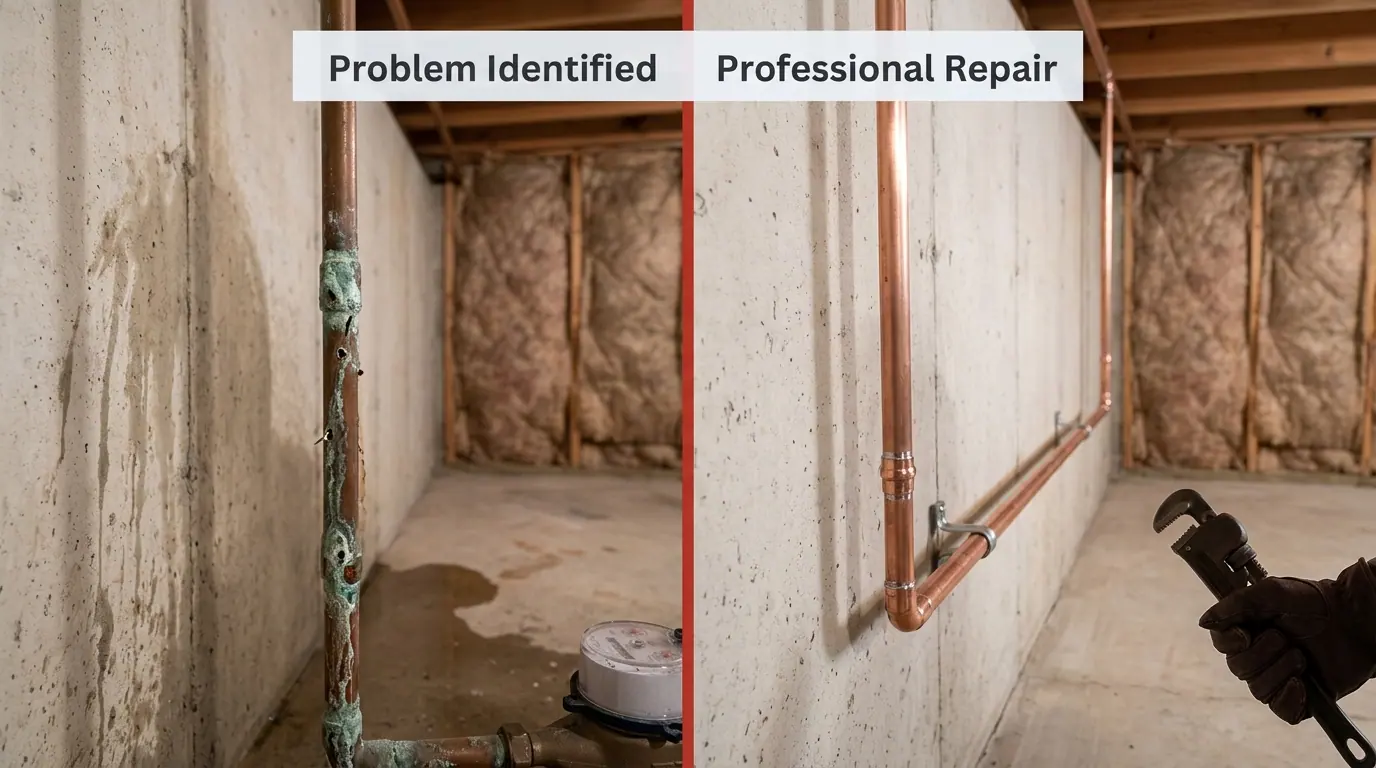
Pipe repair methods range from simple fixes to extensive replacements depending on pipe condition, material, and accessibility. Patching works for small pinhole leaks in accessible locations when the surrounding pipe remains sound. Epoxy lining coats pipe interiors to seal small leaks and prevent future corrosion, extending the life of older pipes without full replacement, though it requires the pipe to be structurally intact for the lining to bond properly.
Section replacement cuts out the damaged pipe segment and installs new piping. This approach makes sense when leaks concentrate in one area but the rest of the system remains functional. Re-piping replaces entire supply lines when widespread corrosion, multiple leaks, or obsolete materials (galvanized steel, polybutylene) make piecemeal repairs impractical.
Jackson homes built before 1980 often contain galvanized pipes that corrode from the inside out, causing low water pressure and discolored water as rust flakes break loose. At this stage, partial repairs just delay inevitable system failure.
Frozen pipe repair addresses burst pipes from Jackson's winter cold snaps. When temperatures drop below 20°F for extended periods, pipes in uninsulated basements, crawl spaces, and exterior walls freeze. As ice expands, it splits the pipe, and when thawing begins, water floods the damaged area.
Emergency frozen pipe repair involves shutting off water, thawing the line carefully to avoid further damage, cutting out the burst section, and installing replacement piping. Prevention (insulating pipes, maintaining consistent indoor temperatures, and disconnecting outdoor hoses) avoids the much higher cost of repairing burst-pipe water damage.
Main water line repair fixes leaks in the supply line running from the street to your home. Main line leaks create soggy yard patches, sudden pressure loss, or water pooling near the foundation.
Because main lines run underground, repair requires excavation or trenchless methods if soil conditions allow. Main line failures often result from soil shifting, tree root pressure, or pipe age, Jackson's older infrastructure means many main lines installed decades ago now reach the end of their service life.
Sewer Line Services
Sewer camera inspection inserts a waterproof video camera into the sewer line through a cleanout access point, recording the pipe's interior condition as it travels toward the municipal connection. The camera reveals root intrusions, pipe cracks, bellied sections where waste collects, scale buildup, and joint separations. Jackson's older neighborhoods often have clay sewer pipes installed 50-80 years ago.
These pipes develop cracks at joints where tree roots infiltrate, and the clay material itself degrades over time. Camera inspection provides documentation of damage severity, helping homeowners decide whether cleaning, spot repair, or full replacement is necessary.
Sewer line cleaning and hydro jetting removes blockages and buildup from sewer pipes. Cable snaking cuts through clogs but leaves residue clinging to pipe walls. Hydro jetting's high-pressure water streams (3,000-4,000 PSI) scour pipes clean, removing grease, scale, and root fragments.
For root-invaded lines, hydro jetting cuts roots back to the pipe wall, restoring flow. However, if roots have penetrated the line through major cracks or separated joints, cleaning provides temporary relief but the roots will return, at that point, pipe repair or lining becomes necessary.
Traditional excavation repair digs down to access the damaged sewer section, cuts out the broken pipe, and installs new PVC piping. Excavation is sometimes the only option when pipes have collapsed, when soil conditions prevent trenchless methods, or when other underground utilities crowd the area. The process disrupts landscaping, driveways, or sidewalks above the sewer line, but it allows complete pipe replacement that lasts 50+ years.
Trenchless sewer line replacement avoids most digging through two methods: pipe bursting pulls a new pipe through the old line while simultaneously breaking apart the existing pipe, and pipe lining (CIPP, cured-in-place pipe) inserts a resin-coated liner that hardens inside the existing pipe, creating a new pipe within the old one. Trenchless methods preserve landscaping and reduce labor costs compared to full excavation, though they require the existing pipe to be relatively intact, severely collapsed lines need excavation because there's no intact pathway for the new pipe.
When to pursue repair versus replacement depends on the extent and location of damage. A single cracked pipe section near the house often warrants spot repair, especially if camera inspection shows the rest of the line is sound.
Multiple damaged sections, widespread root intrusion, or a line showing significant deterioration throughout its length point toward full replacement. Jackson's older sewer lines frequently reach the stage where replacing the entire line costs less than repeatedly addressing new failures every few years.
Main sewer line connection to Jackson's municipal system must comply with city codes and often requires permit inspection. If tree roots have damaged the connection point where your line meets the city main, or if the old connection has separated, repair or replacement requires coordination with Jackson's wastewater department to ensure proper tie-in.
Fixture Installation & Repair Services
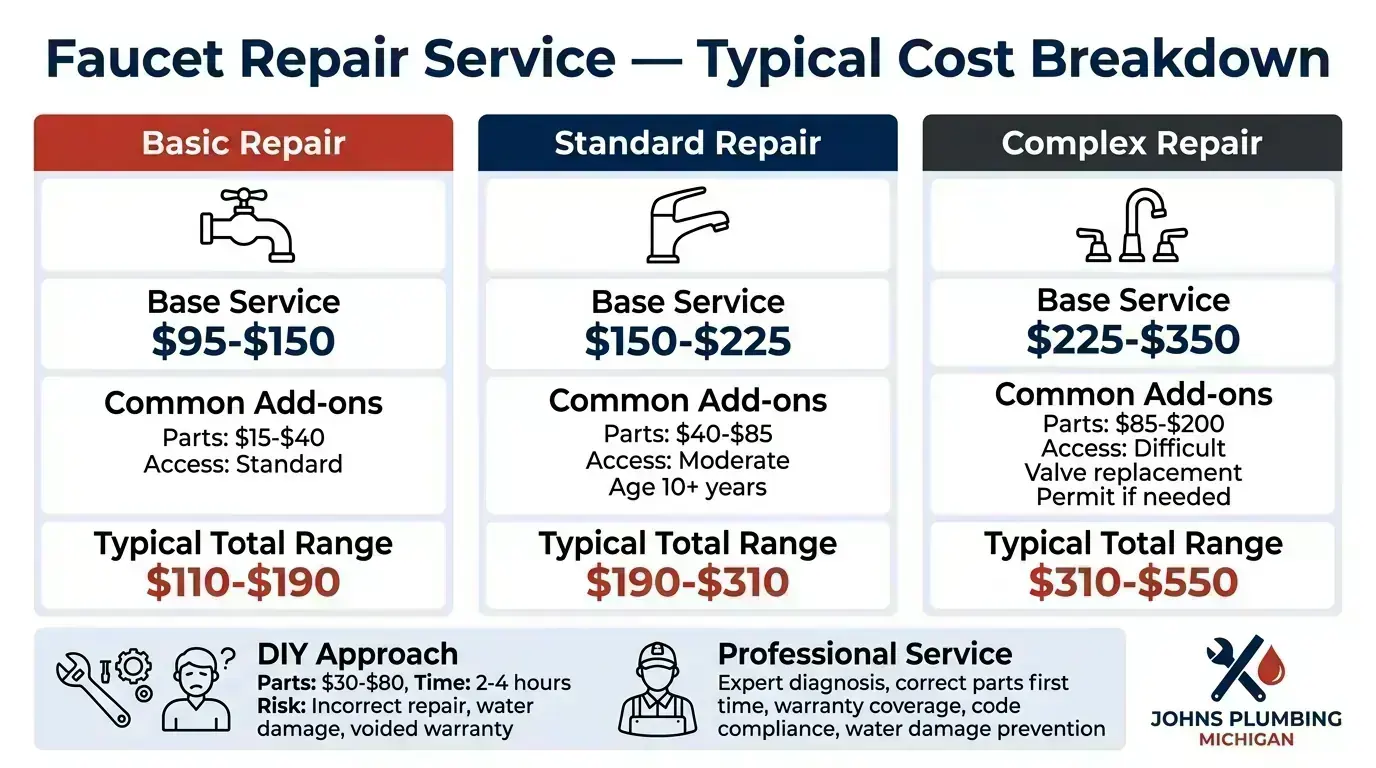
Toilet repair addresses running toilets, toilets that won't flush completely, constant refilling, or leaks at the base. A running toilet wastes hundreds of gallons daily when the flapper valve fails to seal, the fill valve doesn't shut off, or the flush valve leaks. Simple repairs (replacing the flapper, adjusting the float, or replacing the fill valve) restore function for under $100 in most cases.
Toilet replacement makes sense when the fixture itself cracks, when the porcelain develops hairline fractures that leak, or when repeated repairs cost more than a new toilet. Older toilets use 3.5-5 gallons per flush; modern low-flow toilets use 1.28-1.6 gallons, cutting water bills significantly in larger households. Toilet installation takes 1-2 hours and includes new wax ring, supply line, and mounting hardware.
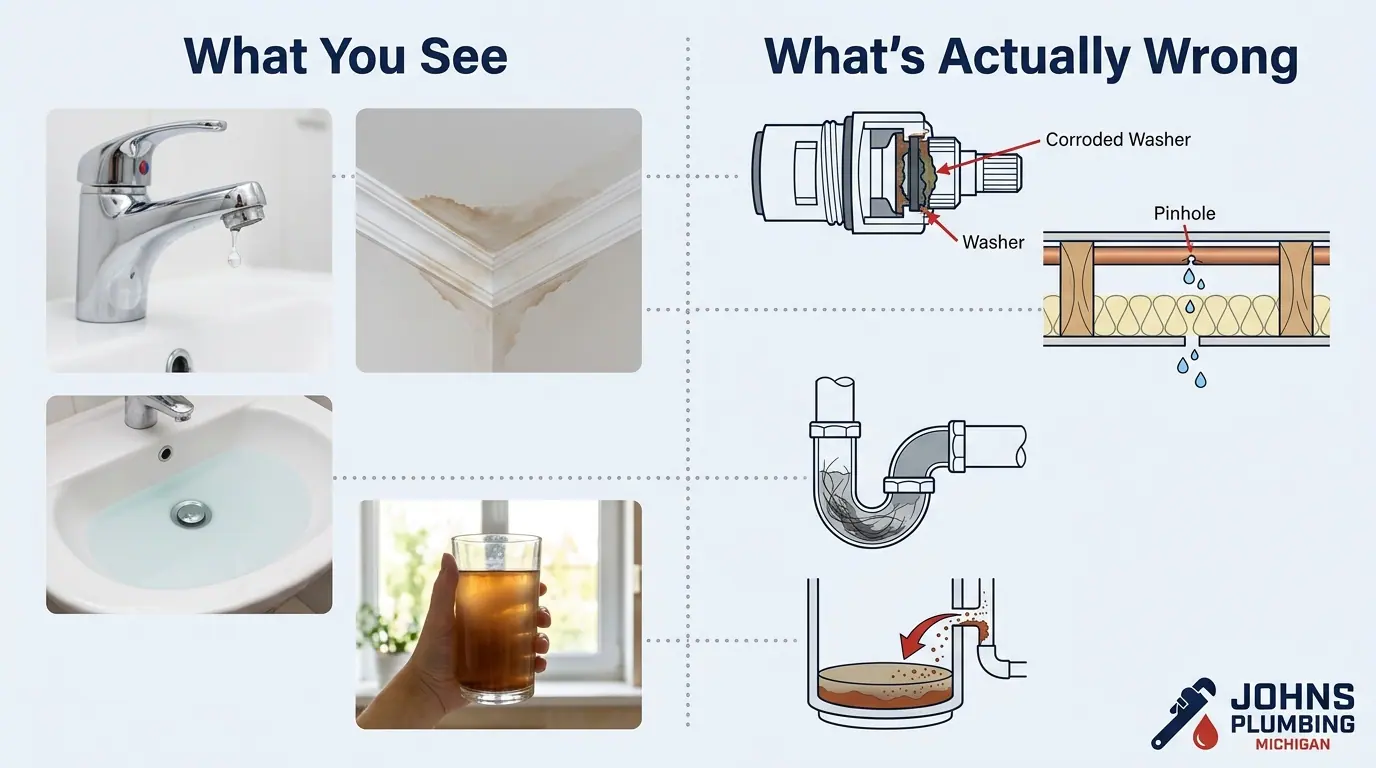
Faucet repair fixes drips, low water pressure, and handle problems. Dripping faucets usually need new O-rings, washers, or cartridges depending on faucet design.
Low pressure from a single faucet typically indicates a clogged aerator, mineral buildup from Jackson's hard water restricts flow through the aerator screen. Faucet handle stiffness or leaks around the handle stem signal worn cartridges or valve seats.
Faucet replacement becomes necessary when internal components corrode beyond repair, when style updates are desired, or when hard water damage has pitted the faucet body. Installation requires shutting off water, disconnecting supply lines, removing the old fixture, and mounting the new faucet with fresh supply connections. Kitchen faucet replacement often includes upgrading to pull-down spray models or touchless operation.
Garbage disposal repair addresses jammed disposals, disposal leaks, or units that hum but don't spin. A jammed disposal usually has something lodged in the grinding chamber, often silverware or hard objects that jam the impeller. Using the disposal's reset button and manually rotating the impeller with an Allen wrench often frees the jam.
Disposal leaks occur at the sink flange, the discharge pipe connection, or the unit body itself. Flange and connection leaks can be resealed, but body leaks require disposal replacement because the internal corrosion cannot be repaired.
Garbage disposal installation takes 1-2 hours and includes mounting the new unit to the sink drain, connecting the discharge pipe to the drain line, and wiring the electrical connection. Disposal selection depends on motor power (1/3 HP for light use, 3/4-1 HP for heavy use) and noise level, newer models include sound insulation that reduces operating noise significantly.
Sink, bathtub, and shower fixture installation ranges from simple faucet replacement to complete fixture overhauls. Sink installation involves setting the basin, connecting supply and drain lines, and sealing edges.
Bathtub and shower installations are more involved, requiring access to plumbing behind walls, ensuring proper drain slope, and waterproofing all penetrations. Fixture upgrades often coincide with bathroom remodels when homeowners replace outdated fixtures with modern designs.
Sump pump installation and repair protects Jackson basements from flooding during heavy spring rains and rapid snowmelt. Sump pumps sit in a basin below basement floor level, automatically pumping water out when the basin fills. Installation requires excavating a sump pit, setting the basin, installing the pump, and routing the discharge line away from the foundation.
Discharge lines must be protected from freezing in winter. Frozen discharge lines prevent the pump from removing water, allowing basements to flood.
Sump pump repair addresses pumps that run continuously, don't turn on, make grinding noises, or show visible rust. Float switch failures, motor burnout, and impeller jams are common failure modes. Because sump pump failure often leads to basement flooding, replacing aging pumps before they fail prevents the much higher cost of water damage restoration.
Need fixture installation or repair in Jackson? Call (313) 736-9553 for service.
Gas Line Services
Gas line installation for appliances requires licensed plumbers because natural gas presents explosion and carbon monoxide risks when improperly handled. Installation involves running black iron pipe or approved flexible connector (CSST) from the existing gas supply to the appliance location, pressure testing the connection, and securing inspection approval. Common gas appliance installations include water heaters (converting from electric to gas for lower operating costs), gas dryers, ranges and cooktops, and fireplaces.
Gas leak detection and emergency shutoff addresses the most critical plumbing emergency: suspected gas leaks. Natural gas is odorized with mercaptan to smell like rotten eggs or sulfur, if you smell gas, evacuate immediately, avoid creating sparks (don't flip light switches or use phones inside), and call the gas company and fire department from outside. After emergency responders secure the scene, a licensed plumber locates the leak source, shuts off the affected line, makes repairs, pressure tests the system, and restores service only after verifying no leaks remain.
Gas line pressure testing verifies system integrity after any gas line work. The plumber pressurizes the line with air or nitrogen above normal operating pressure and monitors for pressure loss.
Any drop indicates a leak that must be found and repaired before gas service resumes. Jackson building codes require pressure testing and inspection before concealing any gas line work.
Gas line repair and replacement fixes corroded pipes, damaged connections, or undersized lines. Older homes sometimes have undersized gas lines that can't deliver adequate flow when multiple appliances run simultaneously.
Adding a gas water heater or range may require upsizing the main gas line or branch lines. Repair involves cutting out damaged sections, threading new pipe, applying approved joint compound, and pressure testing.
Safety protocols for gas line work include proper ventilation, leak detection equipment, pressure testing, code-compliant materials (black iron pipe, approved CSST), and permit inspection. Only Michigan-licensed plumbers should perform gas line work.
Unlicensed work violates state law and creates serious safety risks. Gas work also requires coordination with Jackson's gas utility to ensure proper shutoff and service restoration.
Permit requirements apply to all gas line installations and modifications in Jackson. The city plumbing inspector must approve gas work before it's concealed or put into service to verify code compliance and safety.