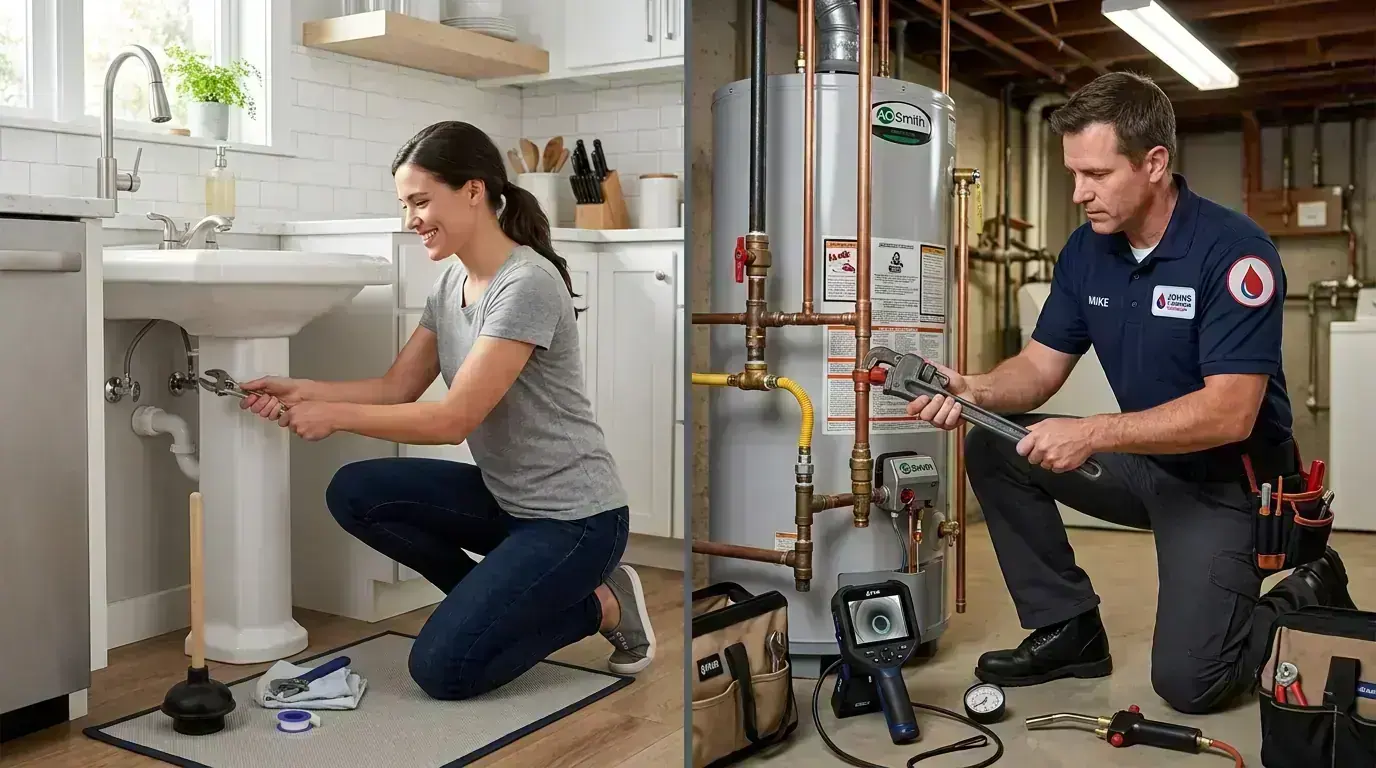
Johns Plumbing Michigan handles all residential plumbing services throughout Midland, from routine repairs to complex installations. Our Michigan-licensed technicians understand the infrastructure challenges unique to Midland homes, aging pipe materials, harsh winter conditions, and the basement flooding concerns amplified by the 2020 dam failure. Below is comprehensive coverage of each service category, technical methods, and when Midland homeowners need professional help.
Drain Cleaning & Clog Removal Services in Midland
Drain problems account for roughly 30% of plumbing service calls in Michigan homes. Kitchen sink clogs typically result from grease buildup and food debris accumulation, while bathroom drains collect hair, soap residue, and mineral deposits from Midland's moderately hard water. When a single drain slows, cable snaking often clears the blockage by mechanically breaking through the obstruction.
For persistent clogs or multiple slow drains throughout the house, hydro jetting uses high-pressure water streams (up to 4,000 PSI) to scour pipe walls clean of grease, scale, and sediment, particularly effective in older Midland homes where decades of buildup narrow pipe diameter.
Multiple drains backing up simultaneously suggests a main sewer line blockage rather than individual fixture problems. This often indicates tree root intrusion in clay sewer pipes common to pre-1980 Midland neighborhoods, or sediment accumulation from aging cast iron drain lines.
Video camera inspection identifies the exact blockage location and cause before we recommend repair approach. Floor drains in Midland basements require particular attention after heavy rain events or spring thaw, when overtaxed municipal systems can cause backflow.
Call (313) 736-9553 for drain cleaning when you notice slow drainage persisting after DIY attempts, gurgling sounds from fixtures, water backing up in sinks or tubs, or sewage odors from drains.
Water Heater Repair & Replacement Services
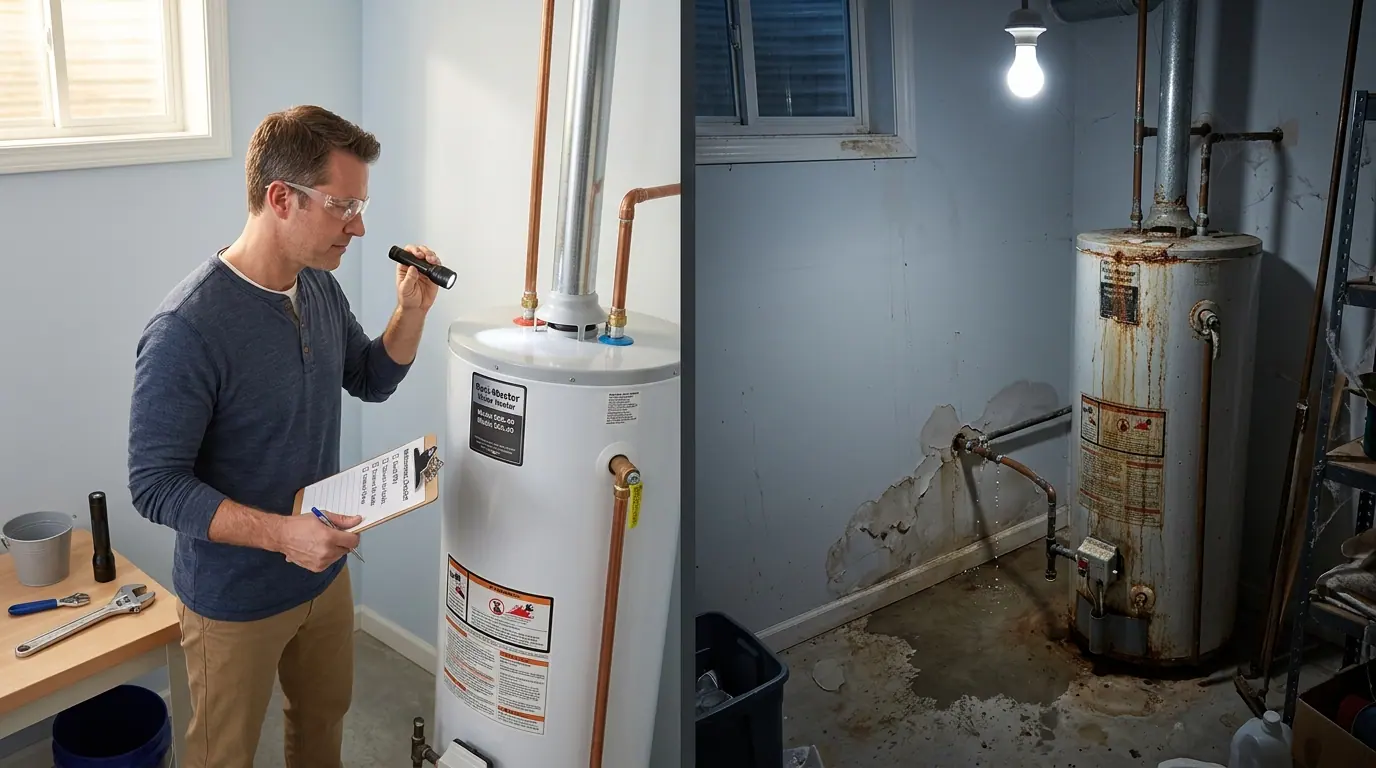
Water heater decisions hinge on age, failure mode, and energy efficiency goals. Tank water heaters typically last 8-12 years in Midland, though mineral content in the water accelerates sediment accumulation at tank bottom, reducing efficiency and eventually causing tank failure. Pilot light issues, thermostat malfunctions, and heating element failures in electric units often warrant repair if the tank is under 8 years old with no corrosion signs.
Beyond that age threshold, especially if you're experiencing rusty water or tank leaks, replacement prevents the catastrophic failure and water damage that results when tanks rupture.
Tankless water heaters eliminate standby heat loss by heating water only on demand, reducing energy costs 20-30% for Midland households. They require adequate gas line capacity and proper venting, but provide endless hot water and last 15-20 years with proper maintenance.
Sizing matters: a household of 2-3 people typically needs a unit rated at 140,000-180,000 BTU for simultaneous shower and appliance use. We calculate demand based on fixture count, occupant number, and usage patterns before recommending specific models.
Anode rod replacement extends tank life by sacrificing itself to corrosion instead of the tank. Midland's water chemistry typically requires anode inspection every 3-4 years.
Temperature and pressure relief valve testing prevents dangerous pressure buildup. Expansion tanks protect the system when thermal expansion causes pressure spikes in closed plumbing systems, required by code in many newer installations.
Need water heater service when your unit is 10+ years old, showing rust-colored water, making banging or popping noises, leaking around the base, or failing to provide adequate hot water. Call (313) 736-9553 for assessment and replacement sizing consultation.
Leak Detection & Pipe Repair Services
Undetected leaks waste water, cause structural damage, and create mold growth conditions in Midland's humid summer months. Visible leaks at fixtures or pipe connections are straightforward, but hidden leaks behind walls, under slabs, or underground require detection technology. Acoustic leak detection listens for water flow sounds in pressurized lines.
Thermal imaging cameras identify temperature variations where water seeps behind drywall. Unexplained water bill increases often signal underground leaks before other symptoms appear.
Slab leaks occur when pipes running beneath concrete foundations corrode or shift with ground movement, a concern in Midland's clay soils that expand and contract with moisture changes. Signs include warm spots on floors (hot water leaks), wet carpeting with no visible source, or foundation cracks accompanied by water stains. These require precise location detection before breaking through concrete, as repair costs multiply with exploratory demolition.
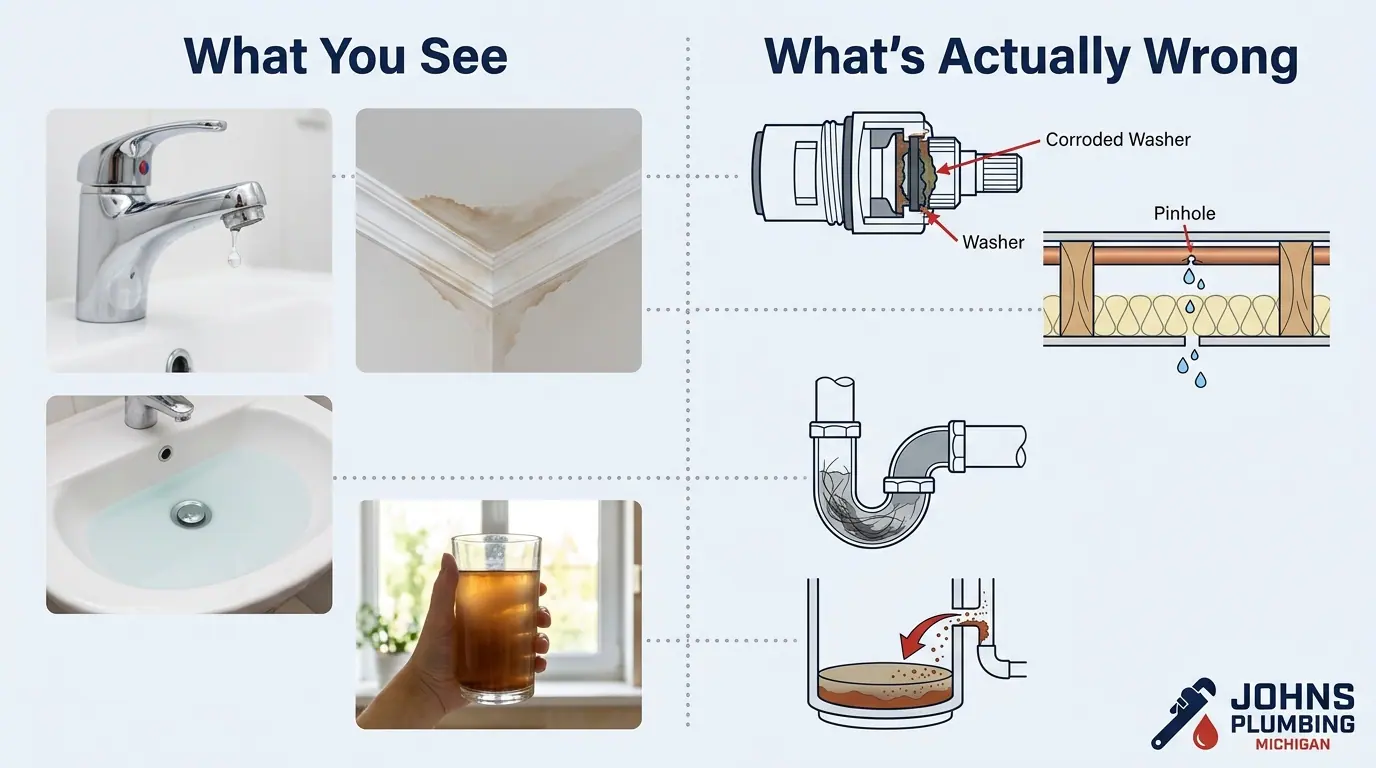
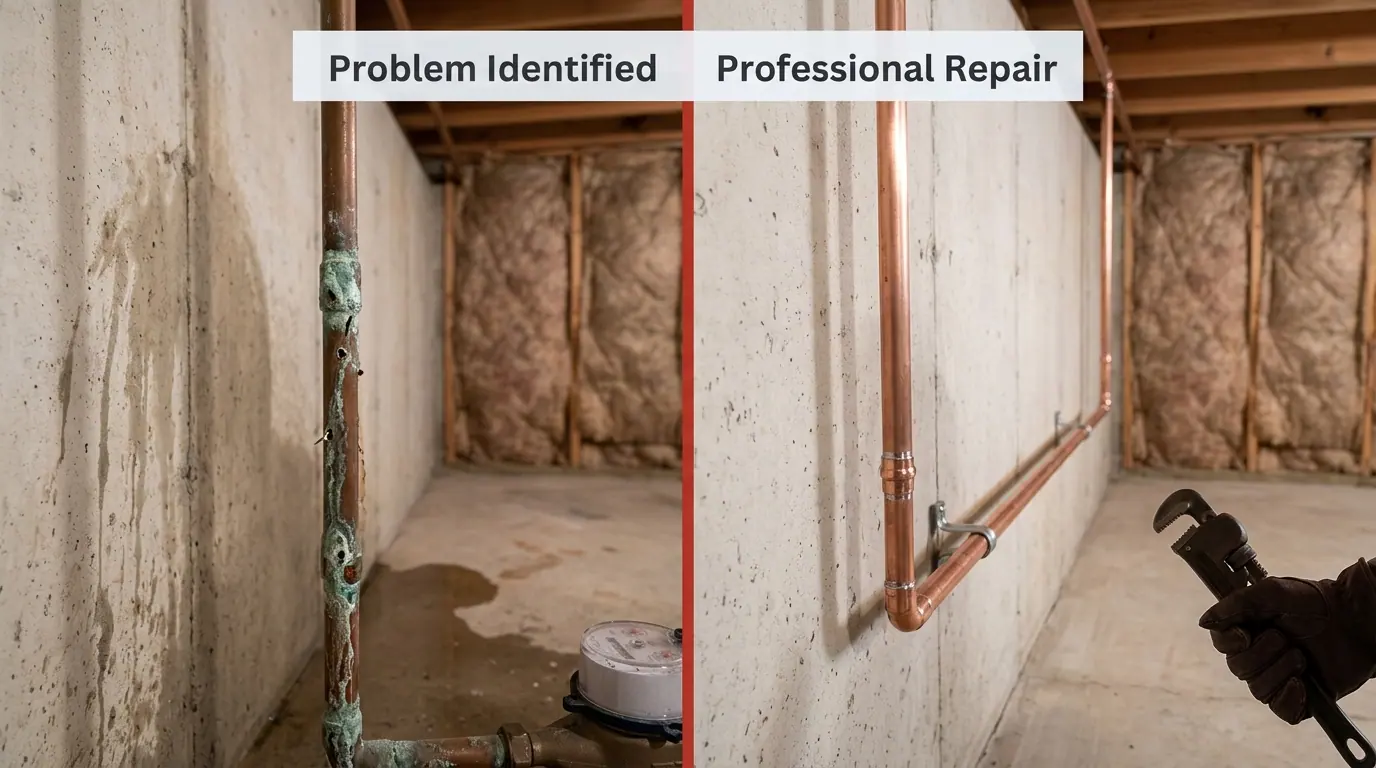
Pipe repair approaches depend on damage extent and pipe material. Copper pinhole leaks from corrosion can be patched with epoxy putty for temporary fixes or properly soldered for permanent repair.
Galvanized steel pipes in older Midland homes often require section replacement when corrosion causes multiple failure points, attempting to patch corroded galvanized usually leads to new leaks nearby within months. Frozen pipe damage from Midland winters frequently necessitates cutting out burst sections and installing new copper or PEX pipe with proper insulation added.
Re-piping becomes necessary when aging pipe material throughout the house causes recurring leaks. Homes built before 1960 with original galvanized plumbing, or 1970s-era homes with polybutylene pipes (gray plastic prone to failure), benefit from whole-house re-piping with modern copper or PEX. This prevents the cascade of repairs that older pipe material eventually requires.
Main water line leaks between street and home show up as soggy yard spots, water pooling near the foundation, or sudden pressure drops. These require excavation to access, though in some cases we can pull new piping through existing pathways using trenchless methods that minimize landscape disruption.
Sewer Line Services in Midland
Sewer line problems escalate quickly from inconvenience to health hazard. Video camera inspection is diagnostic first step when multiple drains back up, toilets gurgle when other fixtures drain, or sewage odors permeate the home. The camera travels through cleanout access points, revealing root intrusion, pipe collapse, sediment buildup, or joint separation in clay or cast iron sewer lines common to older Midland neighborhoods.
Tree root intrusion accounts for most sewer blockages in established areas. Roots seek moisture and nutrients, infiltrating pipe joints or cracks as hairlike tendrils that eventually form dense masses blocking flow.
Hydro jetting cuts through roots and scours pipe walls, but roots regrow unless the underlying pipe damage is addressed. Chemical root treatments provide temporary relief but don't solve structural pipe issues.
Trenchless sewer line repair offers two main approaches: pipe lining (cured-in-place pipe, or CIPP) installs an epoxy-coated liner inside the existing pipe, creating a new pipe within the old one without excavation. Pipe bursting breaks the old pipe while simultaneously pulling new HDPE pipe into place.
Both methods work when the existing pipe path is sound and accessible, avoiding the landscape destruction, driveway removal, and restoration costs of traditional excavation. Traditional dig-and-replace remains necessary when pipes have collapsed, shifted significantly, or run under structures where trenchless equipment can't navigate.
Bellied pipes, sections that sag due to soil settling, create low spots where waste and debris accumulate, causing recurring backups. Camera inspection reveals the sag profile, and repair requires either excavation to regrade the line or trenchless replacement depending on severity.
Main sewer line connection to municipal system is homeowner responsibility from house to property line or street tap point (jurisdiction varies). The 2020 flooding in Midland overwhelmed wastewater systems, and many connections now receive extra scrutiny during post-flood infrastructure rehabilitation. If your connection predates modern codes, upgrades may be required when other sewer work occurs.
Fixture Installation & Repair Services
Toilet problems range from simple flapper replacement (DIY-appropriate) to full toilet replacement requiring professional installation. Running toilets that constantly refill waste hundreds of gallons monthly, usually a worn flapper valve or faulty fill valve, both repairable. Toilets that won't flush completely often have clogged rim jets (mineral buildup blocking water flow from tank to bowl) or insufficient tank water level.
Rocking toilets indicate failed wax ring seals at floor connection, allowing sewer gas infiltration and water leakage that damages subflooring. At that point, toilet removal, flange inspection, and reinstallation with new wax ring and bolts is necessary, a job requiring precision to avoid cracking the porcelain or creating uneven seating that causes future leaks.
Toilet replacement makes sense when repair costs approach new toilet price, or when upgrading to low-flow models that use 1.28 gallons per flush versus older 3.5-5 gallon models. Water savings in Midland households with municipal water pay for upgrade cost within 2-3 years.
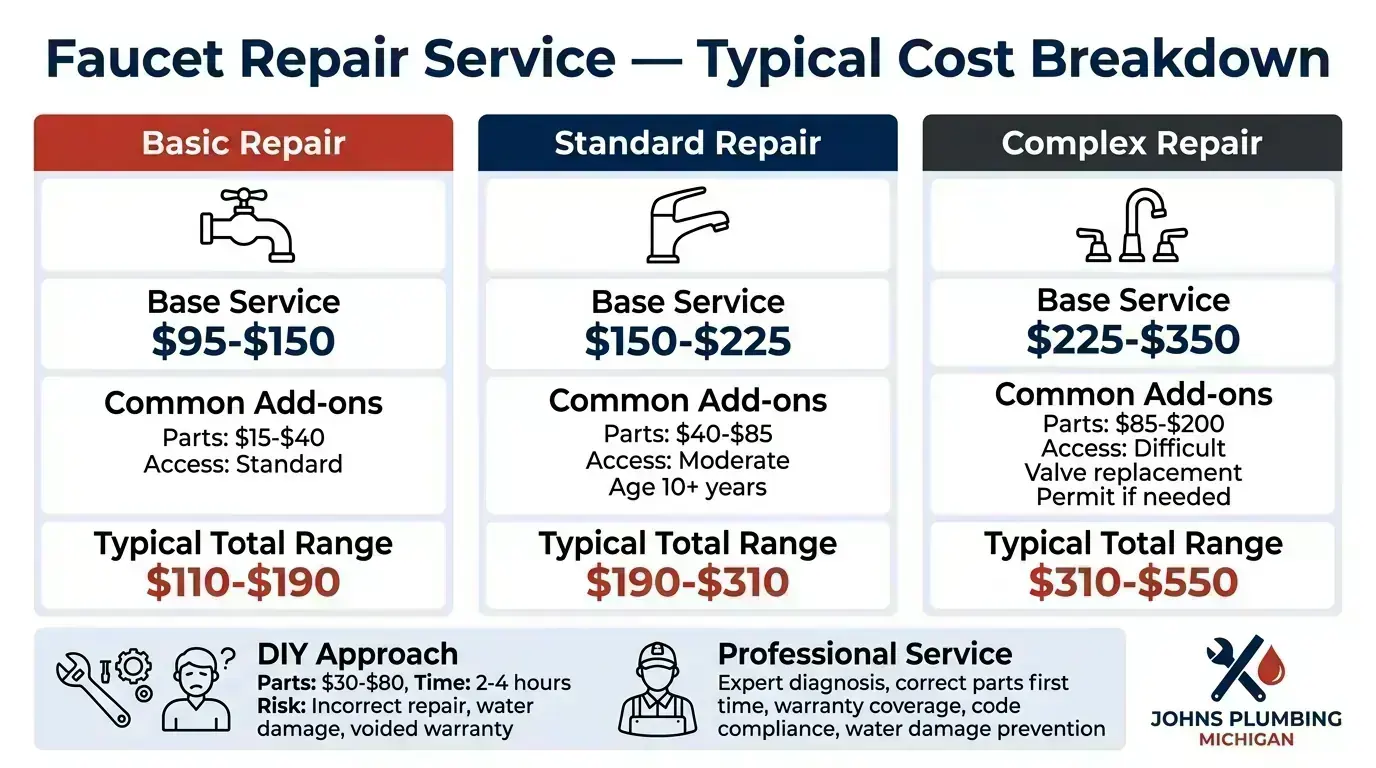
Faucet leaks stem from worn washers, O-rings, or cartridge seals. Single-handle faucets use cartridges that control both temperature and flow. These eventually wear and require replacement.
Compression faucets (older two-handle style) need washer and seat replacement. If the faucet body corrodes or decorative finish deteriorates, replacement beats repair. Modern faucets include aerators that reduce flow while maintaining pressure, saving water without sacrificing function.
Garbage disposals jam from fibrous material (celery, corn husks), grind bones or hard materials they're not designed for, or simply wear out after 8-12 years of use. Jammed disposals often reset with Allen wrench rotation from underneath or manual flywheel rotation after power disconnect.
Leaks at disposal body connection to sink, dishwasher inlet, or discharge pipe usually require gasket or flange replacement. Humming without grinding indicates motor runs but flywheel won't turn, often from foreign object jam or seized bearings requiring replacement.
Sump pumps in Midland basements face heavy demand during spring thaw and storm events. Pumps cycle on when water reaches float switch level, pumping water out discharge line to yard drainage away from foundation. Float switch failures, clogged intake screens, or worn impellers cause pump failure.
Discovered when basement floods during next heavy rain. Battery backup sump systems prevent flooding during power outages common in severe weather. We install primary pump, battery backup pump, and alarm systems that alert homeowners before water reaches damaging levels.
Gas Line Services in Midland
Gas line work requires Michigan licensed plumber with gas certification. This is not DIY territory. Natural gas installations for water heaters, furnaces, dryers, ranges, and fireplaces involve precise pipe sizing, proper joint sealing, pressure testing, and code-compliant installation.
Undersized gas lines cause appliance malfunction; oversized lines waste material and create unnecessary safety exposure. We calculate BTU demand for all gas appliances, measure run distances, and size pipe diameter accordingly (typically ½" to 1" black iron or CSST flexible gas line).
Gas leak detection uses electronic sniffers, soap bubble tests at connections, and pressure testing the system to verify no leaks exist before appliances reconnect. Natural gas itself is odorless; the distinctive rotten-egg smell comes from mercaptan additive for safety detection. Any gas odor requires immediate response: evacuate the house, avoid creating sparks (no light switches, phones, or appliances), call 911 and utility provider from outside, then call (313) 736-9553 once area is secured.
Gas line pressure testing verifies system integrity before new installations go live and after any repairs. We isolate the section, pressurize with air or inert gas, and monitor pressure gauges to confirm no pressure drop occurs over test period. Only after passing pressure test do we reconnect to gas supply and verify proper appliance operation.
Permits are required for all gas line installations and modifications in Midland. Work must comply with Michigan Plumbing Code and National Fuel Gas Code, with inspection by City of Midland plumbing inspector before covering lines or connecting appliances. We handle permit applications and coordinate inspections as part of installation service.