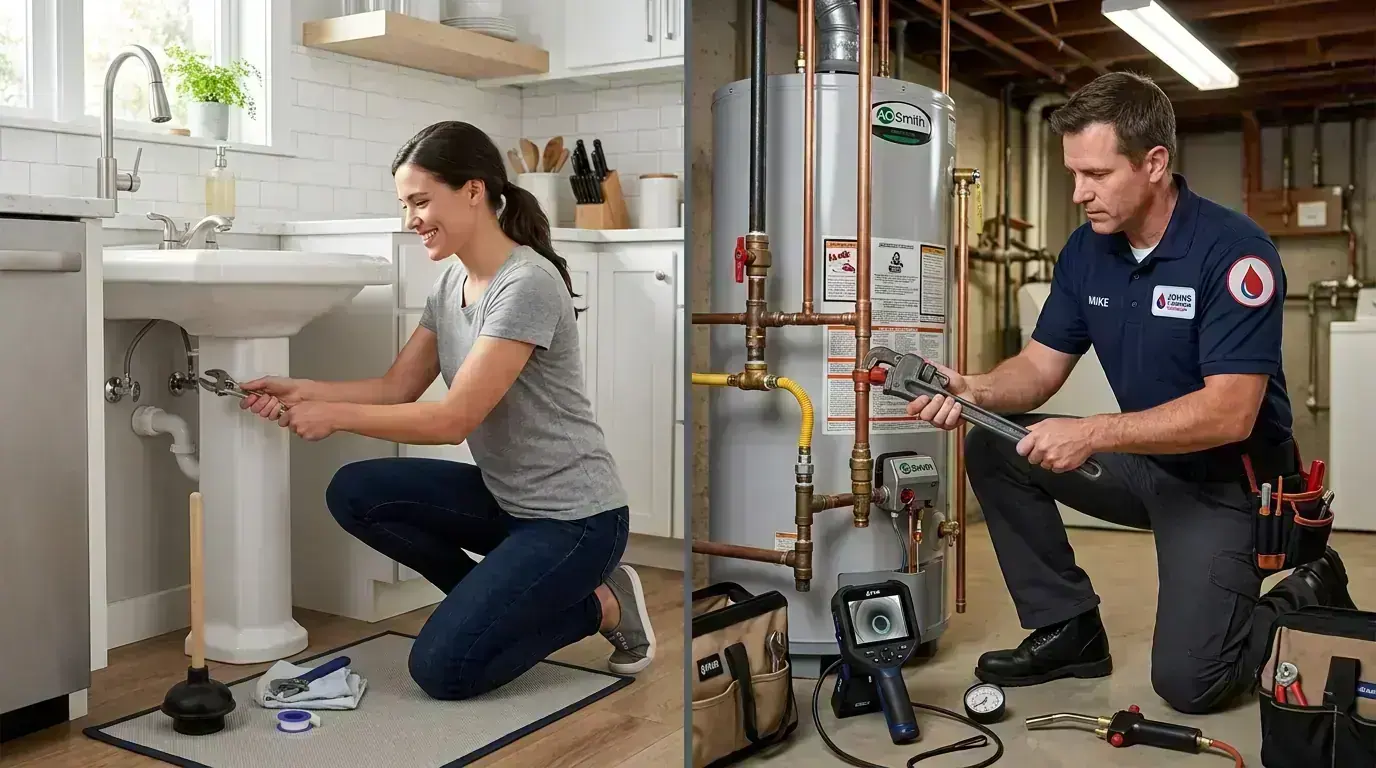
Johns Plumbing Michigan provides comprehensive residential plumbing services throughout Pontiac, covering emergency repairs, routine maintenance, and full system installations. Our Michigan-licensed technicians handle drain and sewer line services, water heater repair and replacement, leak detection and pipe repair, fixture installation, and gas line work across all Pontiac ZIP codes. Below is detailed coverage of each service category, methods used, and when Pontiac homeowners typically need each service.
Drain Cleaning & Clog Removal Services in Pontiac
Drain cleaning addresses slow-draining sinks, tubs, showers, toilets, and main sewer lines throughout Pontiac homes. Kitchen sink drains clog from grease buildup and food debris, while bathroom drains collect hair, soap scum, and mineral deposits from Oakland County's hard water. Main sewer line blockages often stem from tree root intrusion, common in Pontiac's older neighborhoods where mature trees send roots into aging clay pipe connections.
We use cable snaking for standard clogs in individual fixtures, a rotating cable with cutting head breaks through blockages and pulls debris back. For tougher obstructions like hardened scale buildup or root intrusions, hydro jetting applies high-pressure water streams (3,000-4,000 PSI) to scour pipe walls clean. Camera inspection identifies the exact location and cause of blockages before we choose the clearing method, particularly useful when multiple drains slow simultaneously, a pattern indicating main line problems rather than individual fixture issues.
Floor drains in Pontiac basements require periodic cleaning to prevent backup during spring thaw or heavy rain events. Clay-heavy soil around foundations doesn't drain well, so when storm systems overwhelm municipal infrastructure, basement floor drains become vulnerable entry points for backed-up water. Regular cleaning removes sediment and debris that could block these critical drainage pathways.
When one drain runs slow, cable snaking typically resolves it. When multiple fixtures drain slowly or gurgle when others are used, that signals a main line blockage requiring hydro jetting or camera inspection to locate root intrusion points. Recurring clogs in the same fixture after recent clearing suggest the underlying cause wasn't fully addressed, scale buildup from hard water or a sagging pipe section that traps debris.
Water Heater Repair & Replacement Services
Water heater service in Pontiac addresses everything from pilot light issues and thermostat failures to complete tank or tankless system replacements. Tank water heaters dominate older Pontiac homes, gas or electric units storing 40-80 gallons depending on household size.
When these systems fail to produce hot water, the issue often involves a faulty thermostat, burned-out heating element (electric), or extinguished pilot light (gas). We diagnose the specific component causing failure before recommending repair or replacement.
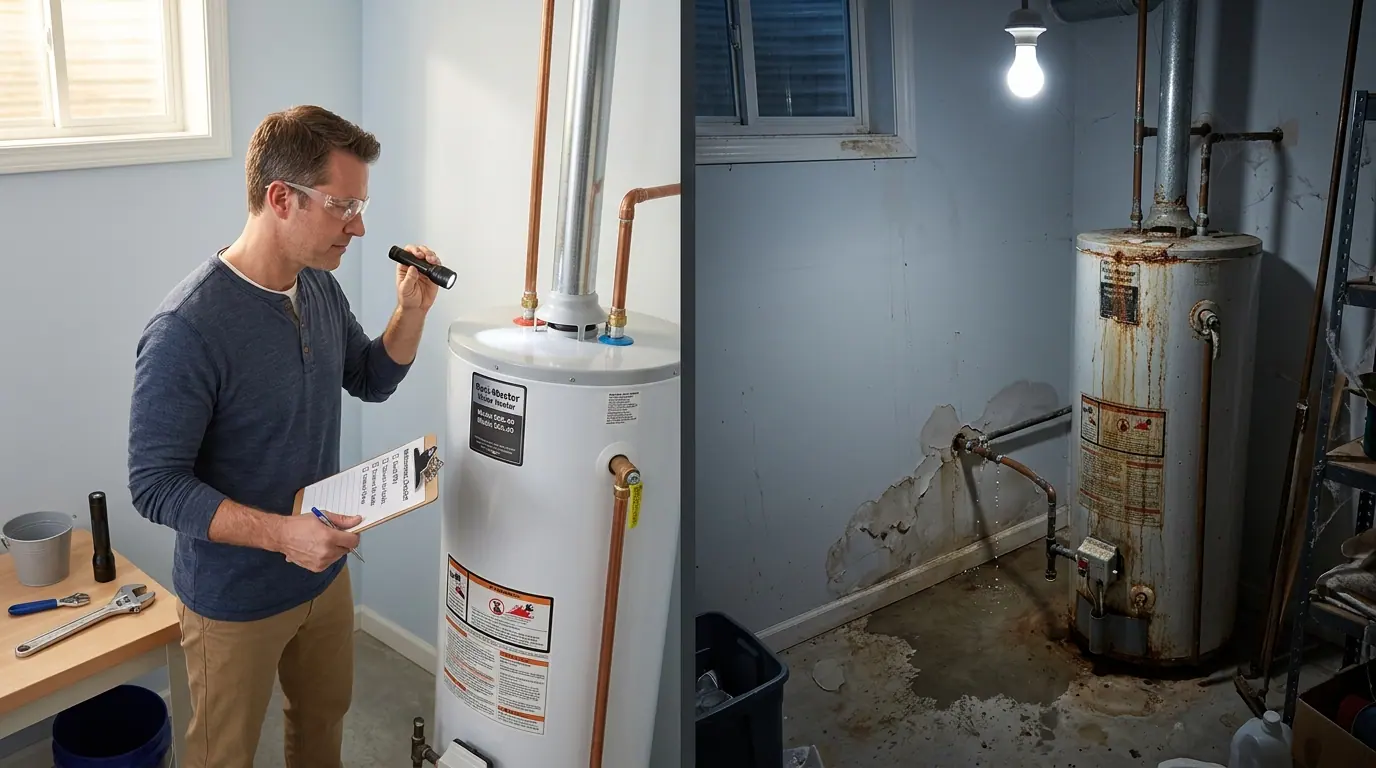
Replacement becomes necessary when tanks show signs of internal corrosion, rusty water, metallic taste, or visible leaking around the base where tank seams have weakened. Most tank water heaters last 8-12 years in Pontiac, though hard water accelerates sediment accumulation that reduces efficiency and shortens lifespan. Anode rod replacement extends tank life by sacrificing itself to corrosion instead of the tank lining, but most homeowners don't perform this maintenance until symptoms appear.
Tankless water heaters provide on-demand hot water without storage tanks, ideal for Pontiac homes with limited basement space or homeowners wanting energy efficiency improvements. Installation requires adequate gas line capacity (for gas models) or electrical service upgrades (for electric models), plus proper venting to exterior.
Sizing matters. A single tankless unit handles one or two simultaneous uses (shower plus dishwasher), while larger households may need multiple units or a high-capacity model.
For Pontiac's older homes built before 1950, water heater placement often involves working around original plumbing configurations not designed for modern equipment dimensions. Basement ceiling heights, proximity to gas lines, and venting paths through original masonry all affect installation complexity. We assess these factors during initial consultation to provide accurate replacement timelines and costs.
Pilot light problems and ignition failures happen more frequently during Pontiac's harsh winter months when basement temperatures drop and draft conditions affect gas appliance performance. These typically require service calls within a day or two, as households can manage temporarily with limited hot water. Complete loss of hot water in winter, especially with young children or elderly residents, constitutes a higher-urgency scenario warranting same-day response.
Leak Detection & Pipe Repair Services in Pontiac
Leak detection identifies hidden water loss before it causes major damage to Pontiac homes. Critical in older properties where original plumbing reaches end-of-life.
We start with visual inspection of accessible pipes, checking joints, valves, and fixture connections for obvious drips or corrosion. When leaks hide behind walls, under slabs, or in crawl spaces, we use acoustic listening devices to detect the sound of water escaping under pressure, and thermal imaging cameras to spot temperature differences where water saturates insulation or building materials.
Slab leaks occur when pipes embedded in concrete foundation floors corrode or crack, common in Pontiac homes built on slab foundations where freeze-thaw cycles stress buried lines. Signs include warm spots on floors (hot water leak), unexplained water bill increases, and foundation cracks as saturated soil beneath the slab shifts. Underground leaks between the main water line and house foundation show up as soggy yard patches, reduced water pressure, or meter readings that continue when all fixtures are off.
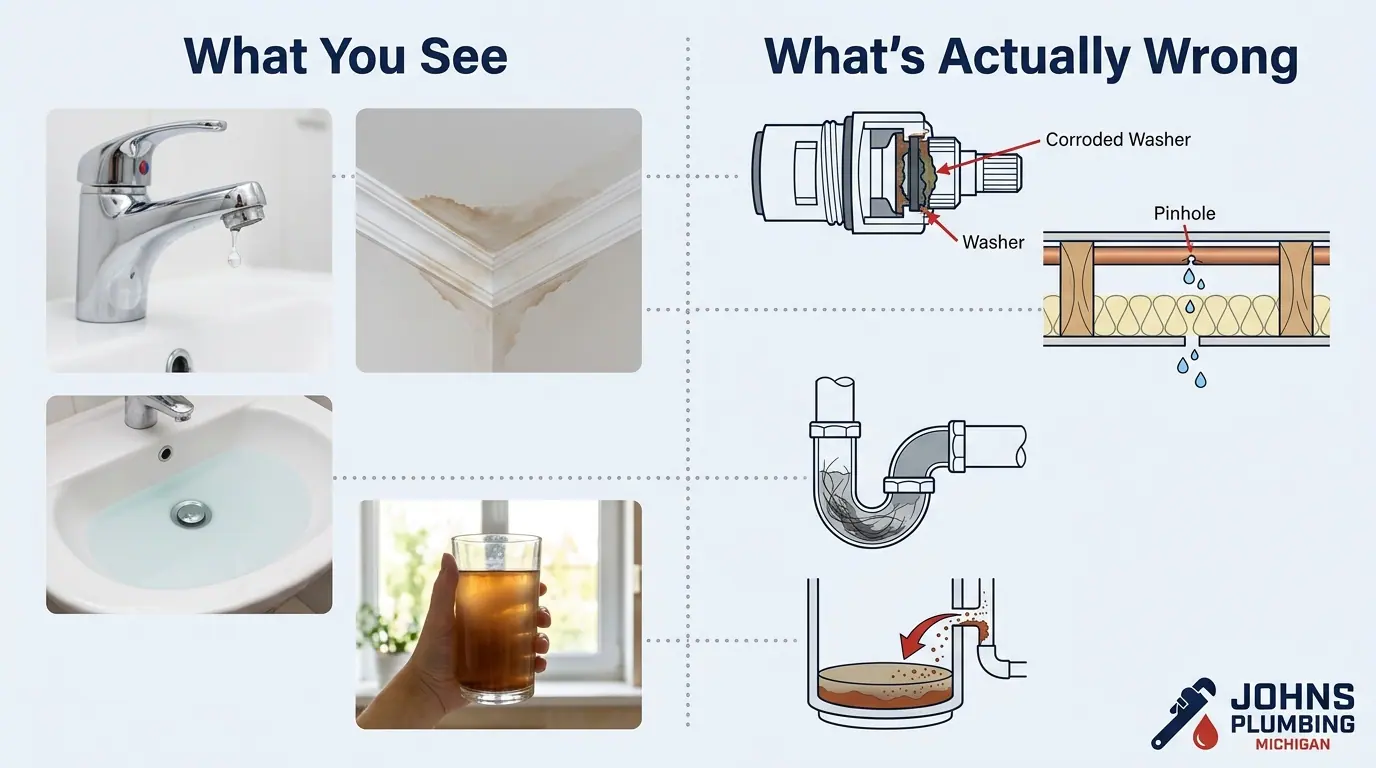
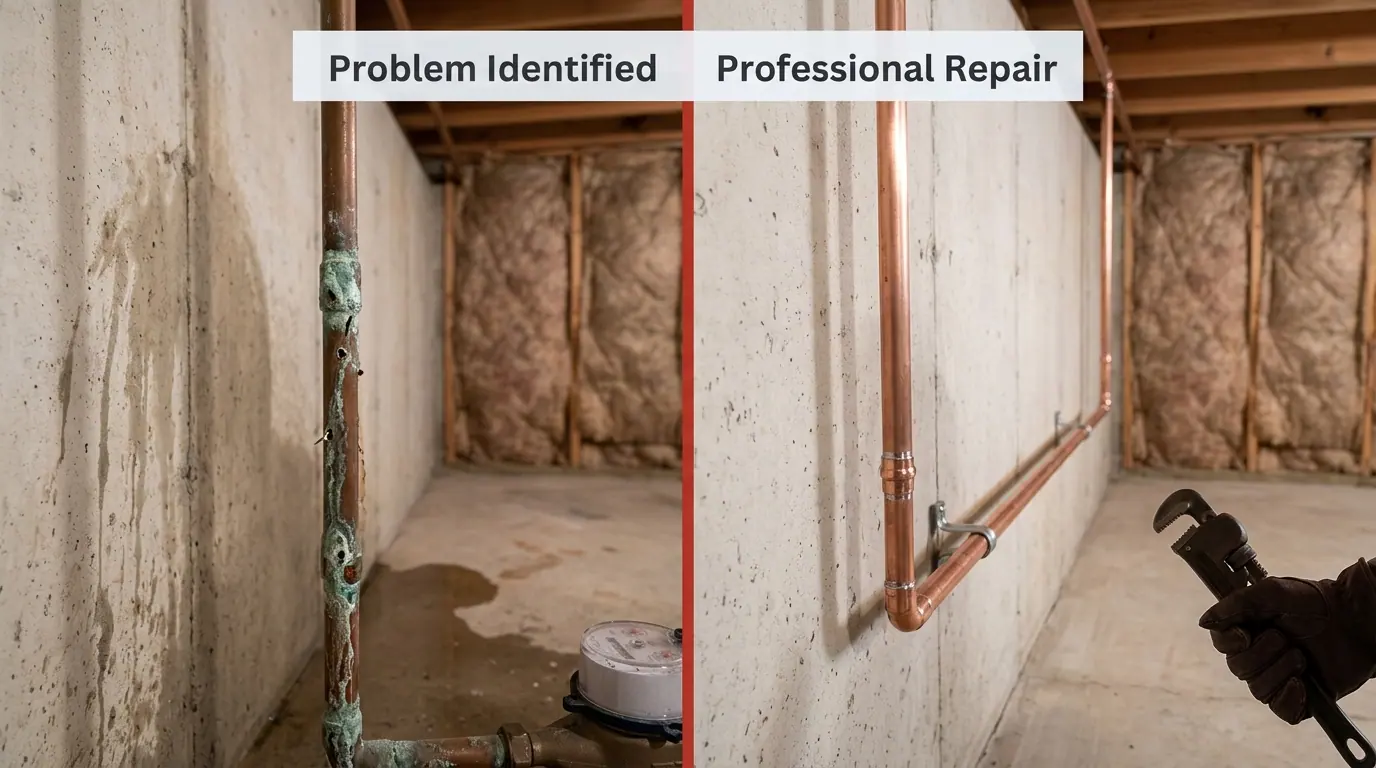
Pipe repair methods depend on leak location and severity. Accessible pinhole leaks in copper pipe get patched with repair clamps or epoxy compounds as temporary fixes, though permanent repair involves cutting out the damaged section and soldering in new pipe.
When multiple leaks appear in aging galvanized pipes, typical in Pontiac homes from the 1900s-1940s, partial or complete re-piping makes more sense than chasing individual failures. Galvanized pipe corrodes from inside out, so visible exterior corrosion signals extensive internal deterioration.
Frozen pipe repair becomes urgent in Pontiac winters when pipes in uninsulated basements, crawl spaces, or exterior walls freeze solid. We use electric heat tape, heat guns, and infrared heaters to thaw frozen sections slowly. Rapid thawing can burst already-stressed pipes.
Once thawed, we pressure-test the system to identify cracks before restoring water service. Preventive measures include pipe insulation, maintaining consistent basement heat, and leaving cabinet doors open during extreme cold snaps to allow warm air circulation around pipes.
Main water line repair from the street connection to house involves coordinating with municipal water department for shutoffs and potential permit requirements in Oakland County. These repairs require excavation, so we assess soil conditions, existing landscaping, and driveway or sidewalk impacts before starting work. Call (313) 736-9553 for leak detection when you notice persistent damp spots, unexplained water bills, or reduced pressure, early detection prevents damage that costs far more than the leak repair itself.
Sewer Line Services
Sewer line service addresses problems between your home's drain system and the municipal sewer main, typically 50-100 feet of underground pipe. Camera inspection inserts a waterproof video camera on a flexible cable down through a cleanout access point, revealing cracks, root intrusions, bellied sections where pipe has settled, and complete blockages. This diagnostic step shows exactly what's happening inside the line before we recommend cleaning, repair, or replacement.
Sewer line cleaning uses hydro jetting to blast away years of grease, scale, and organic buildup. For root intrusions, common where mature trees in Pontiac's older neighborhoods send fine roots into clay pipe joints seeking water, mechanical cutting blades attached to rotating cables shred roots before jetting flushes debris. Tree root removal provides temporary relief, but roots return within 18-24 months unless the damaged pipe section is repaired or replaced to eliminate entry points.
Repair options include traditional excavation, where we dig down to the damaged section, cut out the bad pipe, and install new PVC, and trenchless methods that minimize yard disruption. Pipe bursting pulls a new pipe through the old one while simultaneously breaking up the damaged line.
Pipe lining inserts an epoxy-saturated sleeve that cures in place, creating a seamless interior pipe within the existing damaged pipe. Trenchless works when the existing line isn't completely collapsed and soil conditions allow insertion.
Many Pontiac homes built before 1960 have clay sewer pipes, durable when intact but prone to root intrusion at joints and vulnerable to cracking from soil settlement. Combined sewer systems in older Pontiac neighborhoods mix stormwater and sanitary flow, so during heavy spring rains or rapid snowmelt, municipal systems can back up, pushing water into basement floor drains and lower-level fixtures. Backwater valves installed in main sewer lines prevent this reverse flow but require professional installation and maintenance.
When multiple drains throughout your Pontiac home drain slowly or backup occurs at the lowest fixture (usually a basement floor drain or toilet), that signals main sewer line obstruction requiring professional service rather than individual fixture clearing. Call (313) 736-9553 for sewer camera inspection if you experience frequent clogs, sewage odors in the yard, or soggy patches near your sewer line path.
Fixture Installation & Repair Services
Fixture service covers toilets, faucets, sinks, tubs, showers, garbage disposals, and sump pumps throughout Pontiac homes. Toilet repair addresses running toilets (flapper valve failures wasting hundreds of gallons daily), incomplete flushing (fill valve or flush valve problems), and constant refilling (internal leaks between tank and bowl). When repair costs approach $150-200 and the toilet is 15+ years old, replacement makes more economic sense than repeated repairs on aging components.
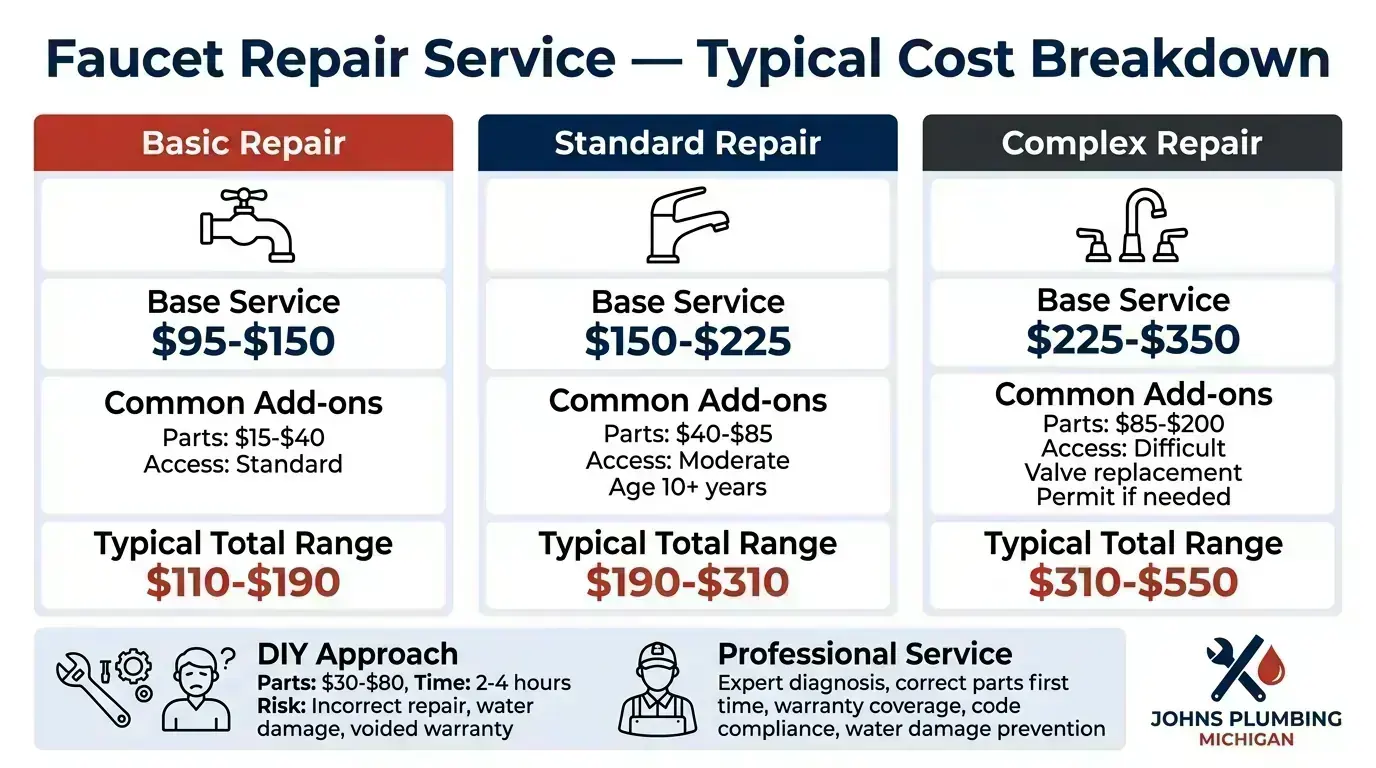
Faucet repair typically involves replacing worn washers, O-rings, or cartridges that cause drips or leaks at the base. Kitchen faucets in Pontiac homes endure heavy use and hard water mineral buildup that degrades internal components faster than bathroom fixtures.
When multiple components fail or the faucet body shows corrosion, replacement costs less than parts and labor for extensive repairs. Modern WaterSense-certified faucets reduce water consumption, valuable in Oakland County where water and sewer charges penalize excess usage.
Garbage disposals jam from improper use (fibrous vegetables, coffee grounds, grease) or wear out after 8-12 years of daily use. We reset tripped breakers, clear jams with hex wrenches inserted into the bottom reset slot, and replace worn mounting gaskets that leak under sinks.
When motor bearings seize or impellers crack, replacement costs less than motor rebuilding. Installation involves electrical connections, mounting to sink drains, and dishwasher drain hose integration for homes with connected appliances.
Sump pump installation and repair prevents basement flooding in Pontiac homes where clay-heavy soil and high water tables create chronic groundwater intrusion during spring thaw. Primary sump pumps move water from basement collection pits to exterior discharge lines, while battery backup systems activate when power fails during storms, exactly when basement flooding risk peaks. We test pumps before spring melt season, replace aging units showing reduced pumping capacity, and clean discharge lines that freeze or clog with debris.
Shower and tub fixture repairs range from replacing worn valve stems that cause temperature control problems to full valve body replacements when corrosion damages brass components. Fixture installations in Pontiac's older homes often require adapting modern fixtures to original pipe sizing and configurations, sometimes necessitating reconfiguration behind walls to meet current plumbing codes.
Gas Line Services
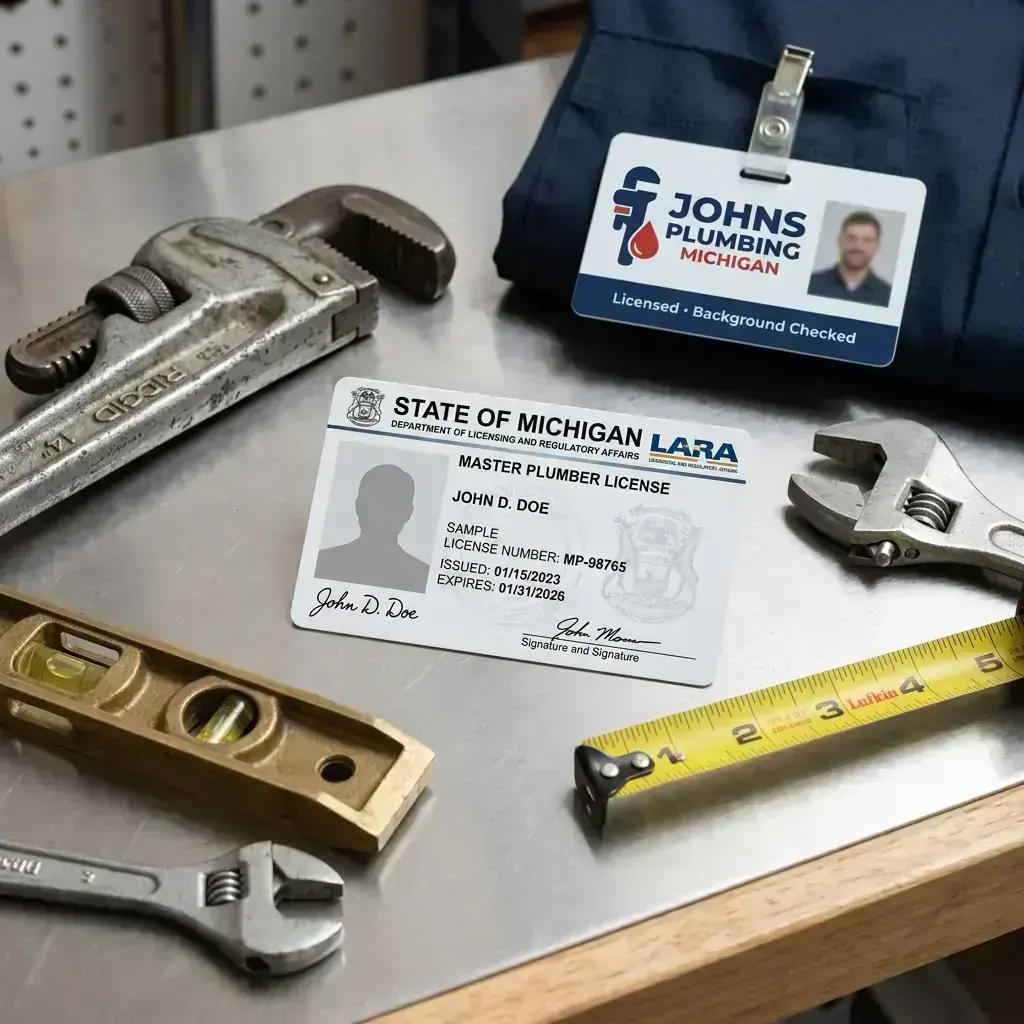
Gas line work requires Michigan Master Plumber licensing. We install gas lines for water heaters, dryers, stoves, and fireplaces, detect and repair gas leaks, pressure-test systems, and coordinate permits with local building departments.
Gas leak detection uses electronic sniffers and soapy water tests to locate leaks at pipe joints, valve connections, and appliance flex lines. Any gas odor (rotten egg smell from added mercaptan odorant) requires immediate evacuation and utility company notification before we enter to locate and repair the source.
Gas line installation for new appliances or relocated equipment involves running black iron pipe or CSST (corrugated stainless steel tubing) from existing branch lines to appliance locations, sizing lines for BTU demand, and installing shutoff valves within reach of each appliance. We pull permits through Oakland County building departments, schedule rough-in inspections before concealing lines in walls, and coordinate final inspections after appliances connect.
Gas line pressure testing verifies system integrity after repairs or new installations. We pressurize lines with air or inert gas above operating pressure, monitor gauges for drops indicating leaks, and soap-test every joint before restoring gas service. Michigan code requires pressure testing and inspection for all gas line alterations beyond simple appliance reconnections using existing flex lines.
Gas line replacement becomes necessary when old black iron pipes corrode internally (common in Pontiac's older homes with original 1930s-1950s installations), or when galvanized pipe was incorrectly used for gas service and has deteriorated. CSST has largely replaced rigid black iron for new installations due to faster installation and flexibility routing through existing structures, though proper bonding to electrical ground prevents lightning-induced failures.
Safety protocols include shutting gas at the meter, verifying proper appliance venting, checking carbon monoxide detector operation, and educating homeowners on shutoff valve locations. Gas work carries serious consequences if done incorrectly (explosions, fires, and carbon monoxide poisoning) which is why Michigan restricts this work to licensed Master Plumbers who understand combustion air requirements, venting standards, and pressure regulation.