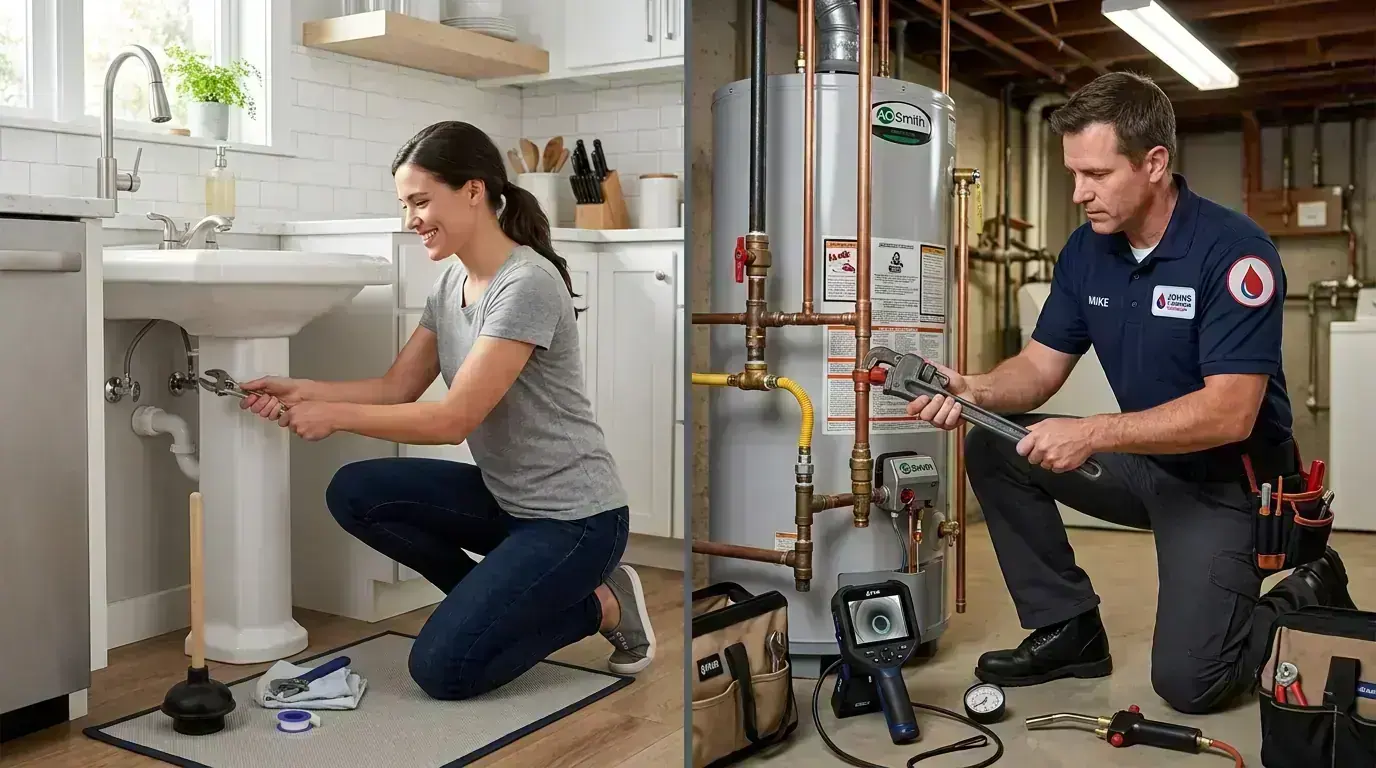
Johns Plumbing Michigan provides complete residential plumbing services throughout Portage, covering emergency repairs, routine maintenance, and full system installations. Our licensed technicians handle drain and sewer line services, water heater repair and replacement, leak detection and pipe repair, fixture installation, and gas line work. Below is detailed coverage of each service category, methods used, and when Portage homeowners typically need each service.
Drain Cleaning & Clog Removal Services in Portage
Drain cleaning addresses blockages in kitchen sinks, bathroom sinks, tubs, showers, toilets, floor drains, and main sewer lines. When one drain slows, the problem usually sits in that fixture's trap or nearby branch line. When multiple drains back up simultaneously, the clog typically affects your main sewer line, a more serious issue requiring professional intervention.
Cable snaking works for most routine clogs. A rotating cable with a cutting head breaks through hair, soap buildup, and organic matter blocking the pipe.
This method handles toilet clogs, shower drains filled with hair, and kitchen sinks blocked by grease accumulation. Snaking reaches 50-100 feet into your drain system, clearing blockages in branch lines and vertical stacks.
Hydro jetting uses high-pressure water streams (3,000-4,000 PSI) to scour pipe walls clean. We use this method when cable snaking can't fully clear tough blockages, tree roots penetrating clay sewer lines, hardened scale deposits, or grease buildup coating pipe interiors. Hydro jetting also serves as preventive maintenance for recurring drain problems.
Portage's older neighborhoods with mature trees often see root intrusion at main line connection points, where roots exploit joints in aging clay pipes. Hydro jetting cuts through these roots and flushes debris completely.
Video camera inspection reveals what's causing recurring clogs. We insert a waterproof camera into your drain line to identify root intrusion points, pipe bellies where water pools, cracks, or corroded sections needing replacement.
Camera inspection prevents guesswork. We see exactly where the problem sits and how extensive repairs need to be.
Call for drain cleaning when you notice persistent slow drainage, gurgling sounds from fixtures (indicating venting problems or partial blockages), or water backing up. Multiple slow drains signal main line issues requiring immediate attention. For Portage homes built before 1980 with original cast iron or clay sewer lines, preventive camera inspection every 3-5 years identifies problems before they escalate into sewage backups.
Water Heater Repair & Replacement
Water heaters fail more frequently during Portage's cold winters when they're working hardest. Michigan's harsh winters strain units running continuously to meet hot water demand. We handle tank water heater repairs, tankless installations, full replacements, and diagnostic services.
Repair versus replacement depends on age, repair cost, and efficiency. If your water heater is under 8 years old and repair costs less than half of replacement, repair makes sense.
Past 10 years, even minor repairs often precede complete failure within 12-18 months. Tank water heaters typically last 8-12 years in Portage; tankless units run 15-20 years with proper maintenance.
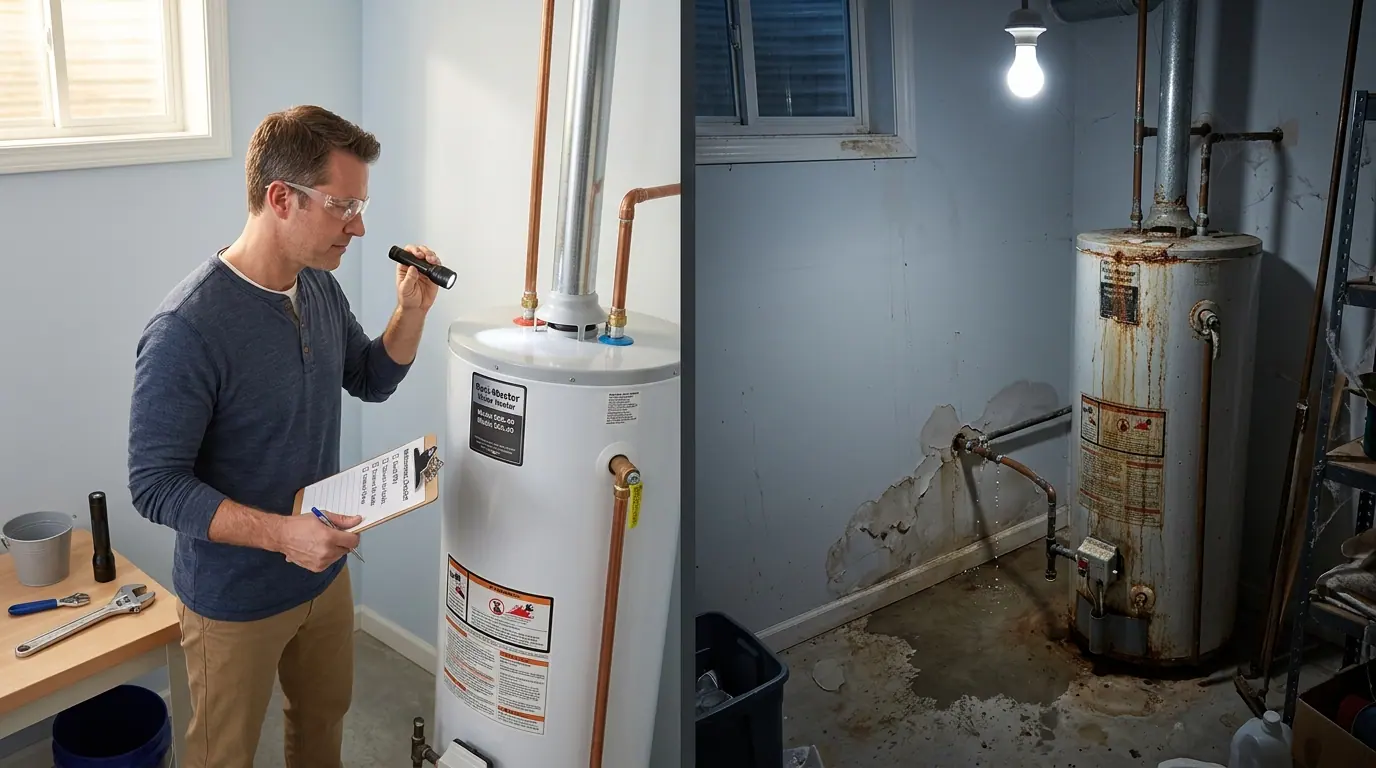
Tank water heater issues include pilot light failures, faulty thermostats, corroded anode rods, and sediment buildup. Hard water common in Portage accelerates sediment accumulation, calcium and magnesium precipitate out as water heats, settling at tank bottom. Annual flushing removes this sediment before it hardens into insulating layers that force your burner to work harder, raising energy costs and shortening tank life.
Tankless water heaters deliver endless hot water by heating on demand rather than storing heated water in a tank. For Portage homes with 2-3 bathrooms, tankless units provide hot water for simultaneous showers, dishwasher, and washing machine use. Sizing requires calculating peak demand.
We measure fixture flow rates and determine which combination of fixtures runs simultaneously. Undersized tankless units can't maintain temperature during high-demand periods; properly sized units eliminate cold water surprises.
Gas-powered tankless units require proper venting and combustion air. Electric tankless heaters need substantial electrical service (150-200 amp panels) to power heating elements.
Installation also requires water pressure testing, low pressure reduces tankless performance. Portage's municipal water pressure typically handles tankless requirements, but homes on well systems may need pressure tanks adjusted.
Anode rod replacement extends tank life by 3-5 years. The sacrificial anode rod corrodes instead of your tank interior, it attracts corrosive elements in water.
We recommend checking anode rods every 3 years in Portage due to hard water. Once the rod deteriorates to its core wire, corrosion attacks your tank directly.
Need water heater service when your unit exceeds 10 years, you notice rusty water from hot taps, hear banging or popping noises during heating cycles, or experience temperature fluctuations. No hot water in winter demands immediate attention.
Frozen temperatures make this an emergency. Call (313) 736-9553 for water heater diagnosis, repair, or replacement consultation.
Leak Detection & Pipe Repair Services
Hidden leaks waste water, damage structures, and increase utility bills before homeowners notice them. Leak detection combines visual inspection, acoustic detection, and thermal imaging to locate problems concealed behind walls, under slabs, or underground.
Slab leaks occur when pipes beneath concrete foundations develop pinholes or cracks. Copper pipes corrode from soil chemistry; shifting foundations stress pipe joints.
Signs include warm spots on floors (hot water leaks), unexplained water bill increases, sound of running water when fixtures are off, and foundation cracks. We use acoustic listening devices to pinpoint leak location without breaking concrete unnecessarily.
Underground leaks on main water lines between the street and your home show up as soggy yard patches, reduced water pressure, or meter readings that don't stop even when you've shut off all fixtures. Portage's freeze-thaw cycles stress buried pipes. Expansion and contraction eventually crack aged galvanized steel or copper lines.
Detection methods start with meter testing, if your meter spins with all fixtures off, you have a leak. Acoustic detection uses sensitive microphones to hear water escaping under pressure.
Thermal imaging cameras spot temperature differences where water seeps through building materials. Video inspection reveals internal pipe condition for lines accessible through cleanouts.
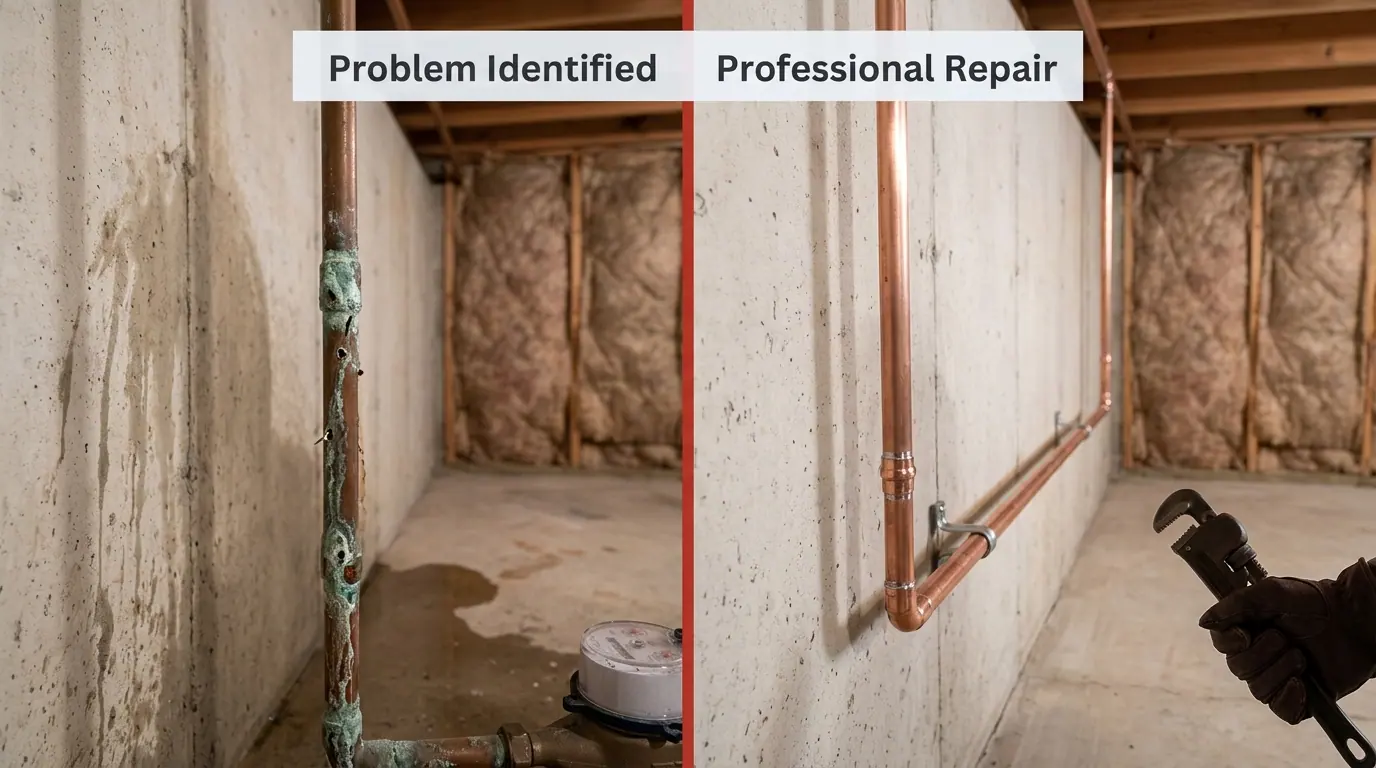
Repair techniques depend on leak location and pipe condition. For accessible leaks, we cut out damaged sections and install new pipe with proper fittings. Epoxy lining repairs pinholes and small leaks in copper pipes without replacement.
We coat pipe interiors with epoxy that seals leaks and prevents future corrosion. This works well for multiple pinhole leaks in inaccessible walls where opening drywall would be expensive.
Section replacement addresses localized pipe failures. We replace only the damaged section rather than entire runs. Re-piping becomes necessary when widespread corrosion affects multiple areas.
Homes with galvanized steel pipes (common in Portage homes built before 1960) often need complete re-piping once one section fails. Galvanized pipe corrodes from the inside out, narrowing flow and creating rough interiors where scale accumulates.
Frozen pipe repair applies to Portage winters. Pipes in unheated basements, crawl spaces, and exterior walls freeze when temperatures drop below 20°F for extended periods. We thaw frozen sections with controlled heating before they burst.
Once a pipe has burst from freezing, we cut out the split section and install new pipe. Prevention includes insulating exposed pipes, maintaining basement heat above 55°F, and letting faucets drip during extreme cold snaps.
Main water line repair requires excavation to access the buried pipe between your meter and home. We locate the leak, dig down to expose the damaged section, and replace it with PEX or copper pipe rated for underground burial.
Portage's clay-heavy soil holds moisture that accelerates metal pipe corrosion. Soil chemistry varies by neighborhood but generally shortens underground pipe lifespan compared to drier regions.
Call immediately for visible water spraying, standing water in basements, or foundation cracks accompanied by moisture. Schedule inspection soon for unexplained water bill increases (anything over 10% without usage changes), persistent wet spots on walls or ceilings, or low water pressure. For Portage homes over 40 years old with original plumbing, preventive pipe inspection identifies corrosion before leaks develop.
Sewer Line Services in Portage
Sewer line problems affect your entire home's drainage. When the main sewer line clogs or breaks, every drain in your house backs up, toilets, sinks, tubs, floor drains. We provide camera inspection, cleaning, repair, and replacement for sewer lines.
Camera inspection shows us what's happening inside your sewer line without excavation. We insert a waterproof camera through a cleanout or toilet, recording video as it travels through your pipe. The camera reveals tree root intrusion, pipe bellies (sagging sections where waste pools), cracks, collapsed sections, or offset joints.
Portage's older neighborhoods often have clay sewer lines vulnerable to root intrusion, mature trees send roots through joints seeking water. Camera footage lets us plan targeted repairs rather than guessing where problems sit.
Hydro jetting clears blockages and removes scale buildup from sewer line interiors. High-pressure water (3,000-4,000 PSI) cuts through tree roots, dissolves grease deposits, and scours pipe walls.
We use jetting before trenchless repair to ensure clean pipe surfaces for lining materials to bond properly. For recurring root problems, hydro jetting every 18-24 months prevents complete blockages.
Trenchless repair replaces or lines damaged sewer sections without digging up your entire yard. Pipe lining inserts an epoxy-saturated liner into your existing pipe, the liner inflates to press against pipe walls, then cures into a smooth, jointless pipe within your old pipe. This seals cracks and blocks roots from re-entering through joints.
Pipe bursting breaks apart your old pipe while simultaneously pulling new pipe into place, a bursting head fractures the old pipe outward, and new HDPE pipe follows directly behind. Both methods require only small access pits at entry and exit points, preserving landscaping, driveways, and hardscaping.
Traditional excavation remains necessary when trenchless methods won't work, severely collapsed pipes, major grade corrections, or connection repairs at the municipal main line. We excavate a trench following your sewer line path, remove damaged sections, and install new PVC or HDPE pipe with proper slope (minimum ¼ inch drop per foot). Portage's soil conditions generally allow trenching without shoring for depths under 6 feet, but deeper excavations near street connections require protective systems.
Sewer line problems escalate quickly. Call immediately if sewage backs up into floor drains or toilets, you smell sewage indoors, or multiple fixtures back up simultaneously.
Schedule inspection soon for slow drains throughout your house, gurgling toilets, or sewage odors in your yard. For Portage homes built before 1980, preventive camera inspection identifies aging clay pipes before they fail.
Fixture Installation & Repair Services
We install and repair all residential plumbing fixtures, toilets, faucets, sinks, tubs, showers, garbage disposals, and sump pumps. Fixture failures range from nuisances (dripping faucets) to emergencies (overflowing toilets).
Toilet issues include running toilets that waste water, toilets that won't flush completely, constant refilling cycles, and leaks at the base. Running toilets usually need flapper replacement, the rubber flapper sealing your flush valve deteriorates over time.
Toilets that won't flush completely may have clogged rim jets (mineral deposits from Portage's hard water block the jets under the toilet rim) or insufficient tank water level. Leaks at the base indicate failed wax ring seals requiring toilet removal and reinstallation.
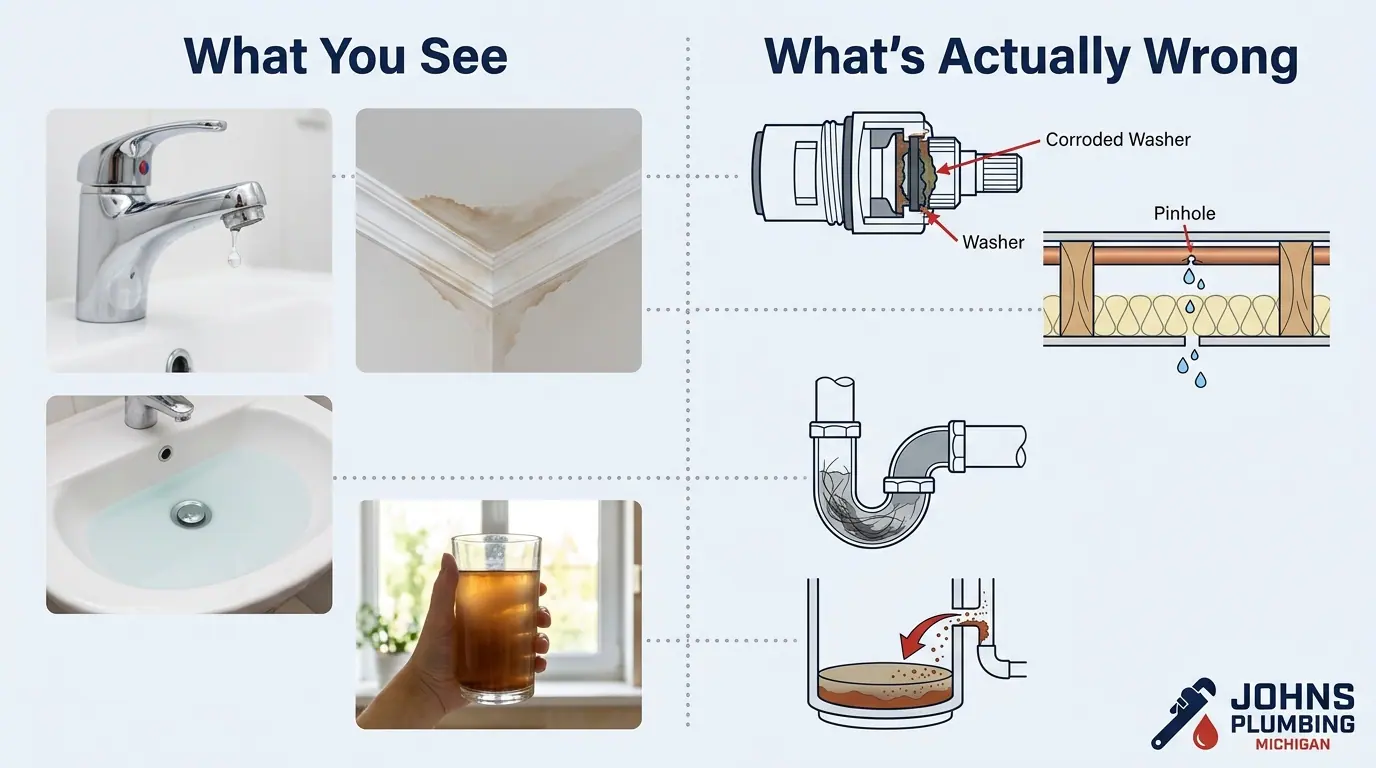
Faucet problems include drips, low water flow, and handle difficulties. Dripping faucets need cartridge or washer replacement depending on faucet type. Low flow from aerators clogged with mineral deposits.
We disassemble aerators, soak them in vinegar to dissolve calcium buildup, and reassemble. For older faucets where replacement parts are unavailable or repair costs approach new faucet prices, replacement makes more sense.
Garbage disposals jam when hard objects enter (bones, fruit pits, silverware), fail electrically, or leak from mounting connections. We repair jammed units by freeing impellers, reset tripped breakers, and tighten mounting assemblies.
Disposals typically last 8-12 years. Replacement becomes necessary when motor housings crack or internal corrosion causes persistent leaks.
Sump pumps protect Portage basements from flooding, especially critical during spring snowmelt and heavy rains. Sump pump failures cause basement flooding.
We install primary pumps with battery backup systems that continue pumping during power outages. Annual sump pump testing before spring identifies worn impellers, stuck float switches, or discharge line problems before failure occurs during peak demand.
Fixture installation includes mounting, connecting supply lines and drain assemblies, testing for leaks, and ensuring code compliance. We handle permits required for new installations and coordinate inspections where necessary.
Call immediately for overflowing toilets, major fixture leaks causing water damage, or sump pump failures during wet weather. Schedule service soon for running toilets, persistent faucet drips, or garbage disposals that won't start. Routine fixture upgrades improve water efficiency, modern low-flow toilets and faucets reduce water usage significantly compared to fixtures installed before 1990.
Gas Line Services
Gas line work requires licensed professionals. DIY gas line repairs risk explosions, fire, and carbon monoxide poisoning. We install gas lines for water heaters, furnaces, stoves, dryers, and fireplaces, detect and repair gas leaks, perform pressure testing, and handle gas shut-off valve installation.
Gas leak detection uses electronic sensors and soap solution testing to locate leaks. Natural gas smells like rotten eggs (mercaptan added for safety). If you smell gas, leave immediately and call 911 from outside.
Once the gas company confirms safety, we locate the specific leak point and repair it. Gas leaks often occur at threaded connections, corroded pipes, or where flexible connectors deteriorate.
Gas line installation follows strict codes for pipe sizing, support, and venting. We calculate appliance BTU demand to size pipes properly, undersized gas lines starve appliances of fuel, causing inefficient combustion and appliance failures.
Michigan code requires rigid black iron pipe or approved flexible connectors (CSST) for gas distribution inside homes. We install shutoff valves at each appliance for safety and maintenance access.
Pressure testing verifies system integrity after installation or repair. We pressurize gas lines with air or nitrogen, monitoring gauges for pressure drops indicating leaks.
All gas line work requires permits and inspections in Portage. We handle permit applications and coordinate inspections to ensure code compliance.
Safety protocols include combustion air requirements for gas water heaters and furnaces. Gas appliances need fresh air for complete combustion, inadequate combustion air produces carbon monoxide. We verify proper venting, adequate combustion air supply, and install carbon monoxide detectors where required by code.
Gas line work requires Michigan master plumber licensing and specialized training. Call (313) 736-9553 immediately if you smell gas or suspect a leak. For new appliance installations requiring gas connections, we provide installation estimates, handle permits, and coordinate inspections to ensure safe, code-compliant work.