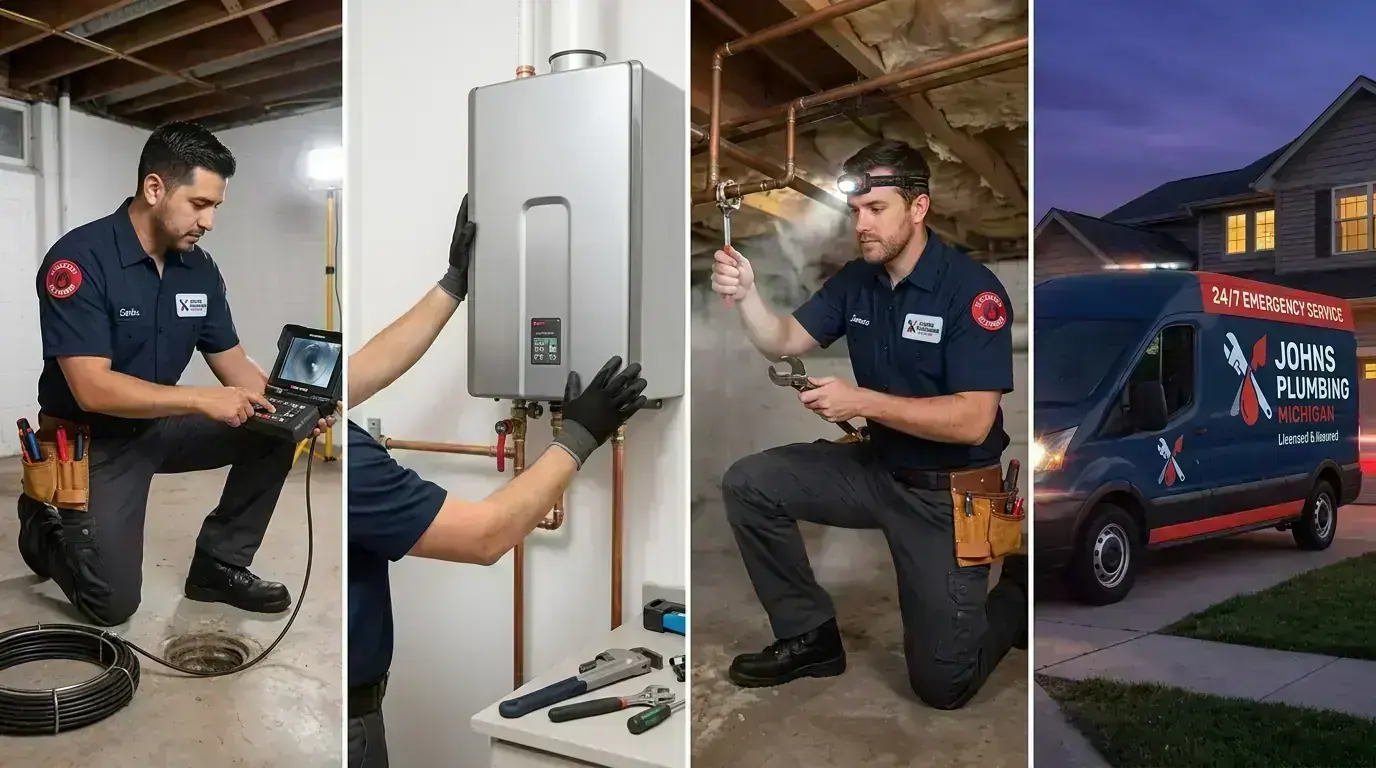
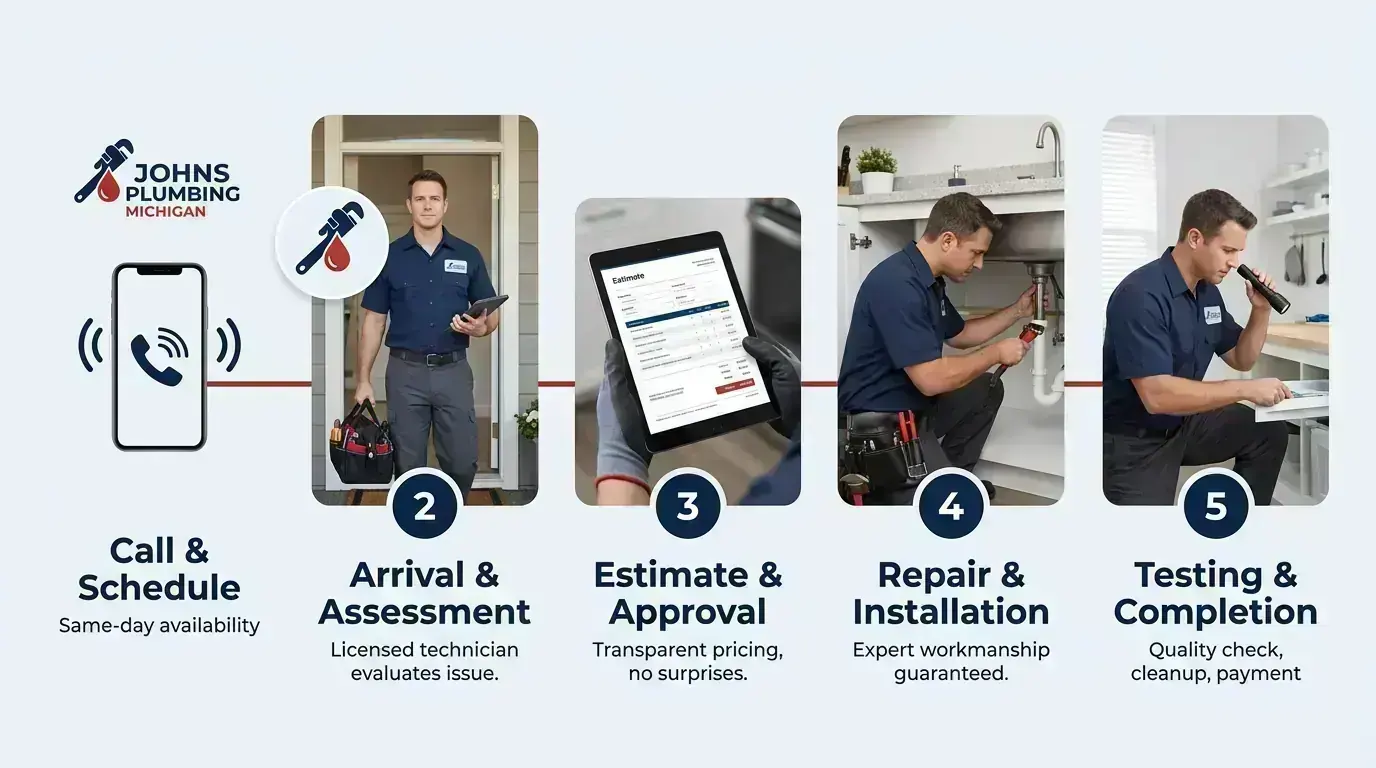
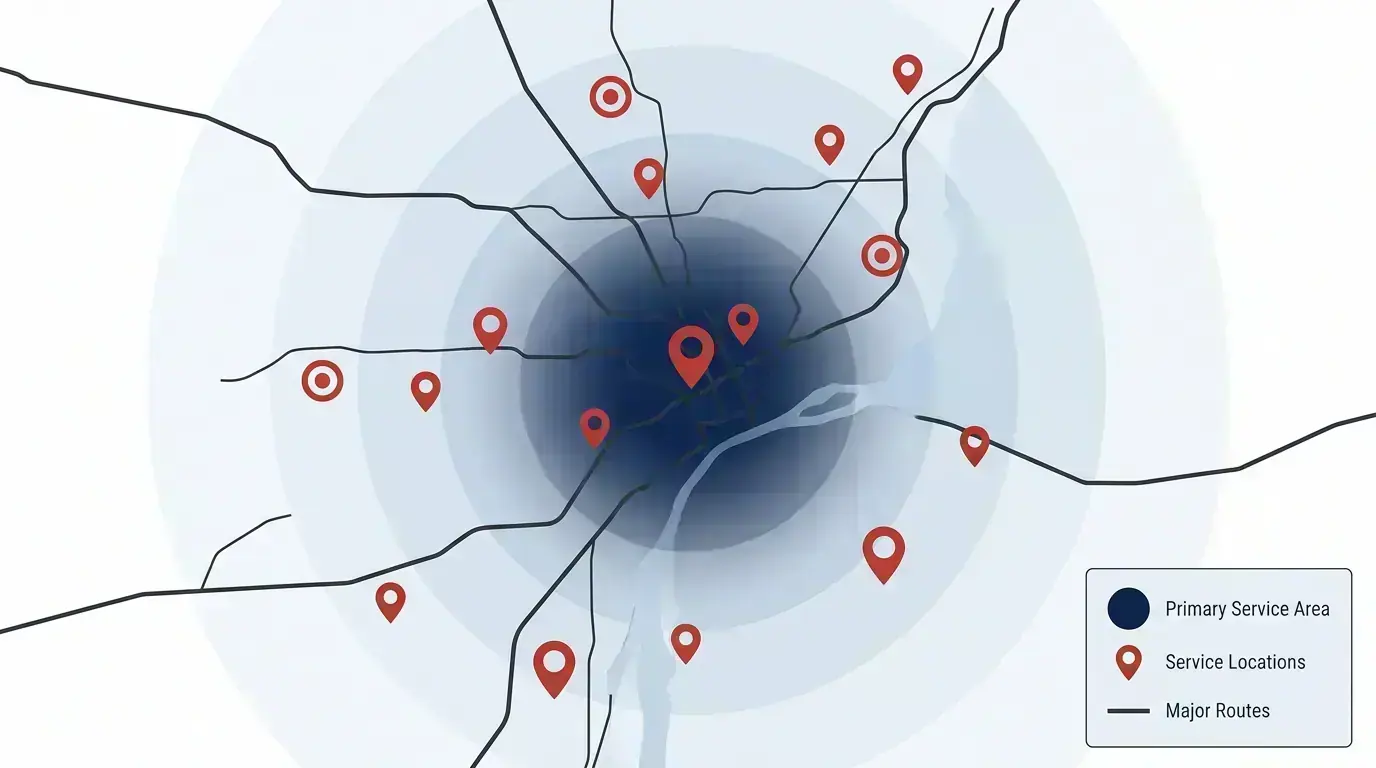
Johns Plumbing Michigan provides comprehensive residential plumbing services throughout Southfield, Oakland County, covering everything from routine repairs to full system installations. Our licensed technicians handle drain and sewer line services, water heater repair and replacement, leak detection and pipe repair, fixture installation, and gas line work. Below is detailed coverage of each service category, the methods we use, and when Southfield homeowners typically need each service, with particular attention to the infrastructure challenges common in Southfield's mid-century housing stock.
Drain Cleaning & Clog Removal Services in Southfield
Kitchen sink, bathroom sink, tub, shower, and toilet clogs are among the most common calls we receive in Southfield homes. When a single drain slows or backs up, the problem usually sits in that fixture's trap or branch line. Multiple slow drains throughout the house typically signal a main sewer line blockage rather than isolated fixture issues, a pattern we see frequently in Southfield's older neighborhoods where tree roots infiltrate aging clay sewer laterals.
We use two primary methods depending on clog severity and location. Cable snaking (also called drain augering) works for most routine clogs within 25-50 feet of the access point, grease buildup in kitchen drains, hair and soap scum in bathroom drains, and organic matter in toilet drains.
The rotating cable breaks through blockages and restores flow. For tougher clogs, recurring blockages, or main line obstructions, hydro jetting delivers high-pressure water streams (3,000-4,000 PSI) that scour pipe walls clean, removing scale buildup, grease deposits, and root intrusions that cable snaking can't eliminate.
Before cleaning, we often perform video camera inspection to identify the blockage location and assess pipe condition, particularly important in Southfield homes built in the 1950s-1970s where original cast iron drain lines may show corrosion or structural deterioration. If inspection reveals systemic pipe failure rather than a simple clog, replacement becomes the better long-term solution than repeated cleaning attempts.
Common scenarios requiring professional drain cleaning in Southfield include gurgling sounds from drains (often indicating partial main line obstruction), water backing up in basement floor drains during heavy use (sign of inadequate main line capacity or blockage), and recurring toilet clogs despite plunging (typically root intrusion in the building drain). Tree root infiltration is especially prevalent in Southfield properties with mature landscaping, roots seek moisture in aging sewer lines and exploit any crack or joint separation they find.
Call (313) 736-9553 when multiple fixtures drain slowly simultaneously, when standing water remains in sinks or tubs after use, or when you notice sewage odors near drains. All indicate blockages requiring professional equipment.
Water Heater Repair & Replacement Services
Water heater decisions in Southfield homes typically center on three scenarios: repairing a failing tank unit, replacing an aging tank with another tank, or upgrading to tankless. For tank water heaters under 8 years old, specific component repairs often make economic sense, replacing a failed thermostat, heating element, or anode rod costs significantly less than full replacement and extends service life several years.
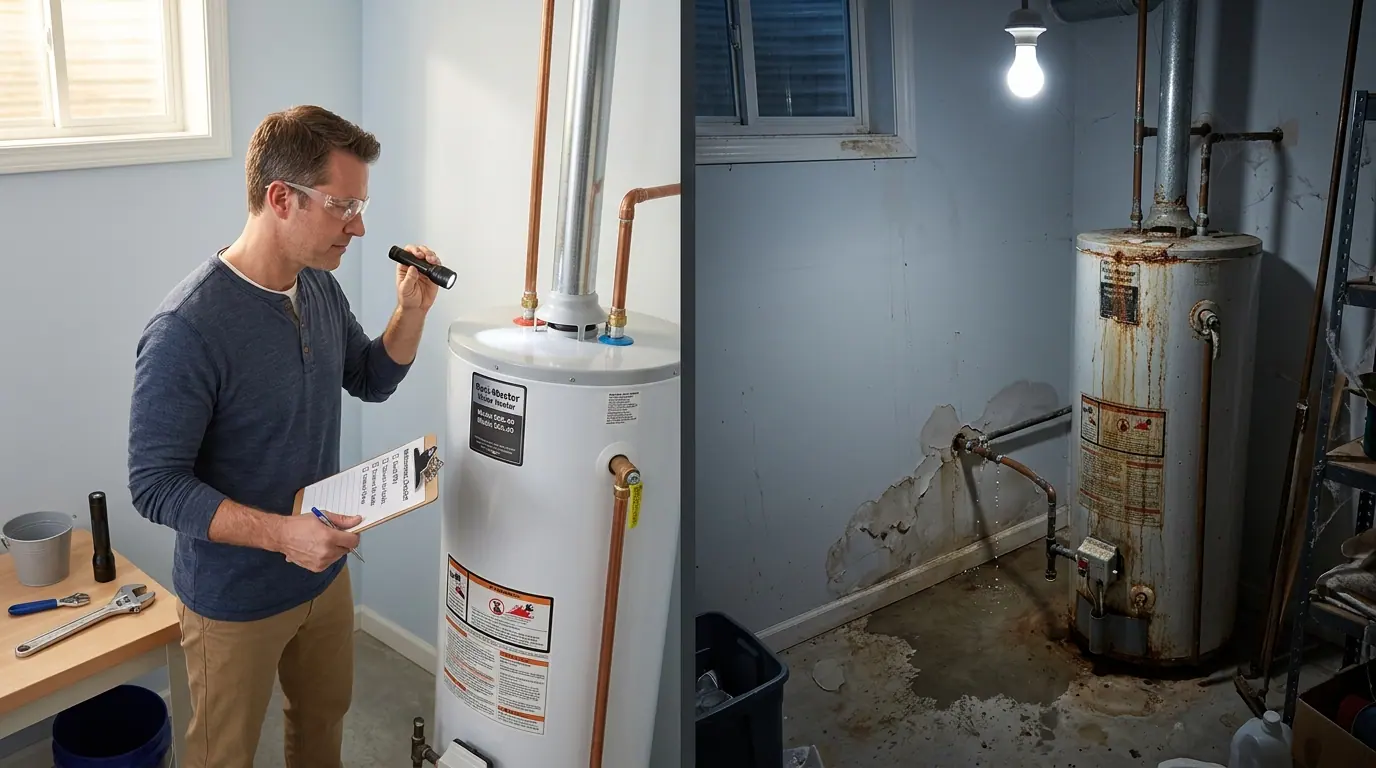
After 10-12 years, however, most tank units show multiple failure indicators (rust-colored water, rumbling sounds from sediment buildup, reduced hot water capacity, or minor leaks at tank connections), at which point replacement prevents the catastrophic failure that floods basements.
Tankless water heater installation provides unlimited hot water and 20+ year service life, but requires specific conditions: adequate gas line capacity (if gas-fired), proper venting through exterior walls or roof, and electrical upgrades for power supply and controls. In Southfield's mid-century homes, upgrading to tankless often means gas line upsizing since original ½-inch lines can't deliver the BTUs modern tankless units demand.
We calculate required flow rate based on simultaneous hot water usage in your home. Two showers plus dishwasher typically needs 7-9 gallons per minute capacity.
Pilot light issues (won't stay lit or requires frequent relighting) usually stem from failed thermocouples or dirty pilot assemblies, straightforward repairs. No hot water emergencies in Southfield winters demand immediate response since frozen showers aren't tolerable when overnight temperatures stay below 20°F for weeks. When your water heater reaches 10 years old or you notice reddish-brown water (internal tank rust), declining hot water volume, or popping/banging sounds during heating cycles, schedule replacement before emergency failure forces you into rush decisions.
Sizing matters significantly: undersized units cause constant hot water shortages, while oversized units waste energy heating unused capacity. Most Southfield households with 2-3 bathrooms need 40-50 gallon tanks or 6-8 GPM tankless capacity. Hard water prevalence throughout Oakland County accelerates tank corrosion and element scaling, making annual flushing and anode rod inspection worthwhile for extending service life.
Need water heater service in Southfield? Call (313) 736-9553 for sizing consultation, repair assessment, or replacement installation with proper permitting.
Leak Detection & Pipe Repair Services
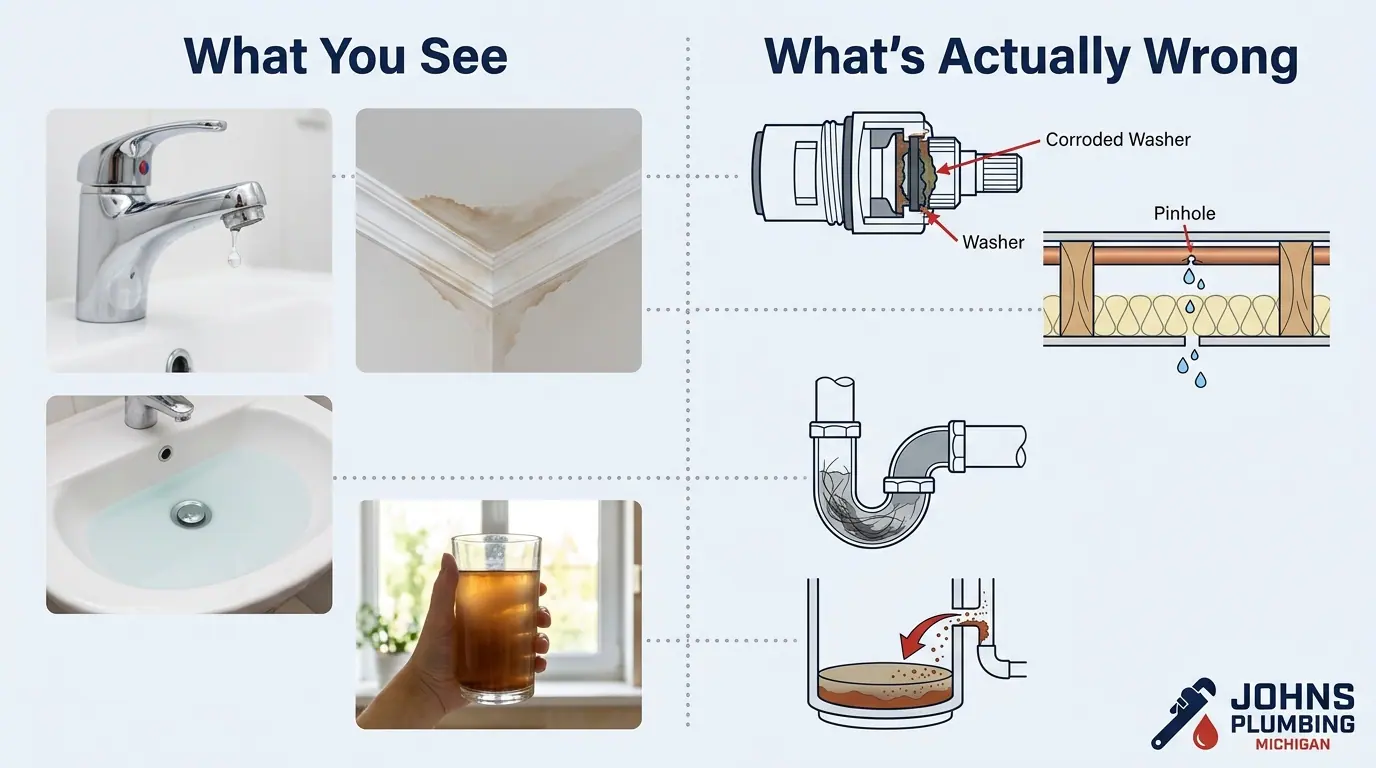
Hidden leaks cause extensive damage before homeowners notice obvious signs. We use three detection methods depending on suspected leak location: visual inspection for accessible pipes (under sinks, in crawl spaces, around water heaters), acoustic detection for listening to water movement behind walls or under slabs, and thermal imaging cameras that reveal temperature anomalies indicating moisture presence.
Slab leaks, pipes beneath concrete foundation floors, present unique challenges in Southfield homes with full basements over crawl spaces. Symptoms include warm spots on floors (hot water leaks), constant water meter movement with fixtures off, foundation cracks, or unexplained water bills doubling.
Underground leaks in yard service lines show as perpetually soggy grass patches, sudden pressure drops, or hissing sounds near the meter. Wall and ceiling leaks announce themselves through water stains, paint bubbling, or drywall softening, though by that point significant damage already exists.
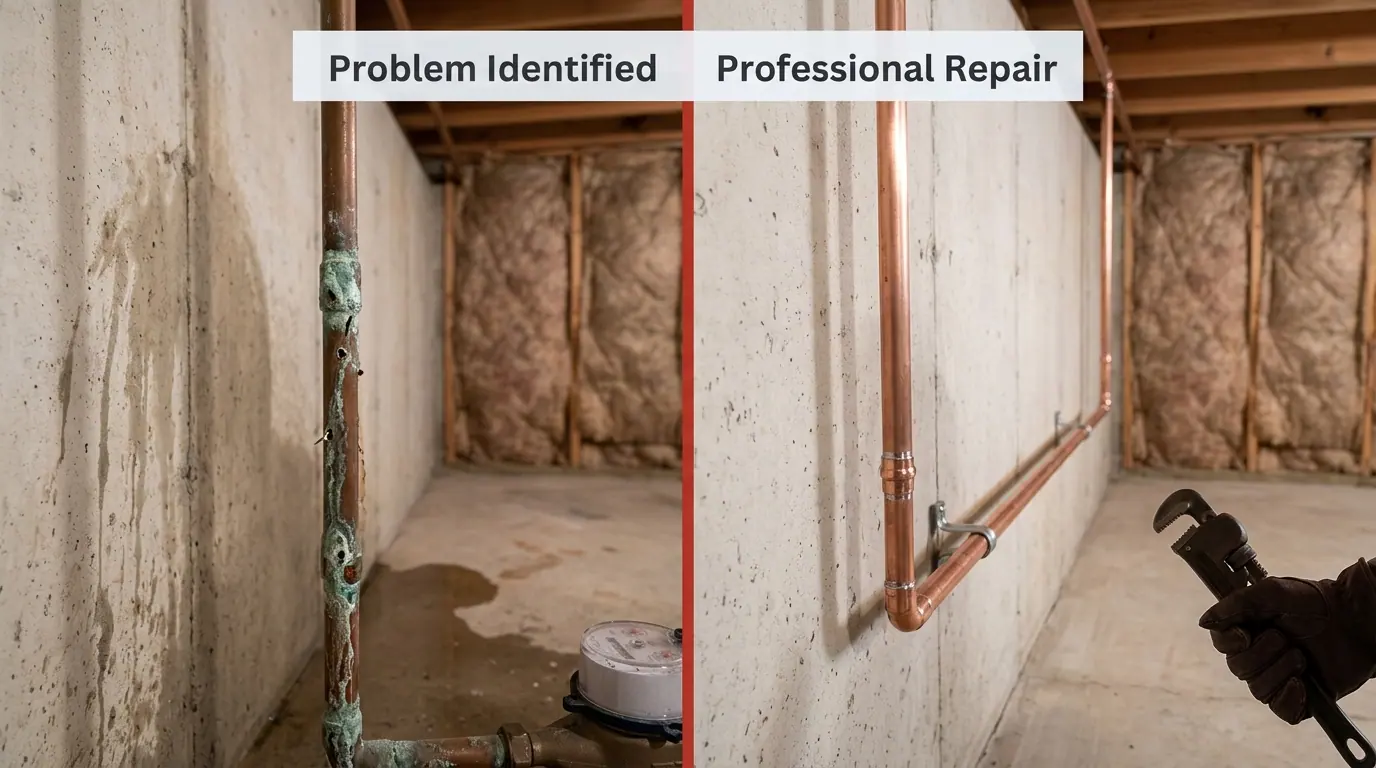
Once located, repair method depends on pipe material, leak size, and accessibility. Small pinhole leaks in accessible copper pipes receive epoxy patching or coupling replacement.
Larger leaks, corroded sections, or leaks behind finished walls often require cutting out the damaged section and installing new pipe, either matching material (copper, PEX) or upgrading deteriorated sections. When multiple leaks occur in short timeframe, or when inspection reveals systemic corrosion throughout copper or galvanized pipes, whole-house repiping becomes more cost-effective than chasing individual failures.
Frozen pipe repair surges in Southfield during January-February cold snaps when exterior wall pipes, unheated crawl spaces, or poorly insulated attics reach freezing temperatures. Prevention (pipe insulation, heat tape, maintaining minimum indoor temperatures) avoids the burst pipe flooding that causes thousands in water damage.
When pipes do freeze, professional thawing prevents rupture. Homeowner attempts with open flame create fire hazards and often burst pipes anyway.
Main water line leaks between the street and house require excavation and replacement, usually involving municipal permits and coordination with Oakland County Water Resources. Aged galvanized steel service lines common in Southfield's older neighborhoods corrode internally, reducing pressure and contaminating water with rust particles. Lead service lines, though less common now, require replacement for health safety, Michigan regulations prohibit lead in drinking water supply lines.
Sewer Line Services in Southfield
Sewer camera inspection reveals what's happening inside underground pipes without excavation. A waterproof camera on flexible cable travels through cleanouts or toilet drains, transmitting real-time video that shows blockages, root intrusions, pipe material, joint condition, and structural damage. In Southfield, we frequently find root masses at 15-30 feet from the building, where clay sewer laterals meet mature tree roots drawn to moisture and nutrients.
After identifying the problem, sewer line cleaning via hydro jetting removes root intrusions, scale buildup, and grease deposits that cable snaking can't fully clear. High-pressure water streams cut through root masses and scour pipe walls, restoring full diameter flow capacity. For light root intrusion in otherwise sound pipes, annual or bi-annual jetting prevents complete blockages.
When camera inspection reveals cracked pipes, separated joints, bellied sections (pipe sagging causing low spots where solids accumulate), or collapsed lines, repair or replacement becomes necessary. Traditional excavation replacement involves digging trenches to access damaged pipe sections, removing old pipe, and installing new, typically PVC or ABS plastic that resists root intrusion and corrosion. This method works for any pipe material or damage type but requires landscape restoration afterward.
Trenchless sewer line replacement offers two approaches: pipe bursting and pipe lining (CIPP, cured-in-place pipe). Pipe bursting pulls a bursting head through the old pipe while simultaneously pulling new pipe behind it, fracturing the old pipe outward.
Pipe lining inserts resin-saturated fabric tube into existing pipe, then inflates and cures it in place, creating new pipe inside old. Both methods avoid extensive excavation but require specific conditions: pipe bursting needs space for equipment, pipe lining requires pipes structurally intact enough to support the liner.
When to replace versus repair depends on damage extent: isolated cracks or root intrusions in otherwise sound pipes warrant spot repairs; systemic deterioration across multiple sections, collapsed lines, or severely corroded cast iron throughout the lateral justify full replacement. Southfield's clay sewer laterals installed in the 1950s-1960s are reaching end-of-life, showing widespread cracking and joint separation that recurring repairs can't permanently fix.
Call (313) 736-9553 for sewer camera inspection when you experience frequent drain backups, sewage odors in yard, gurgling toilets, or basement floor drain backups during main line use.
Fixture Installation & Repair Services
Toilets account for significant residential plumbing service calls. Running toilets (constantly refilling) waste water and money, usually caused by worn flapper valves, failed fill valves, or misadjusted float mechanisms.
Toilets that won't flush properly indicate clogged trap/drain, inadequate tank water level, or failing flush valve. Leaking toilets at the base signal failed wax ring seals requiring toilet removal and reinstallation.
Repair versus replacement depends on fixture age and repair frequency: toilets under 10 years old with single-issue problems merit repair; toilets over 15 years with recurring problems, cracked tanks, or outdated 3.5+ gallon flush volumes (modern WaterSense toilets use 1.28 gallons) justify replacement.
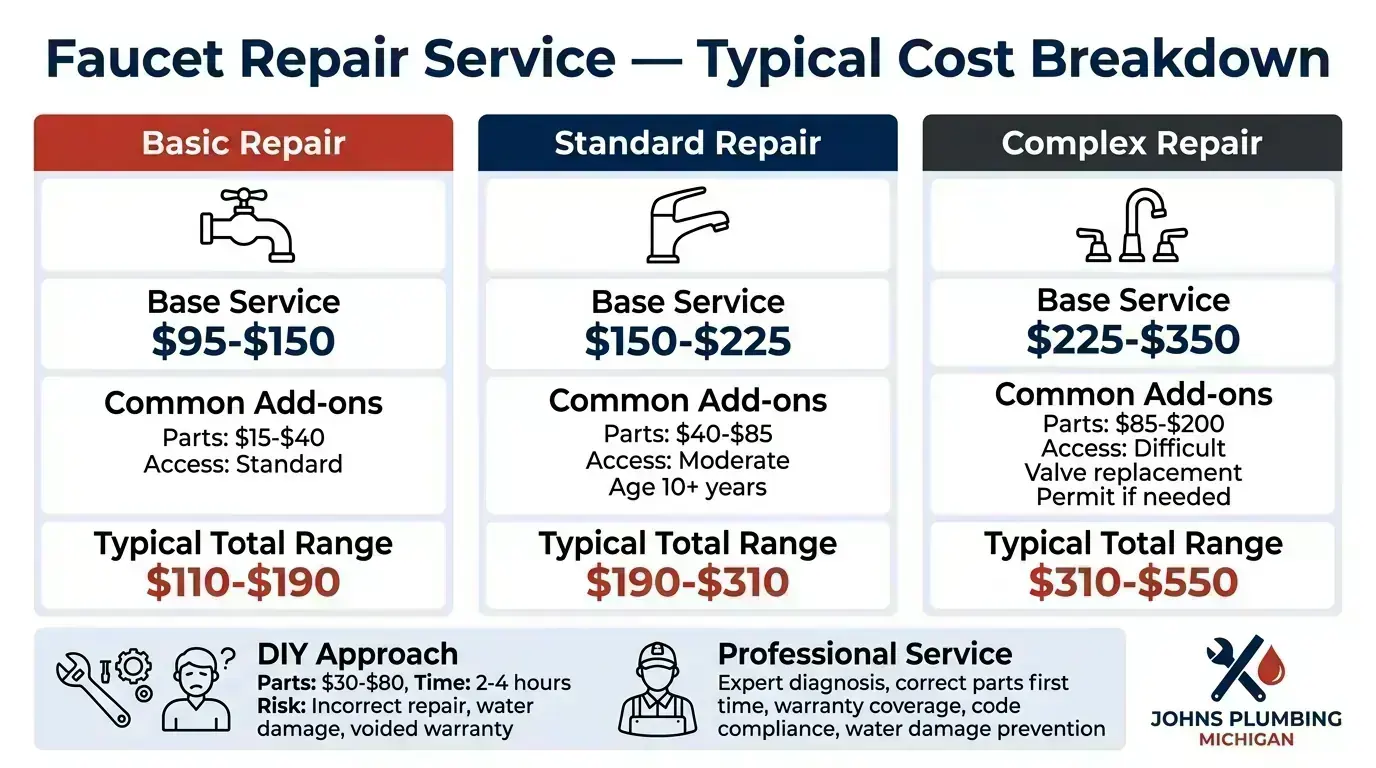
Faucet repair addresses drips, low pressure, and temperature control problems. Dripping faucets waste water and indicate worn washers, O-rings, or cartridges depending on faucet type.
Low pressure from individual faucets usually means aerator screen clogging (mineral buildup in hard water areas) or internal cartridge restriction. When faucets exceed 10 years, show corrosion, or require multiple repairs, replacement with modern fixtures offering better efficiency and performance becomes cost-effective.
Garbage disposals jam from inappropriate items (bones, fibrous vegetables, grease), fail due to motor burnout, or leak at mounting points. Jams usually clear with Allen wrench resets; failed motors require disposal replacement. Disposal leaks at sink mounting require seal replacement; leaks at dishwasher connection or drain elbow require tightening or gasket replacement.
Sinks, bathtubs, and shower fixtures involve installation work requiring proper waterproofing, drain connections, and supply line hookups. In Southfield's older bathrooms, tub and shower valve replacements often expose deteriorated tile backing or subfloor rot requiring additional repair before finishing.
Sump pumps in Southfield basements prevent flooding from groundwater, spring snowmelt, and heavy rainfall. Failure during March-April thaw or summer thunderstorms allows rapid basement flooding.
We install primary sump pumps with battery backup systems and high-water alarms to ensure operation during power outages. Critical when severe storms cause both flooding and power loss simultaneously.
Gas Line Services
Gas line work requires specialized licensing and strict safety protocols. We install gas lines for water heaters, dryers, stoves, and fireplaces, ensuring proper sizing, pressure testing, and code-compliant connections. Gas line installation in Southfield's mid-century homes often involves routing new lines through basements or crawl spaces since original gas layouts didn't anticipate modern appliance placement or tankless water heater BTU requirements.
Gas leak detection and emergency shutoff take absolute priority. Natural gas odor (rotten egg smell from added mercaptan), hissing sounds near gas lines, dead vegetation near underground gas lines, or physical symptoms (headache, nausea, dizziness) require immediate evacuation, 911 call, and then professional gas service. We pressure-test gas lines with manometers to confirm leak-free connections and verify proper pressure delivery to each appliance.
Gas line repair or replacement addresses corroded black iron pipes, damaged flexible connectors, or failed connections. Underground gas service lines in Southfield occasionally require excavation and replacement when corrosion compromises integrity. All gas line work requires permits from the City of Southfield Building Department and inspection before reconnection, Michigan law prohibits unlicensed gas work, and insurance companies void coverage for unpermitted installations.
Safety protocols include shutoff valve installation at each appliance for emergency isolation, proper venting to prevent carbon monoxide accumulation, and sediment trap installation to protect appliance controls from debris in gas supply. When upgrading to high-BTU appliances like tankless water heaters, we calculate required gas line capacity and upsize supply lines as needed. Undersized lines reduce appliance efficiency and create safety hazards.