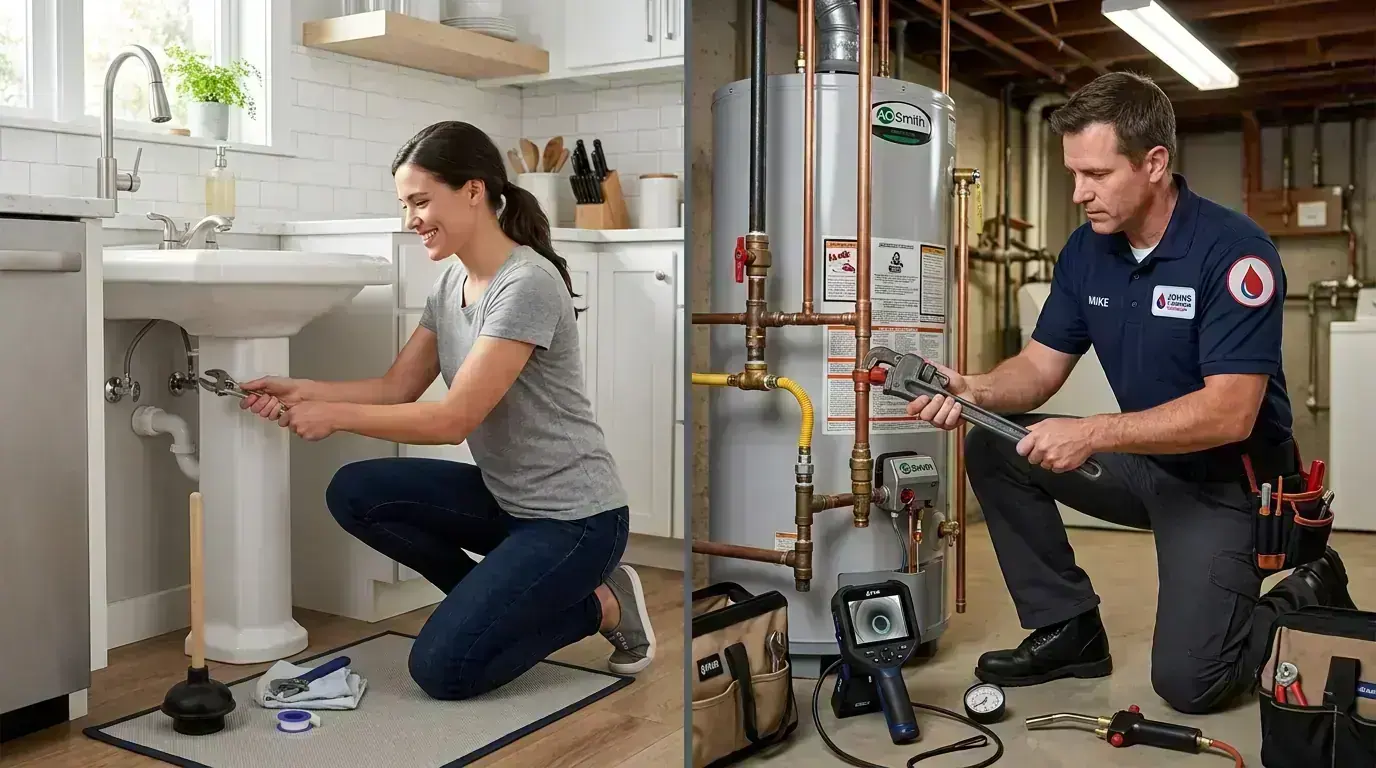
Johns Plumbing Michigan provides comprehensive residential plumbing services throughout Warren, Macomb County, covering emergency repairs, routine maintenance, and full system installations. Our licensed technicians handle drain and sewer line services, water heater repair and replacement, leak detection and pipe repair, fixture installation, and gas line work across Warren's aging infrastructure.
Where homes built 1950s-1980s often require specialized attention. Below is detailed coverage of each service category, methods used, and when Warren homeowners typically need each service.
Drain Cleaning & Clog Removal Services in Warren
Warren homeowners need professional drain cleaning when kitchen sinks back up from grease buildup, bathroom drains slow from hair and soap accumulation, or multiple fixtures drain poorly simultaneously, signaling main line involvement rather than isolated fixture clogs.
Kitchen sink drain cleaning addresses grease, food particle, and detergent buildup using cable snaking for accessible clogs or hydro jetting when buildup coats pipe walls. Bathroom sink and tub drains accumulate hair, soap scum, and toothpaste residue; cable augers clear most clogs, while hydro jetting removes scale in homes with hard water.
Shower drain cleaning tackles hair and shampoo buildup, often requiring removal of drain assembly to access trapped material before augering. Toilet clogs from excessive paper, foreign objects, or partial sewer line blockages respond to closet augers; recurring toilet backups suggest main line problems requiring camera inspection.
Main sewer line cleaning becomes necessary when multiple drains slow or back up together, gurgling toilets, basement floor drain backups, or sewage odor indicate blockages in the main line to the street. Hydro jetting clears tree roots, grease buildup, and debris more thoroughly than cable snaking, particularly in Warren's older clay and cast iron sewer pipes where root intrusion through joints is common. Video camera inspection identifies blockage location, pipe condition, and whether cleaning or replacement is needed.
In Warren's older neighborhoods with mature trees and 50-100 year old sewer infrastructure, tree root intrusion occurs when roots penetrate clay pipe joints seeking moisture. Clay soil and sandy pockets allow roots to spread aggressively, creating dense root masses that trap debris and restrict flow. Hydro jetting cuts roots flush with pipe interior, restoring flow temporarily, but recurring root clogs every 1-3 years indicate pipe replacement may be more cost-effective than repeated cleaning.
Need camera inspection to diagnose recurring drain problems? Call (313) 736-9553 for video documentation and repair recommendations.
Water Heater Repair & Replacement Services
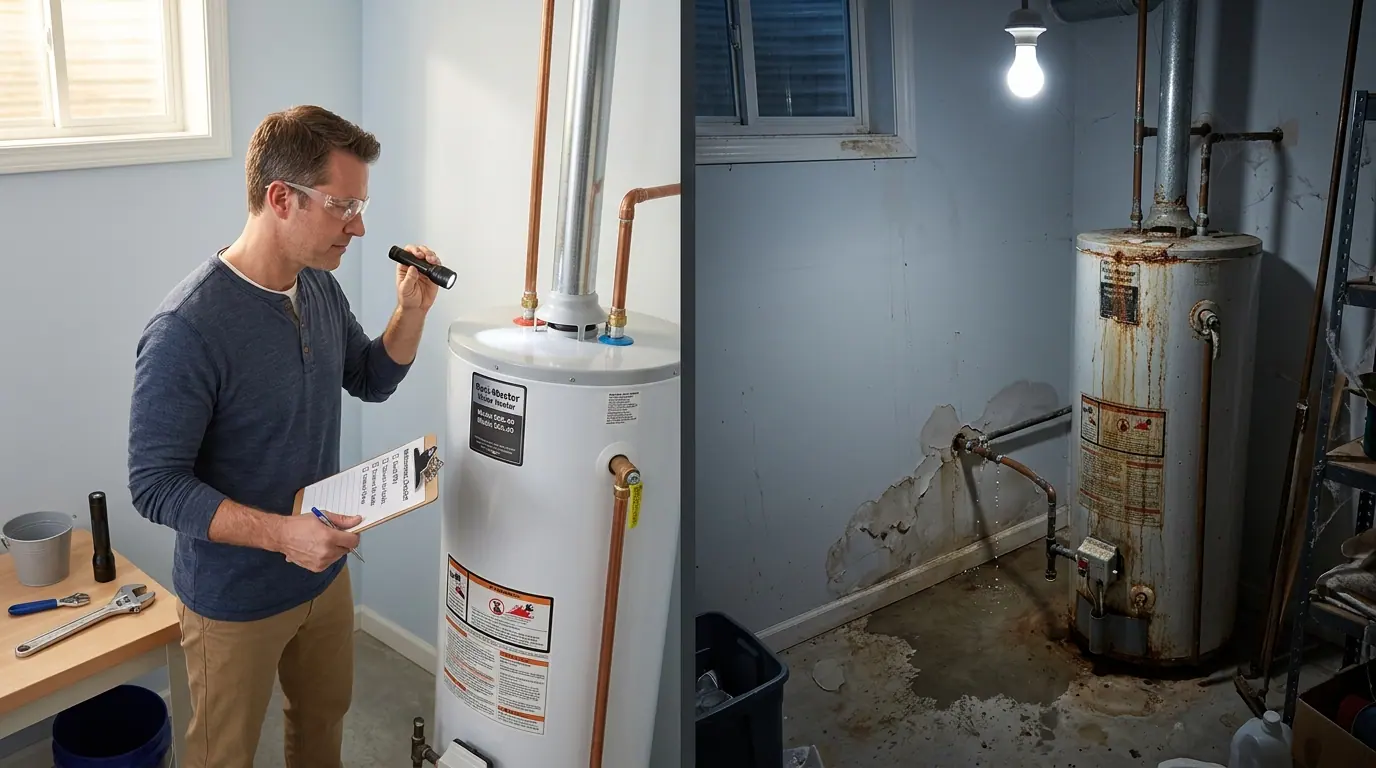
Warren homes typically need water heater service when units reach 8-12 years old and show efficiency decline, when pilot lights fail repeatedly, or when leaks appear at connections or tank bottom. Decision between repair and replacement depends on unit age, repair cost relative to replacement, and whether efficiency upgrades justify new installation.
Tank water heater repair addresses pilot light problems (thermocouple replacement), thermostat failures causing inconsistent temperature, anode rod deterioration accelerating tank corrosion, and pressure relief valve leaks. Repairs make sense for units under 8 years old with isolated component failures. Tankless water heater installation provides endless hot water and energy savings but requires adequate gas line capacity, proper venting, and often electrical upgrades.
Initial cost is higher but operating cost is lower over 20+ year lifespan. Water heater replacement becomes necessary when tanks leak from corrosion, when repair costs exceed 50% of replacement cost, or when units over 12 years old require major repairs.
Sizing guidance matters in Warren's housing stock: 40-gallon tanks suit 1-2 person households, 50-gallon tanks serve 3-4 people, and 75-80 gallon tanks handle larger families. Undersized units run out of hot water during peak use; oversized units waste energy heating unused capacity.
Tankless units size by flow rate (gallons per minute) and temperature rise. Michigan's cold groundwater requires higher BTU ratings than southern climates to achieve desired outlet temperature during simultaneous use.
Warren's hard water accelerates sediment accumulation at tank bottom, reducing capacity and efficiency while increasing energy bills. Annual flushing removes sediment and extends tank life, particularly important in areas served by wells or older municipal infrastructure with mineral-rich water. Anode rod inspection every 3-4 years identifies when sacrificial protection has depleted, replacing anode rods before they fail completely prevents premature tank corrosion and extends unit lifespan by several years.
Tank versus tankless comparison for Warren homes: tank units cost $1,300-$1,900 installed for standard 50-gallon models, require less complex installation, and provide adequate hot water for most families. Tankless units cost $2,500-$4,500 installed, require gas line and venting upgrades in many older homes, but eliminate standby heat loss and provide unlimited hot water capacity. In Warren's climate with 112.5 annual freeze days, basement installations protect both unit types from freeze damage, while garage installations require freeze protection and insulated supply lines.
Leak Detection & Pipe Repair Services
Professional leak detection becomes necessary when water bills increase unexpectedly, when water sounds run behind walls with fixtures off, or when wet spots appear on walls, ceilings, or floors without obvious source. Warren's aging housing stock, particularly homes with original 1950s-1980s galvanized or cast iron pipes, develops hidden leaks as thread joints corrode and pipe walls thin from decades of exposure.
Acoustic leak detection uses sensitive listening equipment to identify leak locations behind finished walls and under concrete slabs without destructive exploration. Thermal imaging cameras detect temperature differentials where water escapes, showing leak zones through drywall and insulation.
Both methods reduce demolition and repair costs by pinpointing exact leak locations before opening walls or floors. Slab leak detection addresses leaks in pipes embedded in basement concrete floors or main level slabs, common in Warren's mid-century construction where copper supply lines ran through poured concrete.
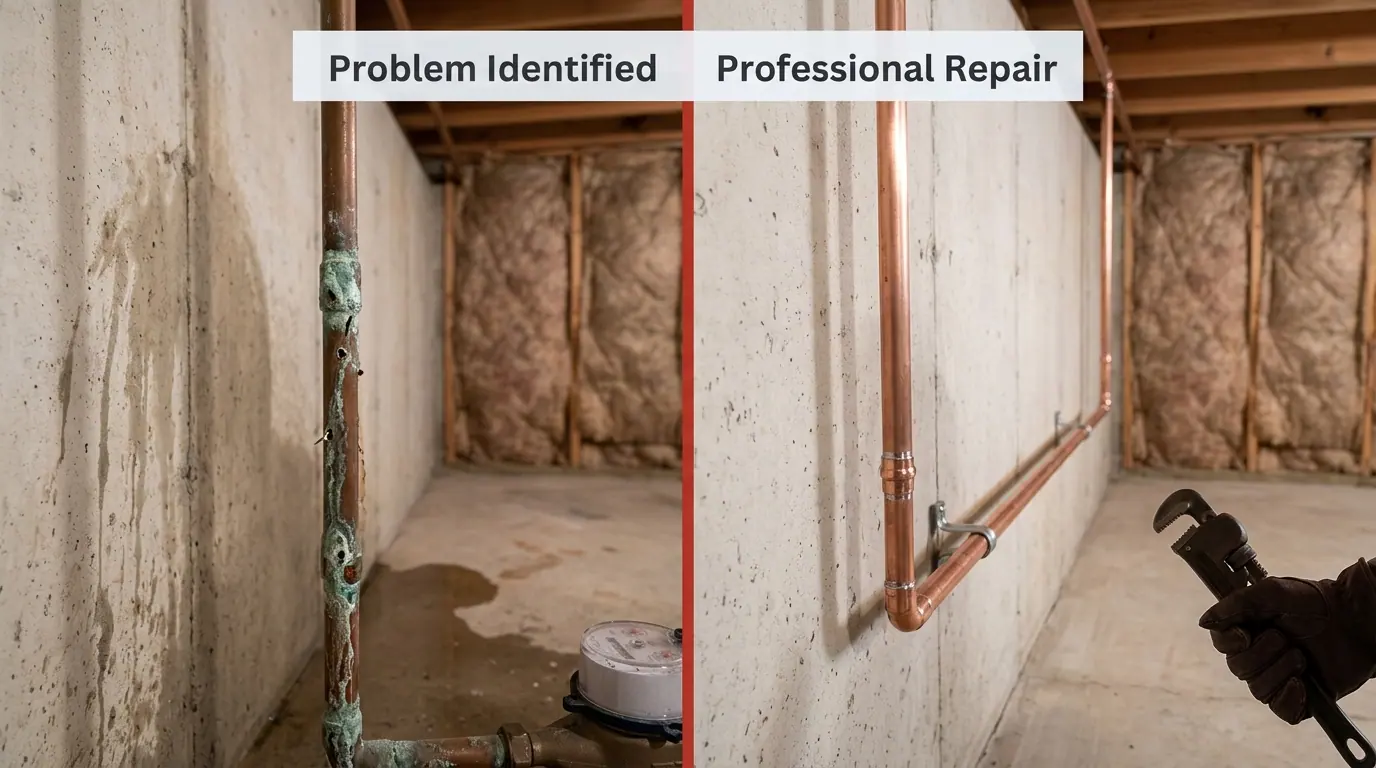
Pipe repair techniques vary by access, pipe material, and damage extent. Epoxy lining seals pinhole leaks in accessible copper and galvanized pipes by coating interior surfaces, extending pipe life 10-15 years without replacement. Section replacement cuts out damaged pipe segments and installs new material.
Practical when leaks concentrate in specific areas like transition joints or exterior wall penetrations exposed to freeze cycles. Whole-home re-piping becomes cost-effective when multiple leaks occur within short timeframes, when galvanized pipes show widespread corrosion, or when pinhole leaks multiply in copper pipes affected by aggressive water chemistry.
Warren's freeze-thaw cycles stress pipes in exterior walls, uninsulated crawl spaces, and unheated basements. When temperatures drop below 20°F for extended periods, common during January and February cold snaps, water inside pipes freezes, expands, and cracks pipe walls or bursts fittings.
Frozen pipe repair typically requires thawing the line, identifying burst locations, and replacing damaged sections before restoring water service. Prevention includes insulating exposed pipes, maintaining minimum 55°F heat in unoccupied homes, and allowing faucets to drip during extreme cold.
Main water line repair addresses leaks between the municipal connection at the street and the home's interior shutoff valve. Signs include soggy yard patches near the service line path, water pooling near foundation, or sudden pressure loss throughout the house.
Clay and sandy soil common in Warren allows underground leaks to travel unpredictably before surfacing, making precise leak location critical before excavation. Repair versus replacement depends on pipe age, material (galvanized corrodes, copper develops pinhole leaks, PEX resists both), and whether partial damage or systemic deterioration exists.
Dealing with unexplained water loss or hidden leak signs? Call (313) 736-9553 for professional leak detection and targeted repair.
Sewer Line Services in Warren
Warren homeowners need sewer line service when multiple drains back up simultaneously, when sewage odor appears indoors or in the yard, or when gurgling sounds come from toilets during drainage, all indicating main line restriction between the house and street connection. Sewer camera inspection shows blockage location, pipe interior condition, root intrusion extent, and whether bellied sections or structural damage exists.
Camera inspection inserts flexible video line through cleanout access, recording pipe interior from house to street while technician notes depth markers and identifies problems. Footage shows whether blockages are soft (roots, grease, paper) responding to cleaning or hard (collapsed pipe, offset joints) requiring repair. In Warren's older neighborhoods with 50-100 year old clay tile and cast iron sewer lines, camera inspection often reveals root masses filling pipe interiors, bellied sections holding standing water, or separated joints allowing soil infiltration.
Hydro jetting for root removal uses high-pressure water streams (3,000-4,000 PSI) to cut roots flush with pipe interior walls and scour grease buildup from pipe surfaces. More thorough than cable snaking, hydro jetting clears the full pipe diameter and removes scale accumulation that cable augers leave behind.
Effective for Warren's mature tree root problems where roots re-enter pipes through existing cracks and joints, seeking moisture during dry summer months. Hydro jetting provides 1-3 year relief before roots regrow, depending on tree species and proximity to sewer line.
Traditional excavation replacement digs trench along sewer line path, removes damaged pipe, and installs new PVC sewer line from house to street connection. Required when pipe has collapsed, when multiple sections show structural damage, or when bellied pipe grades prevent proper drainage. Excavation disrupts landscaping, driveways, and sidewalks requiring restoration after pipe installation, but provides complete access for thorough repair and allows grade correction for proper flow.
Trenchless sewer line methods minimize surface disruption through pipe bursting (pulls new pipe through old line while fracturing old pipe outward) or pipe lining (pulls resin-saturated liner through existing pipe and inflates it to create new pipe within old pipe walls). Pipe bursting works when old pipe diameter and material allow breaking, replacing full line from access pits at each end.
Pipe lining suits pipes with minor cracks and root intrusion but intact structure, creating smooth interior that resists root penetration. Trenchless costs more than excavation initially but eliminates landscape restoration expenses and completes in 1-2 days versus week-long excavation projects.
Warren's clay and sandy soil composition allows underground pipe movement during freeze-thaw cycles, creating bellied sections where pipes sag below grade. Bellies accumulate standing water and solids, forming persistent soft spots that block drainage and trap debris.
Camera inspection identifies belly locations and severity. Minor bellies sometimes clear with hydro jetting, but pronounced bellies require excavation to re-grade pipe for proper fall toward street.
Fixture Installation & Repair Services
Fixture services address toilets, faucets, garbage disposals, sinks, tubs, showers, and sump pumps, components homeowners interact with daily that wear from use and Warren's hard water buildup. Repair versus replacement decisions depend on fixture age, repair cost relative to replacement, and whether modern efficiency models justify upgrade costs.
Toilet repair handles running toilets wasting water from worn flapper valves, toilets that won't flush from failed fill valves or clogged rim jets, and leaking toilets from deteriorated wax rings or tank-to-bowl gaskets. Simple repairs like flapper replacement cost $15-30 in parts; complex repairs like fill valve or flush valve replacement run $80-150 including labor. Toilet replacement becomes cost-effective when multiple components fail simultaneously, when cracks appear in porcelain, or when water-saving modern toilets (1.28 gallons per flush versus older 3.5-5.0 gallon models) justify upgrade for reduced water bills.
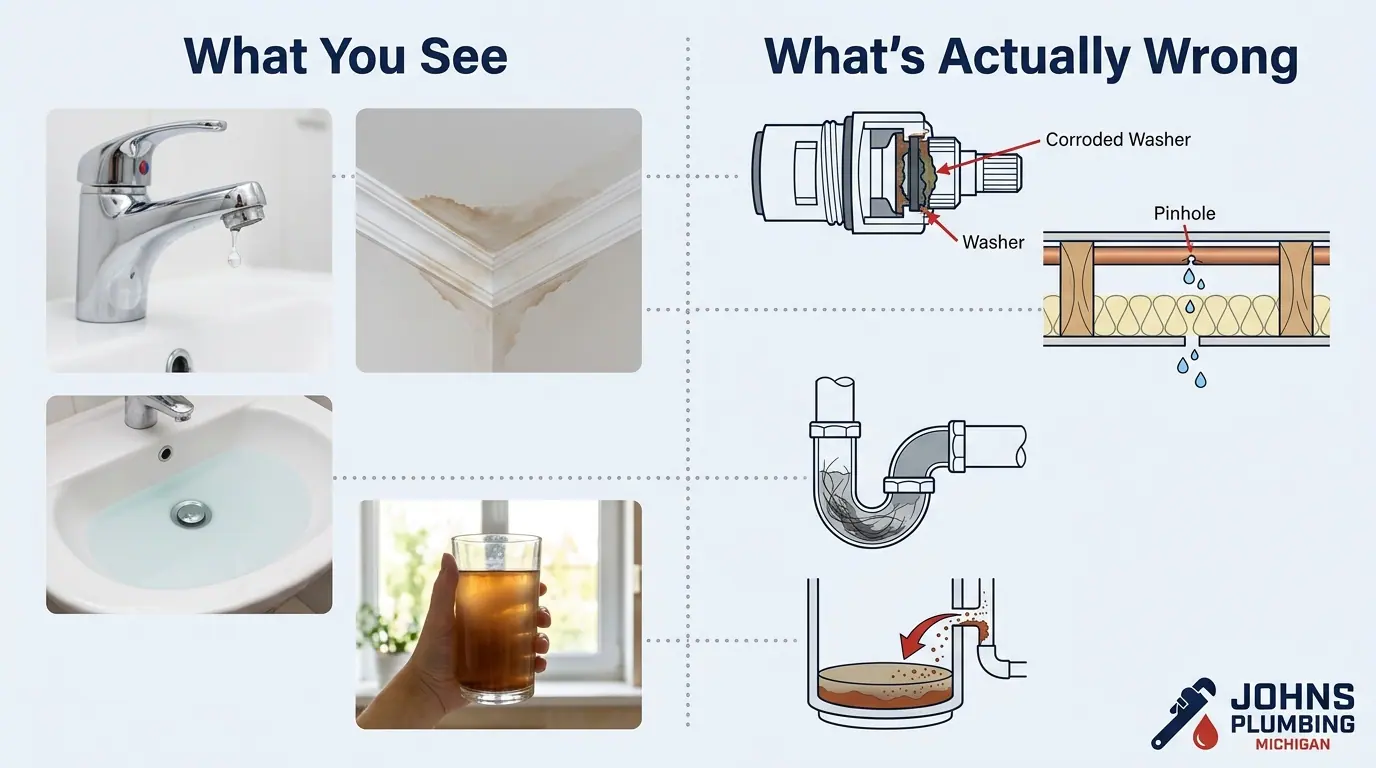
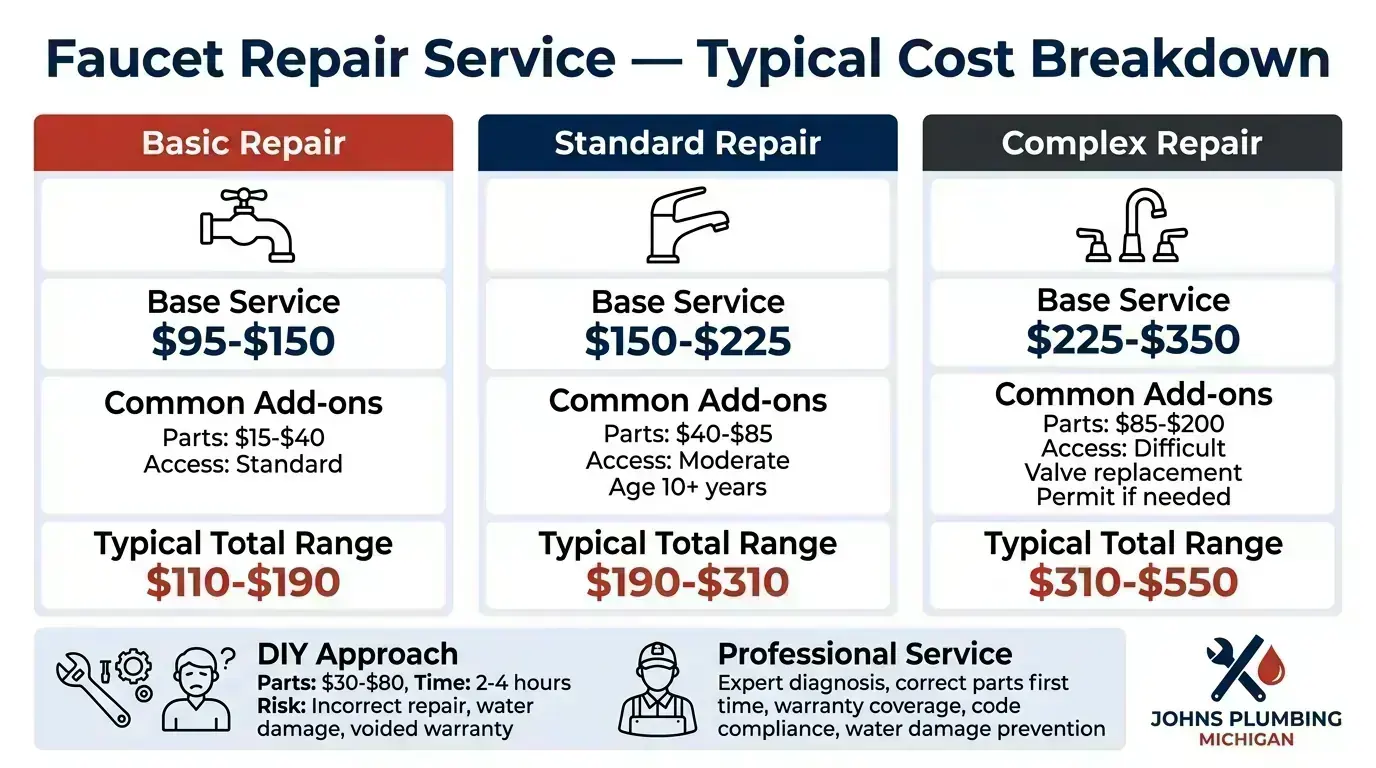
Faucet repair addresses dripping from worn cartridges or washers, low pressure from aerator mineral buildup, and leaking handles from deteriorated O-rings. Cartridge replacement extends faucet life 5-10 years for quality fixtures; cheap faucets often cost less to replace than repair. Hard water in Warren accelerates mineral deposits clogging aerators and coating internal components.
Periodic aerator cleaning and cartridge lubrication extend fixture life. Faucet installation for upgrades includes matching new fixture mounting to existing sink holes, confirming supply line compatibility, and ensuring shut-off valves function properly.
Garbage disposal problems include jammed units from foreign objects, leaking mounting flanges from gasket deterioration, and failed motors from overload or age. Jams often clear by removing obstruction from grinding chamber; leaks require dismounting disposal to replace rubber gasket; motor failures require replacement.
Units cost $150-400 installed depending on horsepower and features. Warren homes with septic systems should avoid garbage disposals or limit use, as ground food waste accelerates septic tank filling requiring more frequent pumping.
Sump pump installation protects Warren basements from groundwater intrusion during spring thaws and heavy rain events common in Macomb County's clay soil with poor drainage. Primary pumps activate when pit water rises, discharging through exterior discharge line away from foundation. Battery backup pumps provide protection during power outages.
Critical during severe storms when municipal power fails and basement flooding risk peaks. Annual testing before spring thaw season confirms pump operation, checks discharge line for freeze damage, and ensures backup battery holds charge.
Gas Line Services in Warren
Gas line services require Michigan-licensed plumbers qualified for natural gas work. Unlicensed installation violates state plumbing code and creates serious safety hazards including gas leaks, carbon monoxide poisoning, and explosion risk.
Gas line installation connects natural gas to water heaters, dryers, stoves, fireplaces, and other appliances in Warren homes served by municipal natural gas. Installation includes sizing gas pipe for appliance BTU requirements, pressure testing connections for leaks, and coordinating permit inspections with Warren's Building Division. Gas water heater installations require both plumbing permit for water connections and mechanical permit for gas piping and venting, dual permit requirement applies to all gas-fired heating appliances.
Gas leak detection addresses rotten egg odor (mercaptan added to odorless natural gas), hissing sounds near gas lines, dead vegetation along underground service lines, or physical symptoms like headache, nausea, and dizziness indicating carbon monoxide or natural gas exposure. Suspected gas leaks require immediate action: evacuate home, call 911 and gas utility emergency line from outside, and do not operate electrical switches or create ignition sources. After utility secures gas supply, licensed plumber pressure-tests system to locate leak source, repairs damaged pipe or connection, and retests before restoring service.
Gas line pressure testing verifies system integrity after repairs, confirms new installations meet code, and identifies small leaks before they become hazards. Test applies air or inert gas pressure above operating pressure, monitors gauges for pressure drop indicating leaks, then uses soap solution at joints to pinpoint leak locations by bubbling. Warren's Building Division requires pressure test documentation before final inspection approval.
Gas shut-off valve installation provides emergency shutoff capability at appliance connections and main service entry. Individual appliance valves allow servicing specific equipment without shutting gas to entire home; main shutoff valve at meter allows emergency shutdown during suspected leaks or natural disasters.
Need gas line work for appliance installation or leak concerns? Call (313) 736-9553 for Michigan-licensed gas line service with proper permitting.