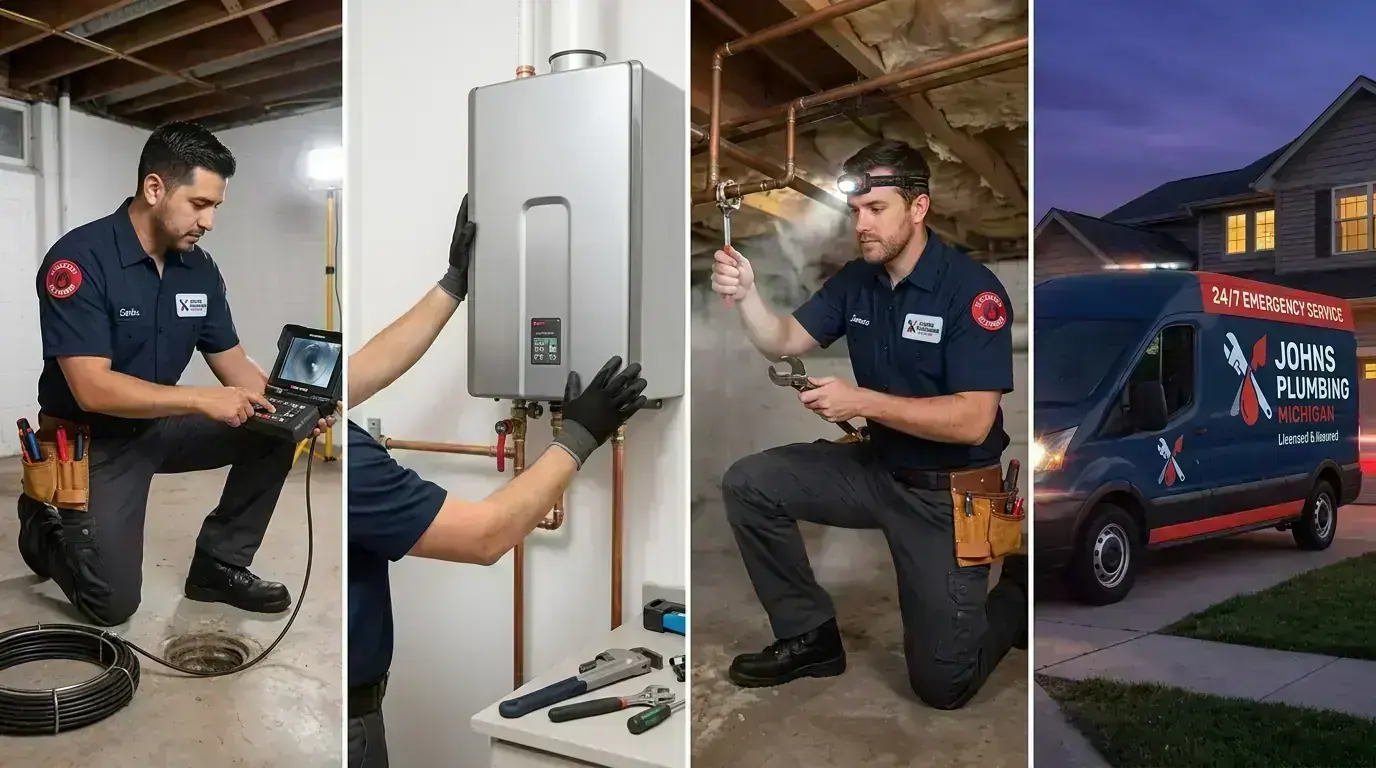
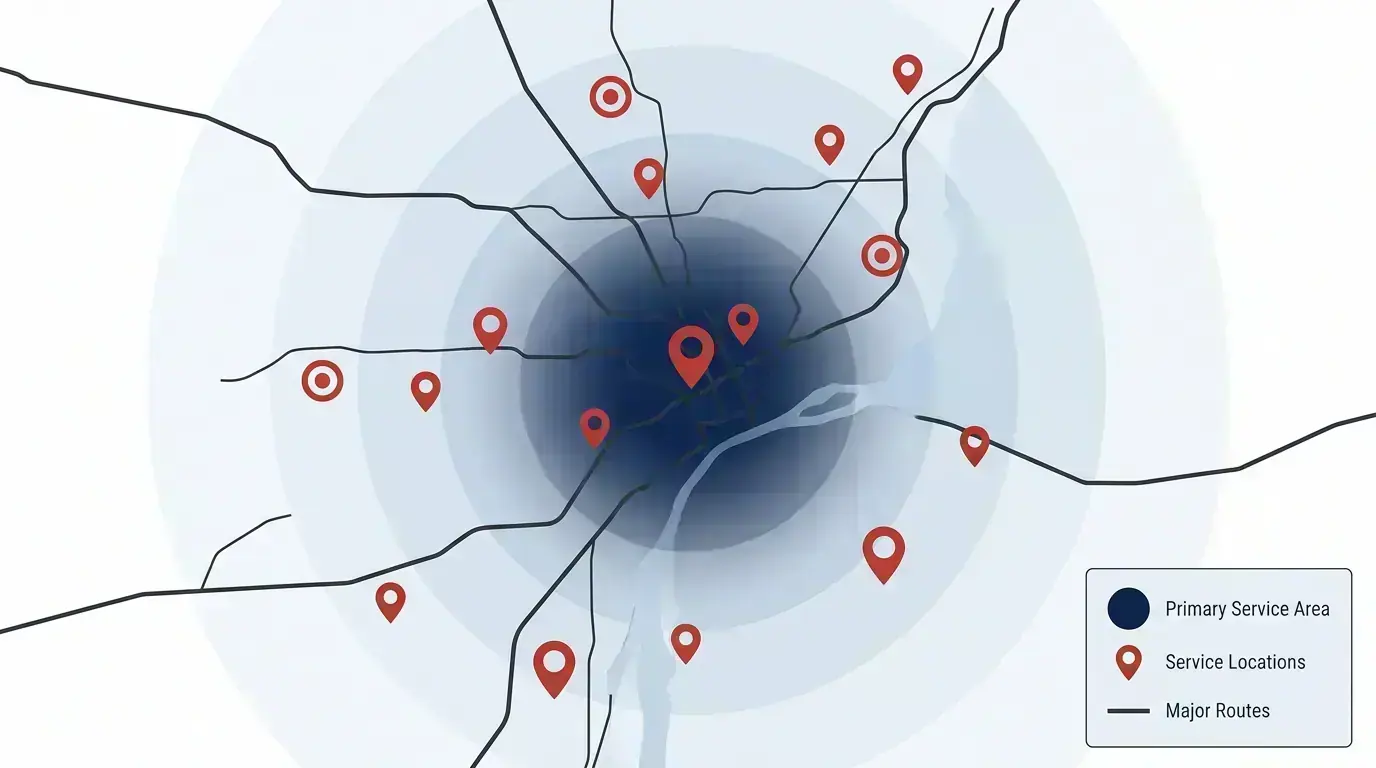
Johns Plumbing Michigan provides comprehensive residential plumbing services throughout Wyoming, Kent County, from routine repairs to complex installations across 1940s-1970s ranch homes and modern subdivisions. Our licensed technicians handle drain cleaning, water heater services, leak detection, sewer line work, fixture installations, and gas line services across ZIP codes 49418, 49519, 49548, 49509, and 49528. Below is detailed coverage of each major service category, the methods we use, and when Wyoming homeowners typically need each service.
Drain Cleaning & Clog Removal Services in Wyoming
Wyoming homeowners face drain clogs from a combination of hard water mineral deposits, aging cast iron drain lines in older homes along 28th Street and Clyde Park, and basement floor drain backups during spring thaw near Buck Creek. We provide kitchen sink, bathroom sink, tub, shower, toilet, main sewer line, and floor drain cleaning using cable snaking for standard clogs and hydro jetting for severe blockages caused by scale buildup, grease accumulation, or root intrusion.
Cable snaking works for localized clogs within individual fixtures, hair in bathroom drains, food debris in kitchen sinks, paper buildup in toilets. Our technicians insert a flexible auger through the drain access point and mechanically break up the blockage.
Hydro jetting uses high-pressure water streams (up to 4,000 PSI) to clear tough blockages and scour pipe walls clean of scale, grease, and mineral deposits, particularly effective for Wyoming homes with hard water buildup. We recommend hydro jetting for recurring clogs, slow drains throughout the house (indicating main line issues), or when video camera inspection reveals heavy scale coating inside pipes.
When multiple drains slow simultaneously, the problem typically lies in your main sewer line, not individual fixtures. Tree root intrusion into clay sewer pipes (common in Wyoming's older neighborhoods), collapsed pipe sections from soil settling, or grease accumulation in the main line all cause whole-house drainage problems. Video camera inspection identifies the exact location and cause before we recommend cleaning versus repair.
If camera inspection reveals structurally sound pipes with blockages, hydro jetting clears the line. If inspection shows cracked, collapsed, or root-damaged pipes, we proceed to sewer line repair.
For Wyoming homes built before 1980, original cast iron drain lines may have corroded interiors that snag debris and promote recurring clogs. Repeated cable snaking provides temporary relief, but permanent solutions require either epoxy pipe lining (trenchless interior coating that smooths corroded surfaces) or section replacement of the worst segments.
Need drain cleaning in Wyoming? Call (313) 736-9553 for camera inspection and expert cleaning service.
Water Heater Repair & Replacement Services
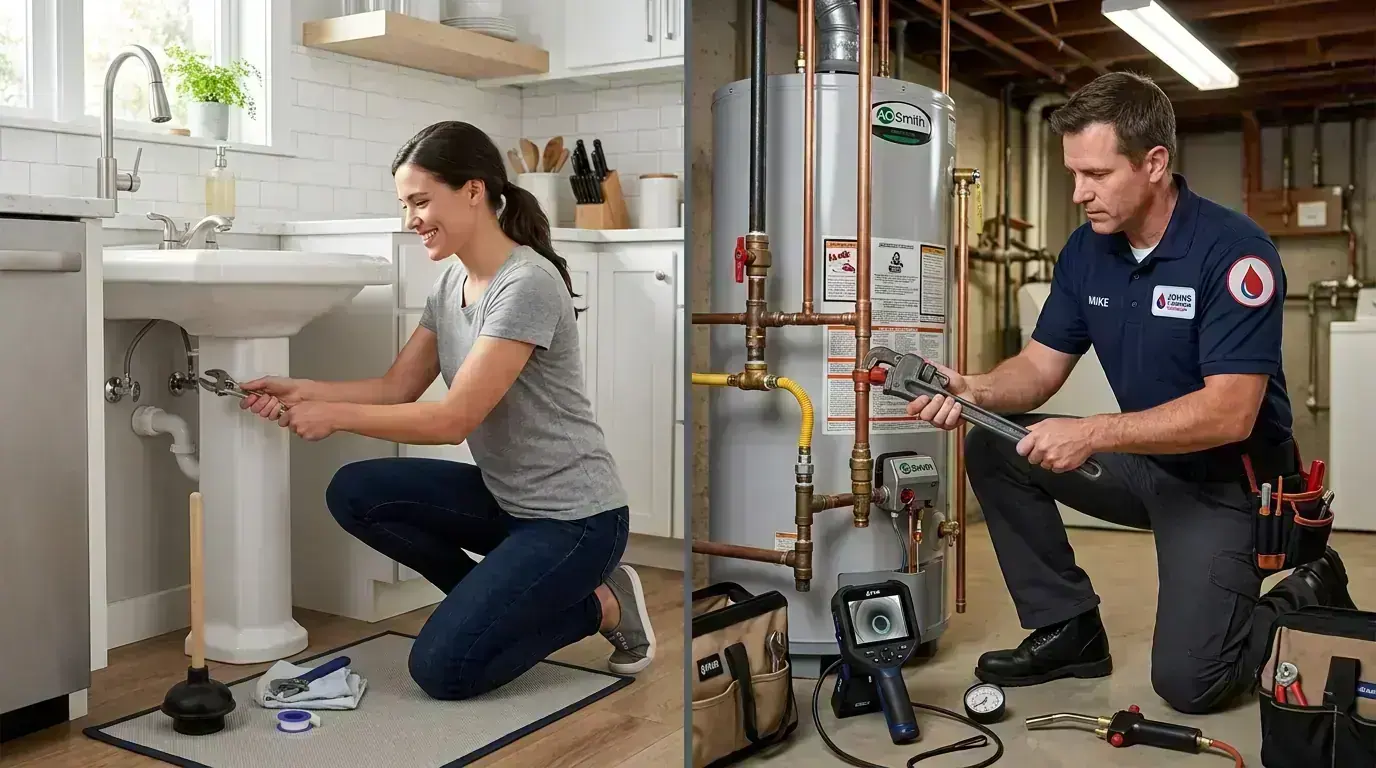
Water heater service requests spike during Wyoming winters when units work harder to heat incoming cold water and older systems fail under increased demand. We repair tank water heaters (addressing pilot light, thermostat, heating element, anode rod, and pressure relief valve issues), install tankless water heaters for space-saving efficiency, and replace aging units showing signs of failure.
Tank water heater repair makes sense when the unit is under 8 years old and the problem is component failure, pilot light won't stay lit (thermocouple replacement), insufficient hot water (thermostat adjustment or heating element replacement), or minor tank leaks (pressure relief valve replacement). Once a tank water heater reaches 10-12 years, replacement becomes more cost-effective than repair because aging tanks develop internal corrosion, sediment buildup reduces capacity, and heating efficiency drops. Wyoming's hard water accelerates this timeline, mineral deposits coat heating elements and tank interiors, forcing the system to work harder and shortening lifespan.
Tankless water heaters provide continuous hot water, eliminate standby heat loss, and last 15-20 years versus 10-12 for tank units. Installation requires adequate gas line capacity (for gas models), proper venting, and sometimes electrical service upgrades.
We size tankless units based on peak demand, number of bathrooms, simultaneous fixture use, and incoming water temperature. Wyoming's cold groundwater (40-50°F in winter versus 60-70°F in summer) means tankless units must work harder during winter months, affecting flow rate calculations.
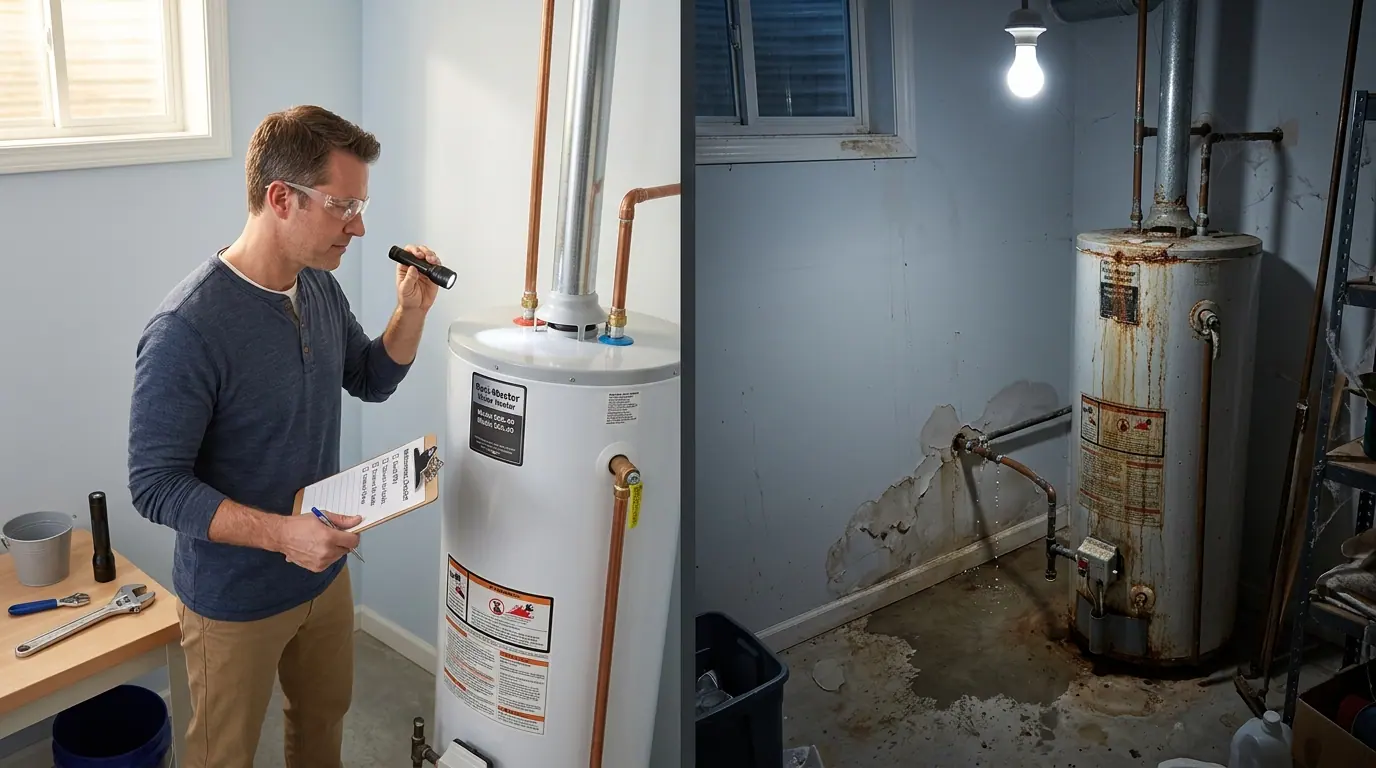
Pilot light issues, rumbling or popping noises (sediment buildup on tank bottom), rusty water, or leaks around the tank base all signal water heater problems requiring professional attention. No hot water during Wyoming winters constitutes an emergency.
We provide same-day replacement when needed. Annual flushing removes sediment, extends tank life, and maintains efficiency, especially important in Wyoming's hard water conditions.
Leak Detection & Pipe Repair Services in Wyoming
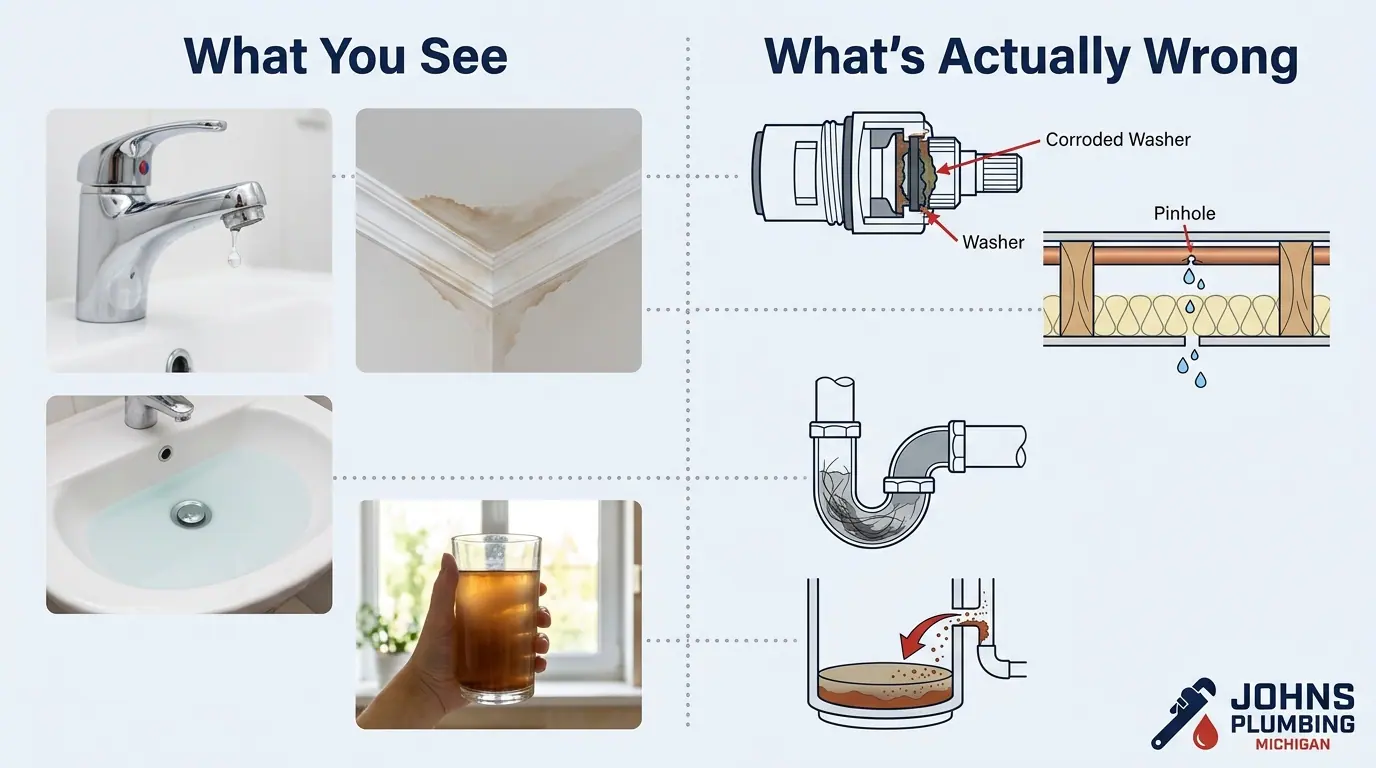
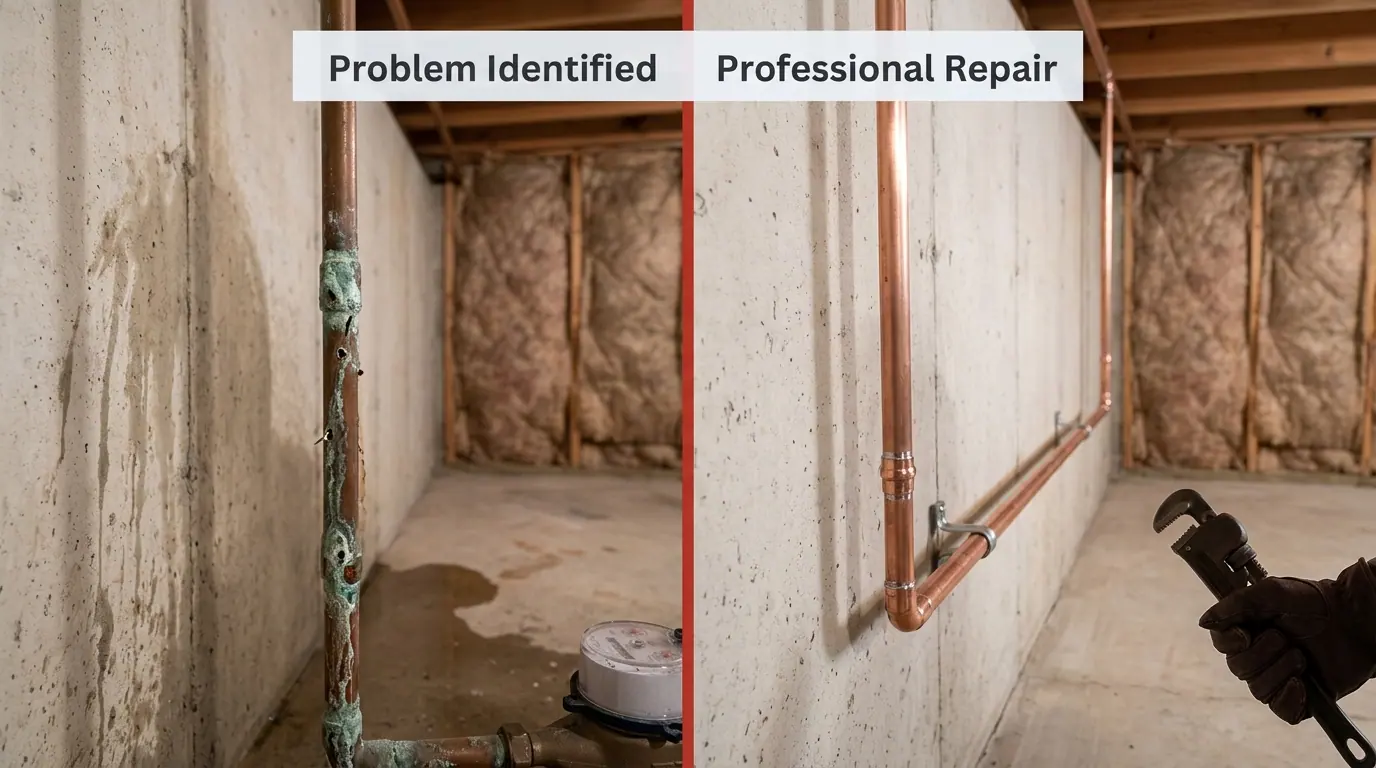
Leak detection in Wyoming addresses slab leaks, underground leaks, wall leaks, and frozen pipe damage common during Michigan's freeze-thaw cycles. We use visual inspection, acoustic leak detection, and thermal imaging to locate hidden leaks, then determine whether patching, epoxy lining, section replacement, or full re-piping provides the best solution.
Unexplained water bill increases, sound of running water when fixtures are off, wet spots on walls or ceilings, mold growth, low water pressure throughout the house, or warm floor spots (indicating hot water leak beneath slab) all suggest hidden leaks requiring professional detection. Acoustic leak detection uses sensitive equipment to hear water escaping under pressure.
Thermal imaging identifies temperature anomalies where water saturates insulation or structural materials. For Wyoming homes on slabs (less common) or with basements, we focus detection on areas where pipes run through concrete, under basement floors, or inside exterior walls prone to freezing.
Once we locate a leak, repair method depends on pipe material, location, and extent of damage. Pinhole leaks in accessible copper pipes can be patched or epoxied. Corroded galvanized steel pipes in older Wyoming homes (common in 1940s-1970s construction) often show multiple weak points.
Repairing one leak only delays the next. When galvanized pipes show widespread corrosion or multiple leaks within short timeframes, whole-house re-piping with PEX or copper provides long-term reliability.
Frozen pipe repair addresses burst pipes in uninsulated basements, crawl spaces, and exterior walls during Wyoming's sub-zero winter stretches. We thaw frozen sections, repair or replace burst pipe segments, and recommend insulation or heat cable installation to prevent recurrence. Main water line leaks (between street connection and house) require excavation, section replacement, and coordination with city water department for shut-off during repair.
Sewer Line Services
Sewer line problems in Wyoming stem from aging clay pipes in older neighborhoods, tree root intrusion (particularly from mature trees along established streets), soil movement from freeze-thaw cycles, and grease or debris accumulation. We provide sewer camera inspection, line cleaning, hydro jetting, tree root removal, and sewer line repair using traditional excavation or trenchless methods.
Sewer camera inspection sends a waterproof video camera through your cleanout access point to examine the entire sewer line from house to street connection. The camera identifies blockages, root intrusion points, pipe cracks, collapsed sections, bellied pipe (sagging sections where debris accumulates), and connection issues at the municipal tap. Inspection determines whether cleaning resolves the problem or structural repair is needed, critical information before committing to excavation.
Tree root removal uses specialized cutting heads attached to cable equipment or hydro jetting nozzles designed to cut roots flush with pipe interior walls. Roots enter clay pipe joints seeking moisture, then grow inside the pipe until they snag debris and create blockages.
Cutting roots clears the blockage, but roots regrow within 1-3 years unless we apply root-killing foam or replace the compromised pipe section. For Wyoming homes near mature trees, sewer line problems often recur until the root source is addressed.
Traditional excavation exposes the damaged sewer line section for replacement. Necessary when pipes have collapsed, separated at joints, or show extensive cracking. We excavate trenches, remove damaged pipe, install new PVC sewer pipe, backfill, and restore landscaping. Trenchless repair methods (pipe bursting or pipe lining) minimize excavation. Pipe bursting pulls a new pipe through the old line while simultaneously fracturing the old pipe outward.
Pipe lining (cured-in-place pipe) inserts an epoxy-saturated liner that hardens inside the existing pipe, creating a new pipe within the old one. Trenchless methods cost more upfront but avoid landscape destruction and shorten project timelines. Need sewer line service in Wyoming? Call (313) 736-9553 for camera inspection and repair options.
Fixture Installation & Repair Services
Fixture service covers toilet repair and replacement, faucet repair and installation, garbage disposal work, sink installations, bathtub and shower fixture service, and sump pump installation and repair (particularly important for Wyoming's basement flooding challenges near Buck Creek and low-lying areas).
Toilet repair addresses running toilets (wasting 200+ gallons per day from worn flappers or fill valves), toilets that won't flush (flapper, flush valve, or fill valve failure), constant refilling (fill valve adjustment needed), and leaks around the base (wax ring replacement). When toilets are 15+ years old, show cracks in porcelain, or require frequent repairs, replacement becomes more cost-effective. Modern low-flow toilets use 1.28 gallons per flush versus 3.5+ gallons in older models, reducing water bills.
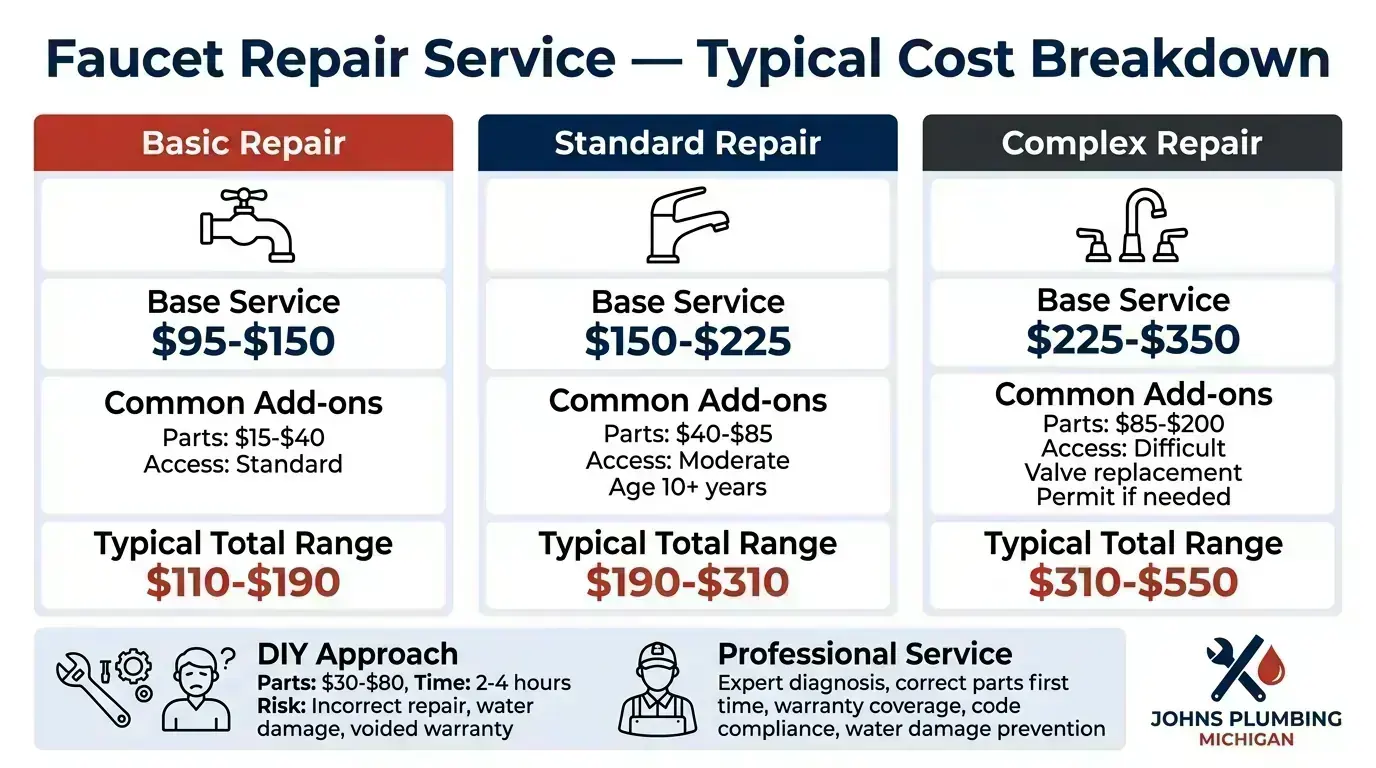
Faucet repair fixes dripping (worn washers or cartridges), low pressure (aerator clog from hard water deposits), and handle leaks (O-ring replacement). Wyoming's hard water clogs aerators with mineral scale. Simple cleaning restores flow.
When faucet bodies corrode or multiple components fail, replacement costs less than cumulative repairs. We install kitchen, bathroom, tub, and shower faucets, matching existing plumbing connections.
Garbage disposal repair addresses jammed units (foreign objects lodged in grinding chamber), motor failure, and leaks at mounting flange or discharge connection. Most disposals last 10-12 years before motor bearings wear or corrosion weakens housings. Installation requires proper electrical connections (hardwired or plug-in), adequate drain line capacity, and dishwasher connection if applicable.
Sump pump installation and repair prevent basement flooding in Wyoming's low-lying areas and homes near Buck Creek. We install primary pumps with battery backup systems (critical during power outages accompanying severe storms), test float switches, check discharge lines for freezing or blockage, and replace aging pumps before they fail during spring thaw when basements flood. Annual testing before spring ensures your sump pump activates when needed.
Gas Line Services
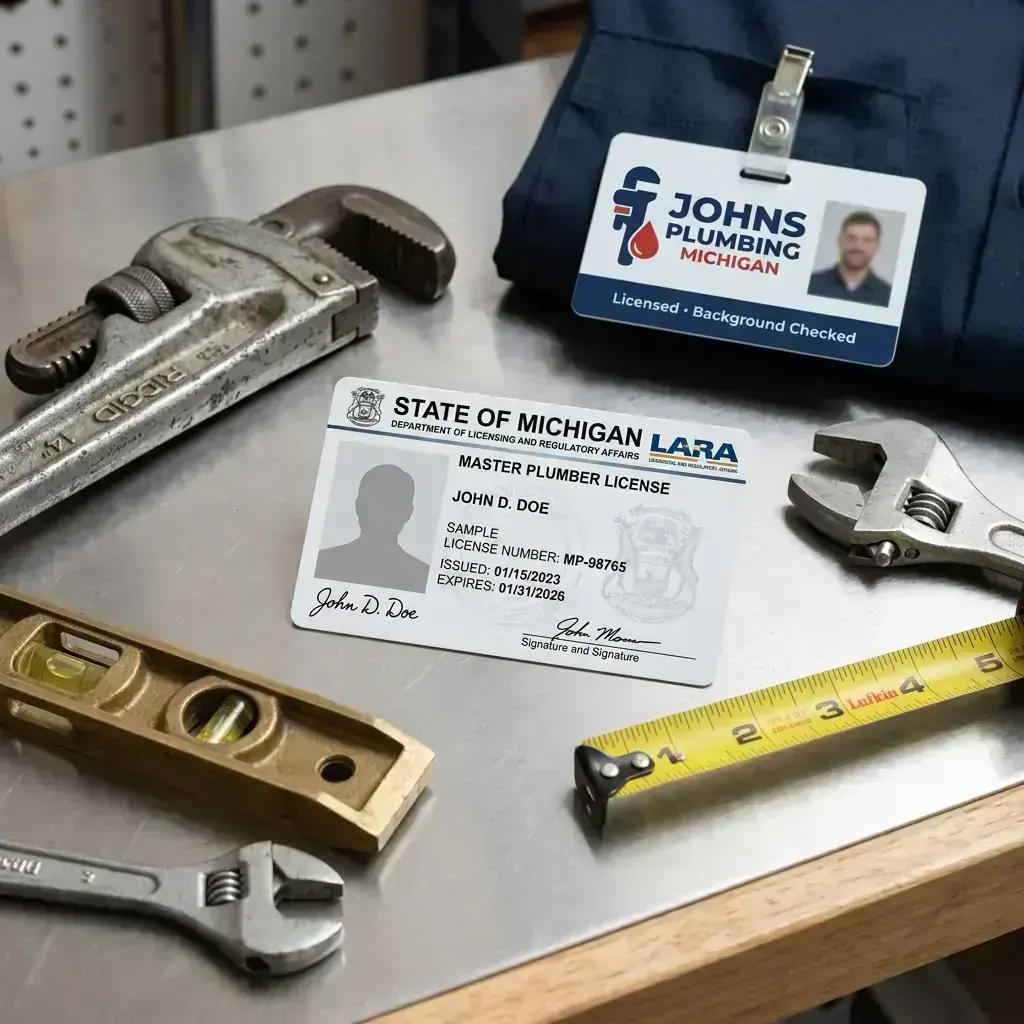
Gas line work requires Michigan-licensed plumbers familiar with state codes, permit requirements, and safety protocols. We install gas lines for water heaters, dryers, stoves, ranges, and fireplaces; detect and repair gas leaks; perform pressure testing; and replace aging gas piping.
Gas leak detection and emergency shutoff take priority over all other plumbing work. Natural gas (odorized to smell like rotten eggs) indicates a leak, evacuate immediately, call 911 from outside the home, then call (313) 736-9553 once the fire department secures the scene.
We use electronic gas detectors and soap bubble testing to locate leaks at connections, valves, and pipe joints. Repairs may involve tightening connections, replacing corroded pipe sections, or installing new valves.
Gas line installation for new appliances requires proper sizing (pipe diameter based on BTU demand and distance from meter), black iron or corrugated stainless steel tubing (CSST) installation following Michigan codes, pressure testing to verify no leaks, and final inspection by city building department. Wyoming requires permits for gas line work. We pull permits and coordinate inspections.
Gas line pressure testing verifies system integrity after installation or repairs. We pressurize lines above operating pressure, monitor gauges for pressure drop, and soap-test all connections.
Pressure holds steady with no leaks before we restore gas service. Safety protocols include proper ventilation during work, electronic leak detection throughout the home, and carbon monoxide detector testing.