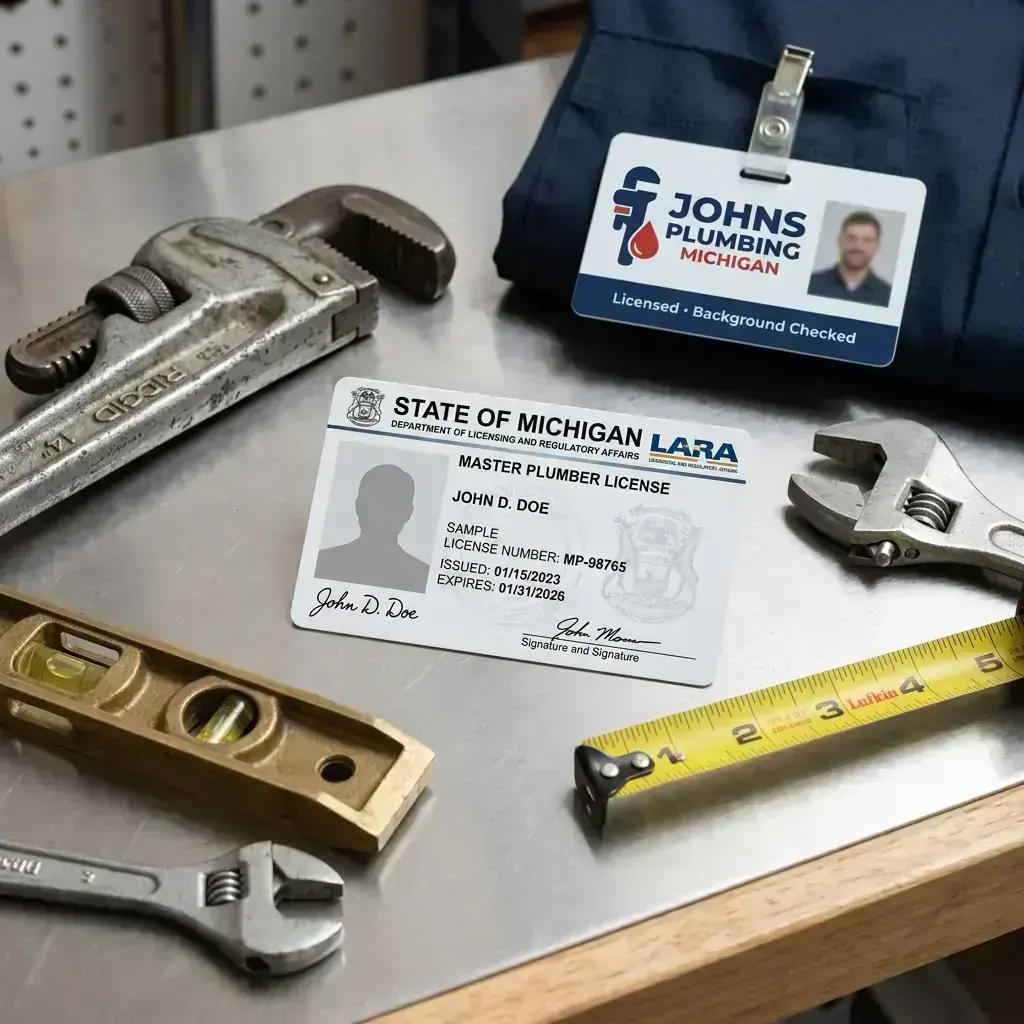
Johns Plumbing Michigan provides comprehensive residential plumbing services throughout Dearborn Heights, covering emergency repairs, routine maintenance, and full system installations. Our licensed technicians handle drain and sewer line services, water heater repair and replacement, leak detection and pipe repair, fixture installation, and gas line work across Wayne County. Below is detailed coverage of each service category, methods used, and when Dearborn Heights homeowners typically need each service.
Drain Cleaning & Clog Removal Services in Dearborn Heights
Drain cleaning addresses blockages in kitchen sinks, bathroom sinks, tubs, showers, toilets, main sewer lines, and basement floor drains. Dearborn Heights homes built before 1980 often have cast iron drain pipes with interior corrosion and scale buildup that trap debris and cause recurring clogs.
Kitchen sink clogs typically stem from grease accumulation, food particles, and soap scum binding together in horizontal drain runs. We use cable snaking for straightforward blockages and hydro jetting when scale buildup lines the pipe interior. Bathroom sink and tub drains collect hair, soap residue, and mineral deposits from hard water, issues that worsen in Wayne County's hard water zones where calcium and magnesium concentrate over time.
Shower drains clog from hair and soap buildup, particularly in older homes where drain assemblies lack modern hair traps. Toilet clogs range from simple obstructions (excessive paper, foreign objects) to venting problems that prevent proper flushing. Multiple slow drains throughout the house signal main sewer line blockage rather than individual fixture problems, tree roots penetrate clay and cast iron sewer lines through existing cracks, or the line has bellied due to soil settlement.
Main line cleaning uses hydro jetting to scour pipe walls and remove root intrusions, scale, and compacted debris. Video camera inspection identifies the clog location, pipe condition, and whether roots have compromised the line.
When camera inspection reveals extensive pipe deterioration or collapse, cleaning becomes a temporary fix. Replacement addresses the root cause.
Basement floor drains connect to the main sewer line and back up when the main line clogs or during heavy rainfall when combined sewer systems overwhelm capacity. Need drain cleaning in Dearborn Heights? Call (313) 736-9553 for camera inspection and hydro jetting service.
Water Heater Repair & Replacement Services
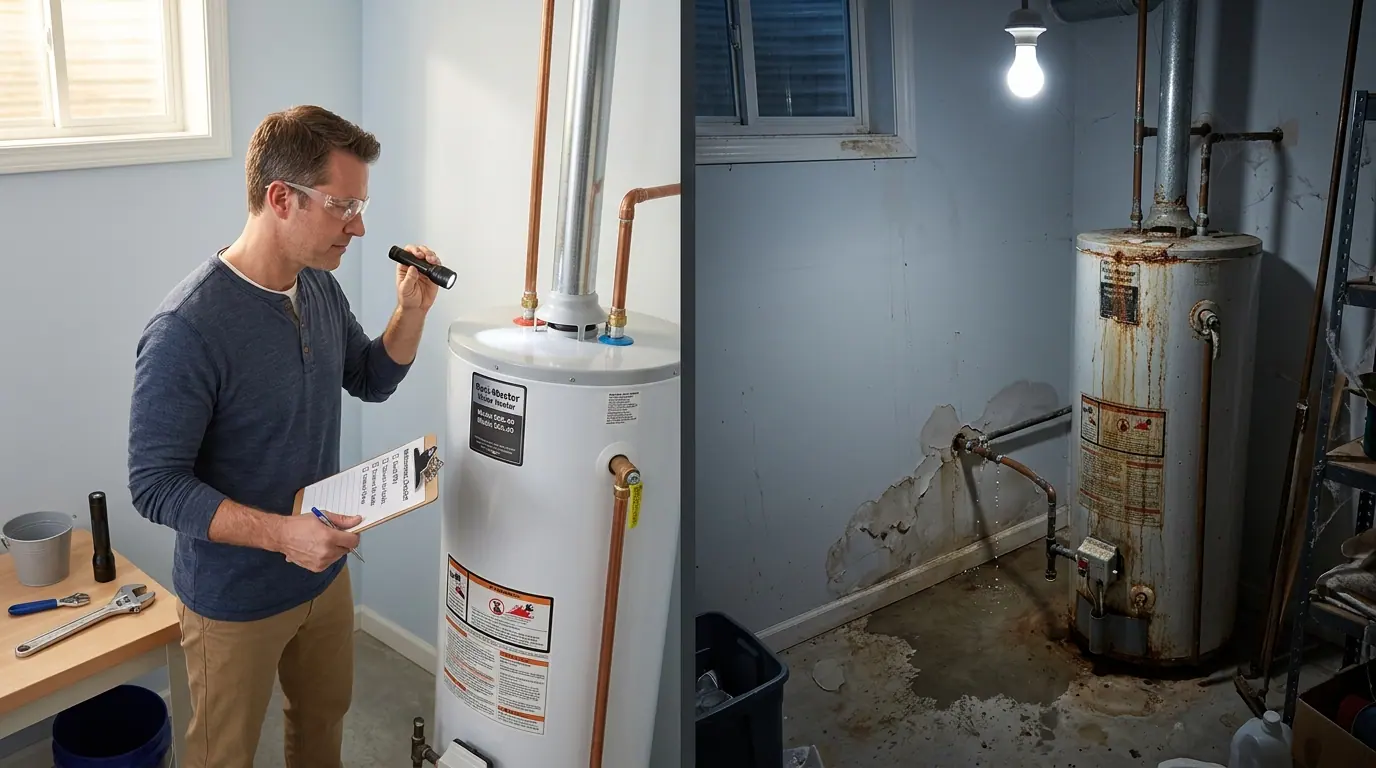
Water heater service decisions hinge on unit age, repair cost versus replacement cost, and energy efficiency gains. Tank water heaters in Dearborn Heights homes typically last 8-12 years before mineral sediment accumulation, anode rod depletion, and tank corrosion cause failure.
Tank water heater repair addresses pilot light issues (thermocouple failure, gas valve problems), thermostat malfunctions causing insufficient hot water or scalding temperatures, and heating element failure in electric models. Anode rod replacement extends tank life by sacrificing the rod to corrosion rather than the tank itself. Replacement makes sense when the tank is under 8 years old and otherwise sound.
Water heater replacement becomes necessary when tanks leak from interior corrosion, when repair costs approach 50% of replacement cost, or when units exceed 12 years regardless of current function. Dearborn Heights' hard water accelerates sediment buildup and tank corrosion, shortening lifespan compared to soft water areas.
Tankless water heater installation eliminates standby heat loss and provides endless hot water for households with high demand. Tankless units require adequate gas line capacity and electrical circuits for ignition and controls.
Sizing depends on simultaneous hot water demands, number of bathrooms, appliances, and flow rate requirements. Most Dearborn Heights homes with 2-3 bathrooms need units rated 180,000-199,000 BTU for natural gas models.
Installation includes mounting the unit, running gas lines, installing proper venting (Category III stainless steel for condensing models), and configuring electrical connections. Tankless units cost more upfront but reduce energy consumption by 24-34% compared to tank models. For water heater replacement in Dearborn Heights, call (313) 736-9553 for sizing consultation and installation.
Leak Detection & Pipe Repair Services in Dearborn Heights
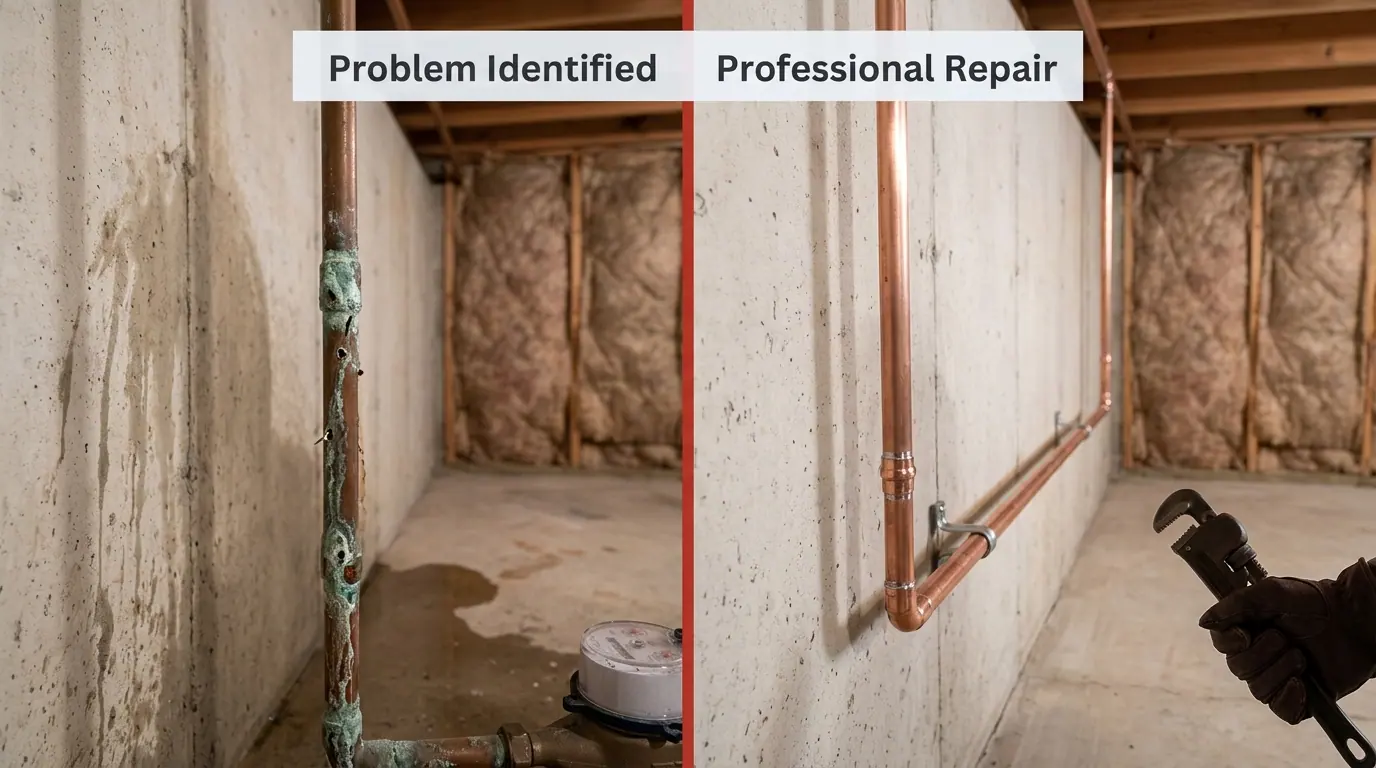
Leak detection uses visual inspection, acoustic detection, and thermal imaging to locate hidden leaks in walls, ceilings, slabs, and underground. Dearborn Heights homes with galvanized steel supply pipes (common in pre-1960 construction) develop pinhole leaks from interior corrosion, water chemistry and age combine to perforate pipes.
Slab leaks occur when pipes beneath concrete foundation slabs corrode or shift due to soil movement. Clay-heavy soil in Wayne County swells with moisture and contracts when dry, stressing rigid pipe connections. Thermal imaging identifies hot spots from leaking hot water lines or cold spots from supply line leaks.
Underground leak detection uses acoustic listening devices to identify the sound of escaping water in buried pipes. Main water line leaks between the meter and house create soggy yard patches, foundation settling, and unexplained water bills. Leak location determines repair approach, accessible pipes receive direct repair, while inaccessible locations require opening walls or excavation.
Pipe repair techniques include compression fittings for small leaks, epoxy pipe lining for interior corrosion, and section replacement when corrosion has weakened the pipe. Galvanized pipe doesn't corrode uniformly.
One leak signals that the entire system is approaching failure. Re-piping with PEX or copper makes sense when leaks multiply or when galvanized pipes show exterior rust.
Frozen pipe repair addresses burst pipes from ice expansion during subzero temperatures. Exposed pipes in unheated crawl spaces, exterior walls without insulation, and basement rim joists freeze when temperatures drop below 20°F for extended periods, common during Dearborn Heights' December through February cold snaps.
Thawing must be gradual to prevent thermal shock. Burst sections require pipe replacement after thawing.
Main water line repair involves excavating from the meter to the house foundation entry point. Older Dearborn Heights homes often have galvanized or copper main lines subject to corrosion and ground shift damage. Trenchless pipe bursting is an option when the existing line provides a path for the new pipe.
Sewer Line Services
Sewer camera inspection reveals clog location, root intrusion extent, pipe material condition, and structural failures like cracks or collapses. We insert a waterproof camera through a cleanout or toilet drain and record the inspection for homeowner review. Camera inspection identifies whether cleaning will resolve the issue or whether repair/replacement is necessary.
Sewer line cleaning uses cable snaking for soft blockages and hydro jetting for root removal and scale deposits. Tree roots from mature maples and oaks penetrate clay and cast iron sewer lines through existing cracks or joints.
Roots grow into the pipe seeking water and nutrients, forming dense mats that trap debris and cause backups. Hydro jetting uses high-pressure water streams (3,000-4,000 PSI) to cut roots and scour pipe walls.
Trenchless sewer line replacement includes pipe bursting (pulling a bursting head through the old pipe while simultaneously pulling in new HDPE pipe) and pipe lining (inserting an epoxy-saturated liner that cures against the existing pipe interior). Trenchless methods avoid excavating the entire yard, preserve landscaping, and cost less than traditional excavation when access is difficult.
Traditional excavation replacement remains necessary when pipes have collapsed, when bellied sections prevent trenchless methods, or when the homeowner prefers complete visual verification of new pipe installation. Excavation uncovers the sewer line from the house to the municipal connection point at the street. Typical depths range from 4-8 feet depending on frost line requirements.
When repair versus full replacement makes sense depends on pipe age, material, and damage extent. Clay and cast iron pipes in Dearborn Heights homes built before 1970 approach end-of-life regardless of current function. Multiple cracks, root intrusion at every joint, and interior corrosion signal that repair is temporary.
Municipal sewer line connections require permits and inspections. Connection points must meet current code for materials and depth. Call (313) 736-9553 for sewer camera inspection in Dearborn Heights.
Fixture Installation & Repair Services
Toilet repair addresses running toilets (flapper valve failure, fill valve malfunction), toilets that won't flush (clog, flapper chain disconnect), and leaking at the base (wax ring failure). Running toilets waste 200+ gallons per day from constant tank refilling. Flapper replacement is straightforward; fill valve replacement requires shutting off water and draining the tank.
Toilet installation involves removing the old toilet, inspecting and repairing the flange if damaged, installing a new wax ring, setting the toilet level, and connecting the supply line. Older Dearborn Heights homes may have cast iron flanges corroded below floor level, flange repair or extenders bring the flange to proper height before setting the toilet.
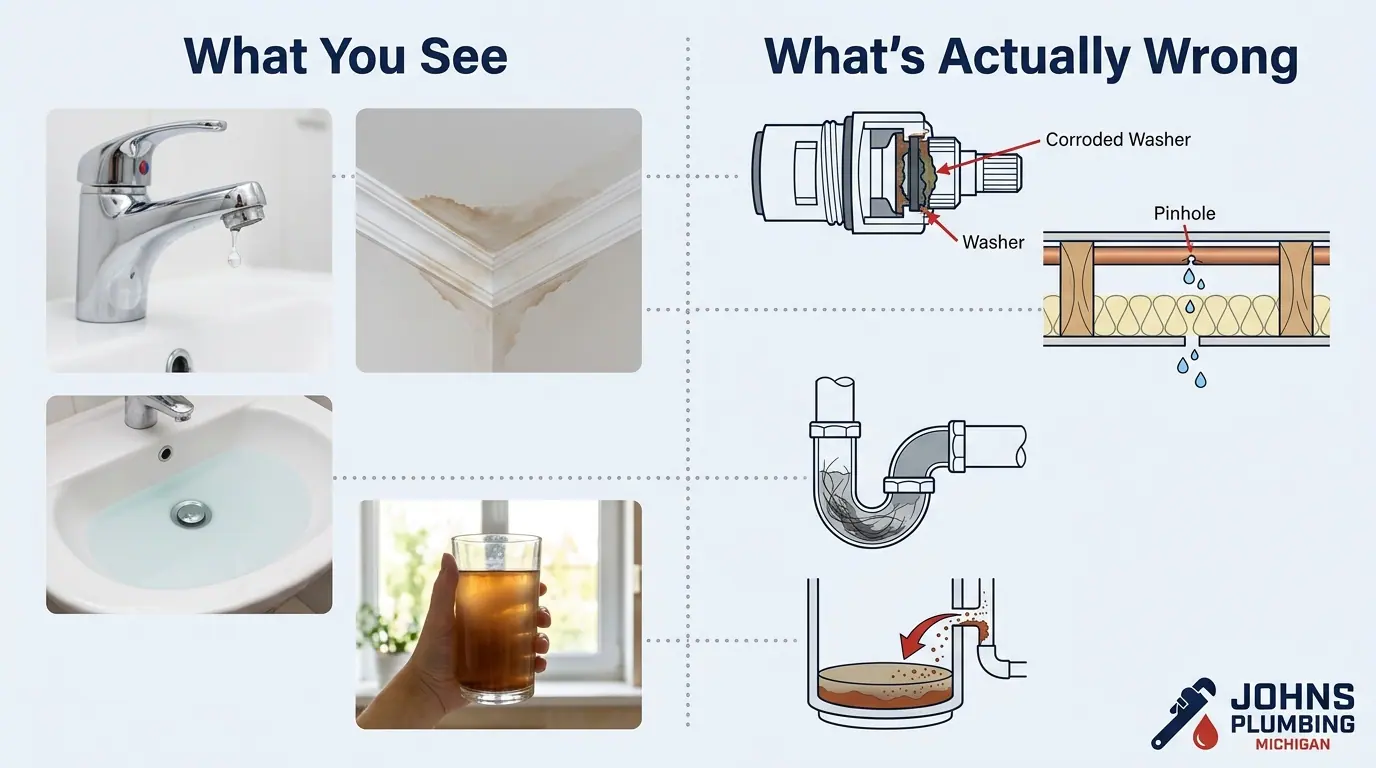
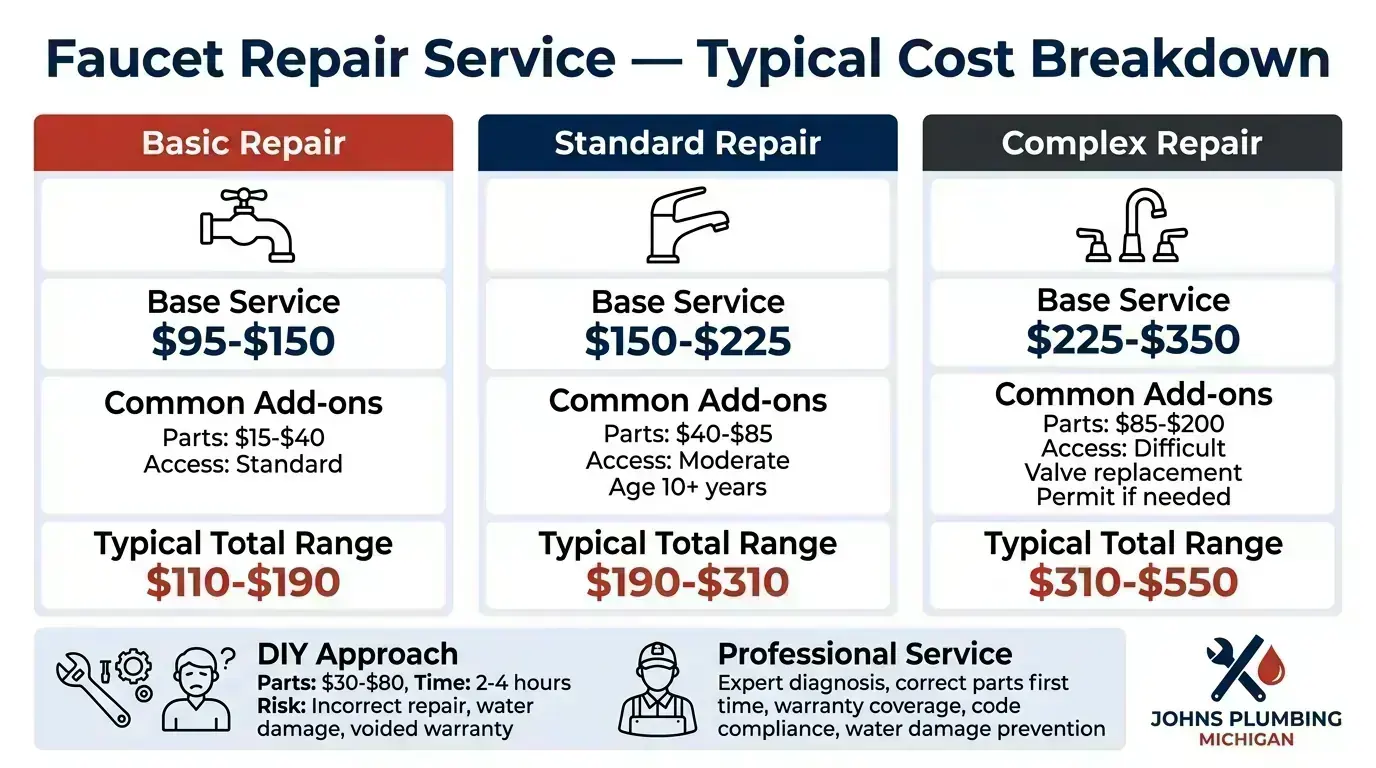
Faucet repair addresses dripping (worn cartridge or O-rings), low water pressure (aerator clogging from mineral deposits), and loose handles. Hard water in Wayne County accelerates mineral buildup in aerators and cartridges. Cartridge replacement restores function for single-lever faucets; compression faucets require seat and spring replacement.
Faucet installation includes removing the old faucet, cleaning mounting surfaces, installing the new faucet with proper seals, and connecting hot and cold supply lines. Under-sink space varies. Some installations require basin wrench access in tight quarters.
Garbage disposal repair addresses jams (foreign objects wedged in grinding chamber), motor hum without grinding (seized flywheel), and leaks at mounting flanges or discharge connections. Disposals jam from silverware, bones, or fibrous material binding the impeller.
Motor replacement rarely makes sense. New disposal installation costs nearly the same as motor replacement.
Garbage disposal installation requires mounting the disposal to the sink drain opening, connecting the discharge pipe to the drain system, and wiring to a switch or outlet. Disposals require adequate electrical circuits (15-20 amp) and proper GFCI protection in kitchen environments.
Sink, bathtub, and shower fixture installation follows similar principles, remove old fixtures, prepare mounting surfaces, install with proper seals and backing, and connect supply and drain lines. Cast iron tubs in older Dearborn Heights homes require structural evaluation before replacement. Cast iron weight exceeds modern acrylic or fiberglass alternatives.
Sump pump installation and repair addresses basement flooding risk. Dearborn Heights' flat terrain and clay soil create high water tables and poor drainage. Sump pumps collect groundwater in a basin and discharge it away from the foundation.
Installation requires excavating a sump basin, installing the pump, and running discharge piping to daylight at least 10 feet from the foundation. Battery backup systems maintain pump operation during power outages, critical during storms that cause both flooding and power loss.
Gas Line Services in Dearborn Heights
Gas line installation for appliances includes running black iron pipe or CSST (corrugated stainless steel tubing) from the meter to water heaters, dryers, stoves, and fireplaces. Gas line sizing depends on BTU demand and pipe run length. Undersized lines cause pressure drop and appliance malfunction.
Gas leak detection uses electronic sniffers, soap bubble testing, and pressure testing to identify leaks at joints, valves, and pipe damage points. Natural gas has added mercaptan for odor detection (rotten egg smell). Any gas odor requires immediate action, evacuate, call 911 and the gas utility, then call (313) 736-9553 after the utility secures the system.
Gas line pressure testing verifies system integrity after installation or repair. Testing uses air or inert gas at specified pressure (typically 1.5 times operating pressure) held for 15 minutes minimum. Pressure drop indicates leaks requiring location and repair before system activation.
Gas line repair and replacement addresses corroded pipes, damaged lines, and code violations from previous unlicensed work. Michigan requires licensed plumbers for all gas line work. Permits and inspections verify code compliance for materials, sizing, support, and venting.
Safety protocols include proper pipe doping (yellow thread sealant rated for gas), pressure testing before activation, leak checking every joint, and ensuring adequate combustion air and venting. Gas water heaters require proper venting to prevent carbon monoxide accumulation, common issues in older Dearborn Heights homes include deteriorated vent pipes and blocked flues.