Michigan Residential PlumbingEmergency Plumbing RepairsMichigan Service Areas
(313) 736-9553
Menu
Call to confirm current availability in Dearborn

Wayne CountySoutheast Michigan

Dearborn Plumber | Licensed Residential Plumbing Services

Johns Plumbing Michigan provides licensed residential plumbing services throughout Dearborn and Wayne County.

We're available 24/7 for emergency plumbing, drain cleaning, water heater repair, leak detection, sewer line services, and all residential plumbing needs in ZIP codes 48128, 48120, 48126, 48124, 48121, and 48123. Michigan-licensed and fully insured, serving Dearborn homeowners with fast response times and guaranteed workmanship.

Dearborn's cold winters, aging housing stock, and position near the Rouge River create specific plumbing challenges, frozen pipes in basements, basement flooding during spring thaw, hard water buildup, and tree root intrusion into older clay sewer lines. We understand these local infrastructure realities and respond quickly when emergencies happen.

Call (313) 736-9553 anytime for same-day service in Dearborn.

Dearborn Plumber | Licensed Residential Plumbing ServicesMichigan Residential Plumbing

Michigan licensed and insured. Serving Dearborn homeowners. Available 24/7 with response typically within 90 minutes for emergencies. All work backed by our satisfaction guarantee.

Residential Plumbing Services in Dearborn, MI

Johns Plumbing Michigan handles the full spectrum of residential plumbing work for Dearborn homeowners, from emergency frozen pipe repairs in January cold snaps to routine water heater replacements and sewer line cleanings. Our licensed technicians work throughout Wayne County, addressing the specific challenges Dearborn's aging housing stock and harsh Michigan climate create. We serve all six ZIP codes across the city and respond to calls from nearby Melvindale, Allen Park, and Lincoln Park.

Our service range covers emergency repairs (burst pipes, sewage backups, gas leaks), scheduled maintenance (drain cleaning, fixture upgrades, water heater flushing), and major installations (tankless water heater conversions, whole-home re-piping, sewer line replacements). We understand how Dearborn's clay and sandy soil shifts with freeze-thaw cycles, how hard water scales fixtures and shortens water heater life, and how older homes' galvanized pipes corrode from the inside out. This local knowledge shapes how we diagnose problems and recommend solutions.

Every service call starts with diagnosis, not guesswork. We use video camera inspection for sewer lines, acoustic leak detection for hidden pipe damage, and thermal imaging to trace water intrusion in walls and ceilings. When we recommend repair versus replacement, we base it on the actual condition of your plumbing system, not a sales script. Permits are pulled for work requiring Wayne County approval (water heater replacements, re-piping, sewer repairs), and all installations meet Michigan Residential Code and International Plumbing Code standards. Learn more about our emergency response or see what to expect during service.

Emergency Plumbing Services in Dearborn, Michigan

Johns Plumbing Michigan provides 24/7 emergency plumbing service throughout Dearborn and Wayne County. We typically arrive within 60-90 minutes for emergencies and handle burst pipes, sewage backups, gas leaks, flooded basements, no hot water crises, frozen pipe thawing, and major leak emergencies.

Burst pipes demand immediate response. Water spraying from copper or galvanized lines can flood rooms in minutes, damaging floors, walls, and belongings.

Sewage backups into your home require evacuation of affected areas and rapid cleanup to prevent health hazards from contaminated water. If you smell natural gas (a rotten egg odor often added to odorless gas), evacuate immediately, call 911 from outside, then call us to coordinate safe shutoff and repair once cleared by authorities.

Dearborn's winter cold snaps bring frozen pipe emergencies, especially in basements where pipes run along exterior walls. Pipes freeze when temperatures drop below 20°F for extended periods, and ice expansion cracks copper or galvanized steel lines. Thawing frozen pipes before they burst requires professional equipment.

Improper thawing with torches or space heaters risks fire. We use heat tape, infrared heating, and controlled warm air methods to restore flow without damage.

Basement flooding from spring snowmelt or intense rainstorms overwhelms Dearborn's combined sewer system quickly. Standing water in basements poses electrical shock risk and breeds mold within 24-48 hours. We extract water, identify entry points (floor drain backups, foundation cracks, sump pump failures), and recommend permanent solutions.

No hot water in winter constitutes an emergency. Michigan cold makes showers, dishwashing, and laundry impossible without functioning water heaters. Pilot light failures, broken heating elements, or gas valve malfunctions require same-day diagnosis and repair.

Call (313) 736-9553 immediately for any emergency plumbing situation in Dearborn. We're available around the clock, every day of the year.

How fast do you need someone?

Check all situations that apply in your Dearborn home. We'll determine the fastest, most appropriate response.

Call now

Damage compounds by the minute.

Same day

Livable for hours, not days.

Schedule

Book it before it escalates.

Residential Plumbing Services in Dearborn

Johns Plumbing Michigan provides complete residential plumbing coverage across Dearborn, from emergency burst pipe repairs during winter freezes to scheduled water heater replacements and routine drain maintenance. We handle the full range of services Dearborn homeowners need, organized around the systems that keep your home functioning safely and efficiently.

Emergency response services address urgent failures burst pipes, sewage backups, gas leaks, and flooded basements that demand immediate professional response. Drainage and sewer services keep water flowing away from your home through drain cleaning, main line clearing, and sewer camera inspections. Water heating services cover tank and tankless repairs, replacements, and maintenance for reliable hot water year-round.

Leak detection and pipe repair locate hidden water loss and restore pipe integrity before damage spreads. Fixture services handle toilet, faucet, sink, and garbage disposal repairs plus installations. Gas line services ensure safe natural gas delivery to water heaters, furnaces, and appliances.

This service range reflects residential plumbing's interconnected nature. A slow kitchen drain might signal a main line clog affecting all fixtures, while low water pressure could trace back to corroded pipes or a failing pressure regulator. Our technicians diagnose the root cause rather than treating surface symptoms, preventing repeat service calls and catching larger problems before they escalate into emergencies.

See detailed service information below for specific coverage under each category, including what's involved, when each service becomes necessary, and how Dearborn's infrastructure affects timing and approach.

Complete Plumbing Service Guide for Dearborn Homeowners

Johns Plumbing Michigan provides the full spectrum of residential plumbing services throughout Dearborn, covering emergency repairs, system installations, routine maintenance, and everything in between. Below is detailed coverage of each major service category.

What each service addresses, when Dearborn homeowners need it, the methods our technicians use, and decision factors for repair versus replacement. This guide helps you understand your options before you call.

Comprehensive residential plumbing services including drain cleaning, water heater repair, leak detection, and fixture installation

Drain Cleaning & Clog Removal Services in Dearborn

Drain cleaning addresses clogs and slow drainage in kitchen sinks, bathroom sinks, tubs, showers, toilets, floor drains, and main sewer lines. When a single drain slows, the blockage typically sits close to that fixture, grease buildup in kitchen lines, hair and soap scum in bathroom drains, or foreign objects in toilet traps. When multiple drains slow simultaneously, the clog usually sits in your main sewer line where all fixture drains converge.

We use two primary methods based on clog location and severity. Cable snaking (also called augering or rootering) feeds a flexible metal cable with a cutting head through the drain line, breaking apart clogs mechanically. This works for most residential clogs (hair masses, grease accumulation, small root intrusions) and costs less than hydro jetting.

Hydro jetting uses high-pressure water (typically 3,000-4,000 PSI) to scour pipe walls clean, removing scale buildup, grease films, and stubborn root masses that cable snaking can't fully clear. We recommend hydro jetting for recurring clogs, commercial-grade grease buildup, or when camera inspection reveals significant scale or root intrusion throughout the line.

Video camera inspection identifies clog causes and pipe condition when symptoms suggest deeper problems. Recurring clogs after snaking, multiple slow drains, or sewage odors. The camera reveals whether you need simple cleaning, root removal, or pipe repair.

Dearborn's aging clay sewer lines (common in homes built before 1980) crack from freeze-thaw cycles, creating entry points for tree root intrusion. The Rouge River watershed's high water table during spring snowmelt increases basement floor drain backup risk when main lines clog.

Hard water prevalent throughout Dearborn accelerates mineral scale buildup inside drain lines, narrowing pipe diameter over time and making clogs more frequent. Kitchen sink drains handle the worst combination, grease from cooking that solidifies as it cools, combined with food particles and mineral deposits. Bathroom drains accumulate hair, soap residue, and toothpaste combined with hard water minerals that cement together into dense masses.

When cleaning transitions to replacement: If camera inspection reveals collapsed pipe sections, severe corrosion throughout the line, or pipe material failure (orangeburg pipe common in 1950s-1970s construction), repair or replacement makes more sense than repeated cleanings. Call (313) 736-9553 for drain camera inspection and cleaning when you notice persistent slow drainage, recurring clogs, or multiple fixtures backing up simultaneously.

Water Heater Repair & Replacement Services

Water heater service splits into repair, replacement, and installation decisions based on unit age, failure type, and efficiency considerations. Tank water heaters (the most common type in Dearborn homes) store 40-50 gallons of hot water and last 8-12 years with proper maintenance. Tankless water heaters heat water on-demand without a storage tank, last 15-20 years, and cost more upfront but save on energy bills long-term.

Repair scenarios include pilot light ignition failures, thermostat malfunctions, heating element burnout (electric models), burner assembly issues (gas models), and pressure relief valve leaks. These repairs make economic sense when your water heater is under 8 years old and the repair cost stays under half of replacement cost. Anode rod replacement (a sacrificial metal rod that corrodes instead of the tank) extends tank life when performed every 3-5 years, but most homeowners skip this maintenance until the tank fails.

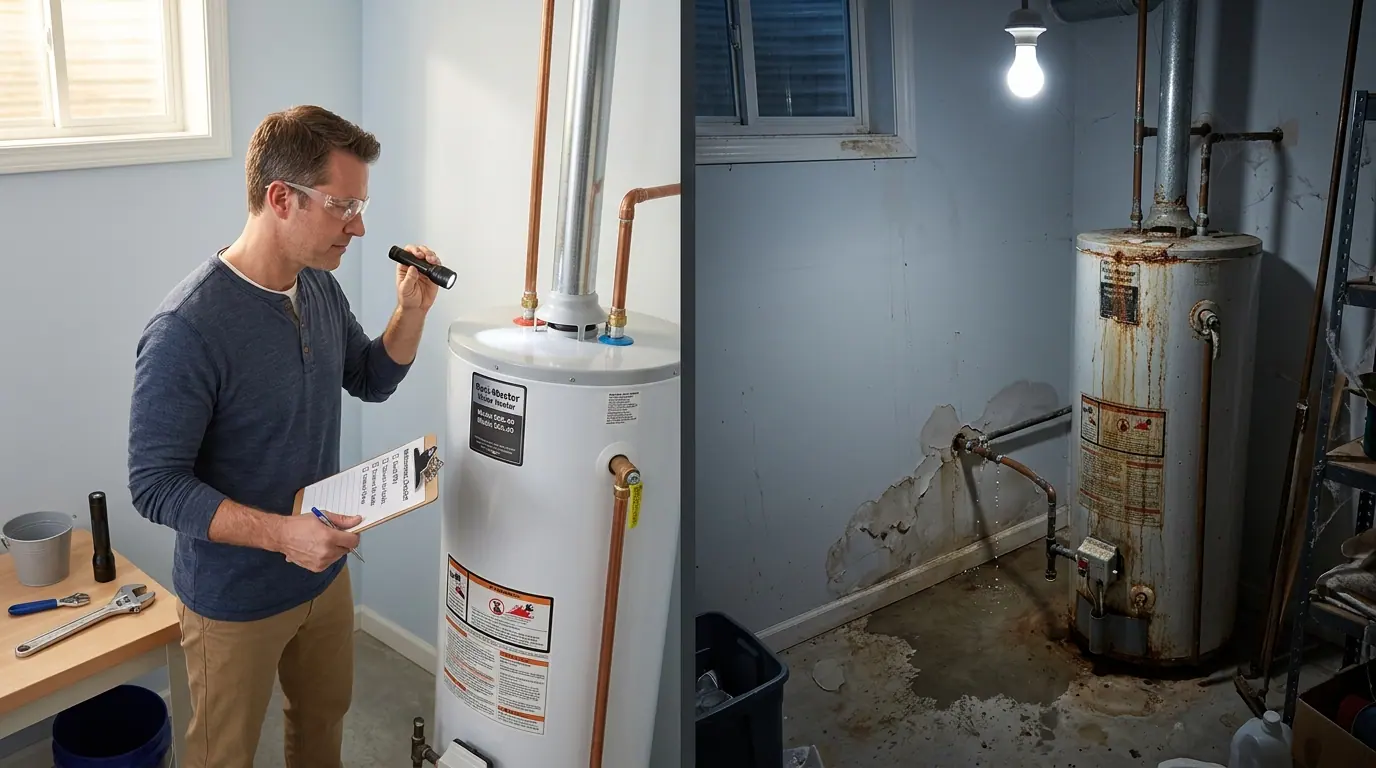
Replacement becomes necessary when you see rusty water (indicates internal tank corrosion), water pooling around the base (tank leak), age exceeds 10 years with declining performance, or repair costs approach $400-500. Tank leaks cannot be repaired. The tank must be replaced.

Dearborn's hard water shortens water heater lifespan by accelerating sediment buildup and anode rod consumption. Mineral deposits settle at tank bottom, reducing heating efficiency and causing popping or rumbling noises as water boils through the sediment layer.

Tankless installation suits Dearborn homes when you want endless hot water supply, have limited space (tankless units mount on walls), or prioritize energy efficiency. Tankless units require adequate gas line capacity (for gas models) or electrical service upgrades (for electric models), adding to installation cost. They deliver hot water continuously but have lower flow rates, typically 2-5 gallons per minute, meaning simultaneous showers and dishwasher use can overwhelm capacity in larger homes.

Sizing guidance: A family of four typically needs a 40-50 gallon tank water heater or a tankless unit rated 7-8 gallons per minute. Undersized units run out of hot water during peak use; oversized units waste energy heating water you don't need.

Michigan building code requires permits for water heater installations, thermal expansion tanks on closed plumbing systems, and proper venting for gas models. All factors affecting installation cost and timeline.

Winter failures hit hardest, no hot water during January cold snaps creates immediate urgency for Dearborn families. If your water heater shows any combination of age over 8 years, declining performance, strange noises, or visible corrosion, schedule replacement before failure rather than facing emergency pricing during winter. Call (313) 736-9553 for water heater assessment, sizing consultation, and installation scheduling.

Leak Detection & Pipe Repair Services

Leak detection locates hidden water leaks before they cause major damage, critical in Dearborn's older housing stock where galvanized steel and copper pipes reach end-of-life after 50-80 years. Visible leaks under sinks or at exposed pipe joints are obvious. Hidden leaks inside walls, under slabs, or underground announce themselves through indirect symptoms: unexplained water bill increases, wet spots on walls or ceilings, mold growth, low water pressure, or the sound of running water when all fixtures are off.

We use three detection methods depending on leak location. Visual inspection identifies accessible leaks, corroded pipe sections, loose compression fittings, deteriorated supply line hoses.

Acoustic detection uses sensitive listening equipment to pinpoint underground or in-wall leaks by amplifying the sound of water escaping under pressure. Thermal imaging cameras detect temperature differences in walls and floors where water leaks create cool spots, narrowing search areas without destructive investigation.

Slab leaks occur when pipes embedded in concrete foundation slabs corrode or shift with soil movement, a concern in Dearborn where clay and sandy soil shifts with seasonal moisture changes and freeze-thaw cycles. Signs include warm spots on floors (hot water leak), foundation cracks, or sudden water bill spikes. Slab leak repair requires accessing the pipe through the foundation, making repair costs higher than accessible pipe fixes.

Pipe repair techniques range from simple to complex. Compression fittings or epoxy pipe wraps patch small pinhole leaks temporarily. Pipe section replacement cuts out corroded segments and splices in new pipe, the permanent fix for localized failures.

Epoxy pipe lining coats pipe interiors with structural epoxy, sealing pinhole leaks and corrosion without excavation, but only works when pipes retain structural integrity. Full re-piping replaces entire supply line networks when widespread corrosion affects multiple pipe sections.

Repair versus replacement decision: Repair makes sense for isolated leaks in otherwise sound piping. Replacement makes sense when you discover multiple leaks within months, pipes show widespread corrosion, or pipe material has known failure patterns (polybutylene pipes common in 1980s construction, galvanized steel in homes from 1920s-1970s).

Dearborn homes built before 1980 often have original galvanized pipes corroding from inside. Repairing one leak doesn't prevent the next failure six feet away.

Frozen pipe repair becomes urgent during January-February cold snaps when temperatures drop below 20°F for extended periods. Pipes in unheated basements, along exterior walls, or in crawl spaces freeze when water inside expands, splitting the pipe open.

We thaw frozen pipes with heat application before damage occurs, or repair split sections after thaw. Prevention measures (pipe insulation, heat tape, maintaining basement temperatures above 50°F) cost far less than burst pipe emergency repairs and water damage restoration.

Sewer Line Services in Dearborn

Sewer line services address problems in the main drain line carrying wastewater from your home to the municipal sewer system or septic tank. Dearborn's aging infrastructure includes many clay sewer lines installed before 1980 that crack from freeze-thaw cycles and tree root intrusion. The Rouge River watershed area's mature tree population sends roots toward sewer lines seeking moisture and nutrients, infiltrating through cracks and pipe joints.

Sewer camera inspection threads a waterproof video camera through your sewer line, revealing pipe condition, clog locations, root intrusion severity, and structural damage. The camera identifies whether you need cleaning, spot repair, or full line replacement. We recommend camera inspection when you experience multiple drain backups, sewage odors, gurgling toilets, or before purchasing older Dearborn homes to assess sewer line condition.

Sewer line cleaning and hydro jetting remove root masses, grease buildup, and accumulated debris. Hydro jetting scours pipe walls with high-pressure water, cutting through root intrusions and flushing debris to the main.

This extends sewer line life when pipe structure remains sound but roots or buildup restrict flow. Properties with large trees (maples, willows, poplars common in Dearborn) near sewer lines benefit from preventive root removal every 2-3 years.

Repair methods split into two categories: Traditional excavation digs trenches to access buried pipe, allowing section replacement or joint repair. We excavate when damage concentrates in specific spots, a crushed section from soil shifting, a separated joint, or localized collapse. Trenchless repair avoids excavation using two methods.

Pipe lining inserts an epoxy-saturated liner through existing pipe, inflates it against pipe walls, and cures in place, creating a new pipe inside the old one. Pipe bursting breaks apart old pipe while simultaneously pulling new pipe through the same path. Trenchless methods cost more per foot but eliminate landscape destruction, driveway removal, and restoration costs.

When repair transitions to replacement: If camera inspection reveals multiple problem areas, extensive root damage throughout the line, or pipe material failure (orangeburg fiber pipe common in 1950s-1960s construction that deteriorates into soft material), full sewer line replacement makes more financial sense than repeated repairs. Dearborn's combined sewer system (where stormwater and sewage share lines in older neighborhoods) means heavy rainstorms can overwhelm capacity, backing sewage into basements through floor drains when main lines clog or fail.

Basement sewage backups require immediate response. Call (313) 736-9553 for emergency sewer service, camera inspection, and repair options.

Fixture Installation & Repair Services

Fixture services cover toilets, faucets, sinks, tubs, showers, garbage disposals, and sump pumps, the components homeowners interact with daily. Repair versus replacement decisions depend on fixture age, repair cost, and whether newer models offer functional improvements.

Toilet repair addresses running toilets (flapper valve failure, fill valve malfunction), weak flushing (clogged rim jets, vent stack blockage), constant refilling (flapper seal failure), and base leaks (wax ring failure). Most toilet repairs cost $150-300 and solve problems for years. Toilet replacement makes sense when toilets exceed 15-20 years (older models use 3.5-7 gallons per flush versus 1.28-1.6 gallons for modern high-efficiency models), crack in the porcelain tank or bowl, or require repeated repairs within short periods.

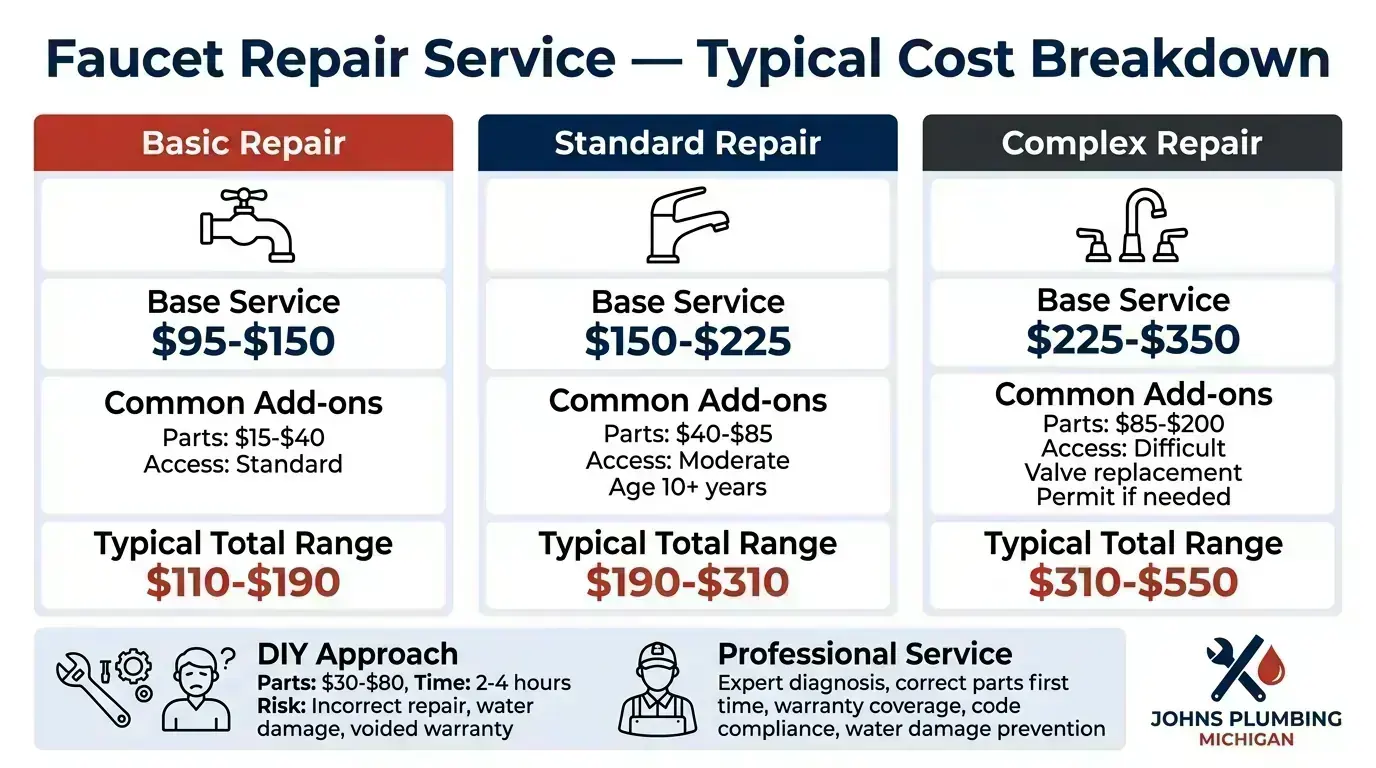
Faucet repair fixes dripping (worn washers or cartridges), low pressure (aerator clog from hard water deposits), and leaking handles (O-ring deterioration). Dearborn's hard water accelerates faucet cartridge and aerator mineral buildup.

Repair costs $100-200 for cartridge or washer replacement. Faucet replacement makes sense when repair costs approach $150, finishes corrode beyond cosmetic acceptance, or you want single-handle models replacing old two-handle designs.

Garbage disposal repair addresses jammed impellers (foreign objects), motor failure, or leaking seals. Unjamming disposals takes 20-30 minutes using an Allen wrench in the bottom reset port. Motor burnout or seal leaks usually justify replacement rather than repair.

Disposals cost $150-400 installed, and repairs approach half that cost for older units. We recommend avoiding fibrous materials (celery, corn husks) and expandable foods (rice, pasta) that jam or clog disposal drain lines.

Sump pump installation and repair prevents basement flooding in Dearborn's high water table areas near the Rouge River. Spring snowmelt and heavy rainstorms fill foundation drain tiles, requiring functional sump pumps to discharge water away from homes.

Battery backup sump pumps maintain protection during power outages common during severe storms. Annual pre-season testing confirms pump operation before spring flooding season, discharge hose routing away from foundations, check valve function, and float switch operation.

Sink, bathtub, and shower fixture installation ranges from replacing basin-mounted faucets (2-3 hours) to complete tub and shower system installations (full-day projects requiring tile work and drain modifications). We coordinate with homeowners' remodel timelines, ensuring fixture installations align with tile, countertop, and finish work schedules.

Gas Line Services in Dearborn

Gas line work requires Michigan plumbing license and strict safety protocols, never attempt DIY gas line repairs or installations. Natural gas powers water heaters, furnaces, stoves, dryers, and fireplaces in most Dearborn homes, delivered through underground mains by DTE Energy.

Gas line installation extends service to new appliances, tankless water heaters requiring larger gas supply, kitchen range upgrades, gas fireplaces, or outdoor grills. Proper sizing ensures adequate pressure and volume for all appliances simultaneously. Undersized gas lines cause appliance performance problems (burners that won't stay lit, weak flames, pilot light failures).

Gas leak detection and emergency shutoff address the most critical gas emergency. Natural gas odor (mercaptan additive smells like rotten eggs) indicates leaks requiring immediate action: evacuate the home, call 911 and DTE Energy from outside, then call (313) 736-9553 for emergency gas line repair after utility company secures the leak and restores service. Never operate light switches, electronics, or create sparks near suspected gas leaks, gas-air mixtures ignite from tiny sparks.

Gas line pressure testing confirms system integrity after installations or repairs, required by Michigan code before restoring gas service. We test lines at 15-20 PSI for 15-30 minutes, monitoring for pressure drops indicating leaks. Failed pressure tests require leak location and repair before system activation.

Gas shut-off valve installation provides emergency isolation points at individual appliances and main supply entry. Building code requires accessible shutoff valves within six feet of each gas appliance, allowing quick isolation during appliance replacement or emergency situations.

Safety protocols and permits: Wayne County requires permits for new gas line installations, major repairs, and appliance conversions (electric to gas). Permit fees typically run $75-150 depending on project scope. Inspections verify proper materials (black steel pipe or approved flexible connectors), correct sizing calculations, secure joints, pressure testing, and carbon monoxide detector placement near gas appliances.

All gas work must meet International Fuel Gas Code standards Michigan adopts. For any gas line installation, repair, or suspected gas leak in Dearborn, call (313) 736-9553 for licensed service and code-compliant work.

Repair or Replace? Decision Framework for Dearborn

Honest guidance based on equipment age, repair cost, and expected remaining life. We recommend what makes sense for you, not what maximizes our invoice.

Tank Water HeaterLifespan: 10-12 years
When repair makes sense
Age < 8 years and repair < $500
When replacement is better
Age 10+ years, or repair > $600, or multiple issues
Replacement benefits
New units: 15-20% energy savings, warranty coverage, avoid emergency breakdown
Michigan local context
Hard water in Michigan shortens tank lifespan—flush annually
Tankless Water HeaterLifespan: 15-20 years
When repair makes sense
Age < 12 years and single component failure
When replacement is better
Age 15+ years, or heat exchanger failure (typically $800-$1,200)
Replacement benefits
Newer models: better efficiency, longer warranty, improved flow rate
Michigan local context
Scale buildup from hard water is the main longevity factor
ToiletLifespan: 15-25 years
When repair makes sense
Age < 15 years, repairable components (flapper, fill valve, wax ring)
When replacement is better
Age 20+ years, cracks in bowl/tank, or frequent recurring issues
Replacement benefits
Modern low-flow: saves 13,000+ gallons/year, quieter flush, better design
Michigan local context
Pre-1994 toilets use 3.5-7 gallons per flush vs 1.28 today
Garbage DisposalLifespan: 8-12 years
When repair makes sense
Age < 6 years and motor hums but won't turn (often a jam)
When replacement is better
Age 8+ years, motor burned out, or leaking from housing
Replacement benefits
Replacement is fast ($200-$400 installed), modern units quieter and stronger
Michigan local context
Hard water doesn't affect these, but heavy use shortens lifespan
Sump PumpLifespan: 7-10 years
When repair makes sense
Age < 5 years, switch or discharge issue, not motor failure
When replacement is better
Age 7+ years, motor failure, or pump runs constantly
Replacement benefits
Backup systems prevent flooding, battery backups available for power outages
Michigan local context
Michigan spring thaw and heavy rain make sump pumps critical—test twice yearly
Clay/Cast Iron Sewer LineLifespan: 50-80 years (clay), 50-100 years (cast iron)
When repair makes sense
Isolated crack or root intrusion, single-spot repair feasible
When replacement is better
Age 50+ years with frequent backups, bellied sections, or multiple failures
Replacement benefits
PVC replacement: 100+ year lifespan, root-resistant, lower ongoing maintenance
Michigan local context
Tree roots seek moisture—clay/cast iron joints are vulnerable
FaucetLifespan: 15-20 years
When repair makes sense
Age < 10 years, cartridge/aerator replacement, single-handle drip
When replacement is better
Age 15+ years, body corrosion, or parts no longer available
Replacement benefits
Modern faucets: better water efficiency, easier cleaning, longer warranties
Michigan local context
Hard water scale is the main wear factor in Michigan—replace aerators regularly
Whole-House Re-PipingLifespan: 50+ years (copper), 100+ years (PEX)
When repair makes sense
Isolated pinhole leak in otherwise sound copper
When replacement is better
Multiple leaks in short time, galvanized steel (corrodes from inside), low pressure throughout
Replacement benefits
PEX: freeze-resistant, faster install, lower cost, no corrosion, easier future repairs
Michigan local context
Homes built before 1970 often have galvanized steel—corrodes within 40-60 years
Cost-Benefit Rule of Thumb
  • RepairIf equipment is < 70% through its lifespan and repair costs < 50% of replacement value.
  • ReplaceIf equipment has exceeded its lifespan or repair costs exceed 60% of replacement value.
  • EfficiencyOlder equipment often costs 20–40% more to operate annually in energy & water bills.
  • WarrantyNew equipment carries 5–10 year parts warranty vs 90-day typical repair guarantee.

Discuss your repair vs replace options: (313) 736-9553

Symptom Diagnosis & Problem Recognition in Dearborn, Michigan

Several observable symptoms indicate underlying plumbing problems requiring professional evaluation in Dearborn homes. Water pressure changes, persistent slow drains, unusual noises, water discoloration, unexplained moisture, and sewage odors are the most common warning signs. Recognizing these symptoms early and understanding their urgency level helps Dearborn homeowners prevent minor issues from becoming costly emergencies, especially given the city's aging housing stock and harsh winter conditions.

Water Pressure Problems

Low water pressure throughout your home usually means one of three things: corroded galvanized pipes common in Dearborn homes built before 1980, a failing pressure regulator, or sediment buildup in your main water line. When only one fixture has weak pressure, the issue is typically a clogged aerator or cartridge in that fixture. If multiple fixtures lose pressure simultaneously, especially in homes with original plumbing, you're likely dealing with corroded galvanized steel pipes that have narrowed from decades of internal rust accumulation.

Sudden pressure loss across the entire house can indicate a main line leak or pressure regulator failure. Check your water meter, if it's spinning when no water is running, you have a leak somewhere between the meter and your home.

High pressure (above 80 PSI) causes faucets to spray, toilets to run, and pipes to hammer when valves close. This shortens the lifespan of water heaters, washing machines, and dishwashers.

Schedule an inspection within the week if pressure has gradually declined over months. Call (313) 736-9553 immediately if pressure drops suddenly or you suspect a main line leak.

Drainage Issues

Gurgling sounds from drains signal air pressure problems in your drain-waste-vent system. When you hear gurgling from one fixture while using another, blocked vents prevent proper air flow and create vacuum conditions. This is common in Dearborn's older homes where vent stacks may be partially blocked by bird nests, debris, or ice buildup during winter freezes.

Multiple slow drains throughout the house indicate a main sewer line clog rather than individual fixture problems. Tree root intrusion is the primary cause in neighborhoods with mature trees and aging clay sewer pipes, roots enter through cracks created by Dearborn's freeze-thaw cycles and form dense mats that catch debris. A single slow drain typically means a localized clog in that fixture's trap or branch line.

Water backing up into lower fixtures when you use upstairs drains confirms a main line blockage. If your basement floor drain gurgles or overflows when you run the washing machine, the main sewer line can't handle the flow. Call (313) 736-9553 within 24-48 hours for persistent slow drains.

Call immediately if multiple drains back up simultaneously or if you see sewage backup. These indicate complete main line blockage requiring emergency service.

Water Quality Symptoms

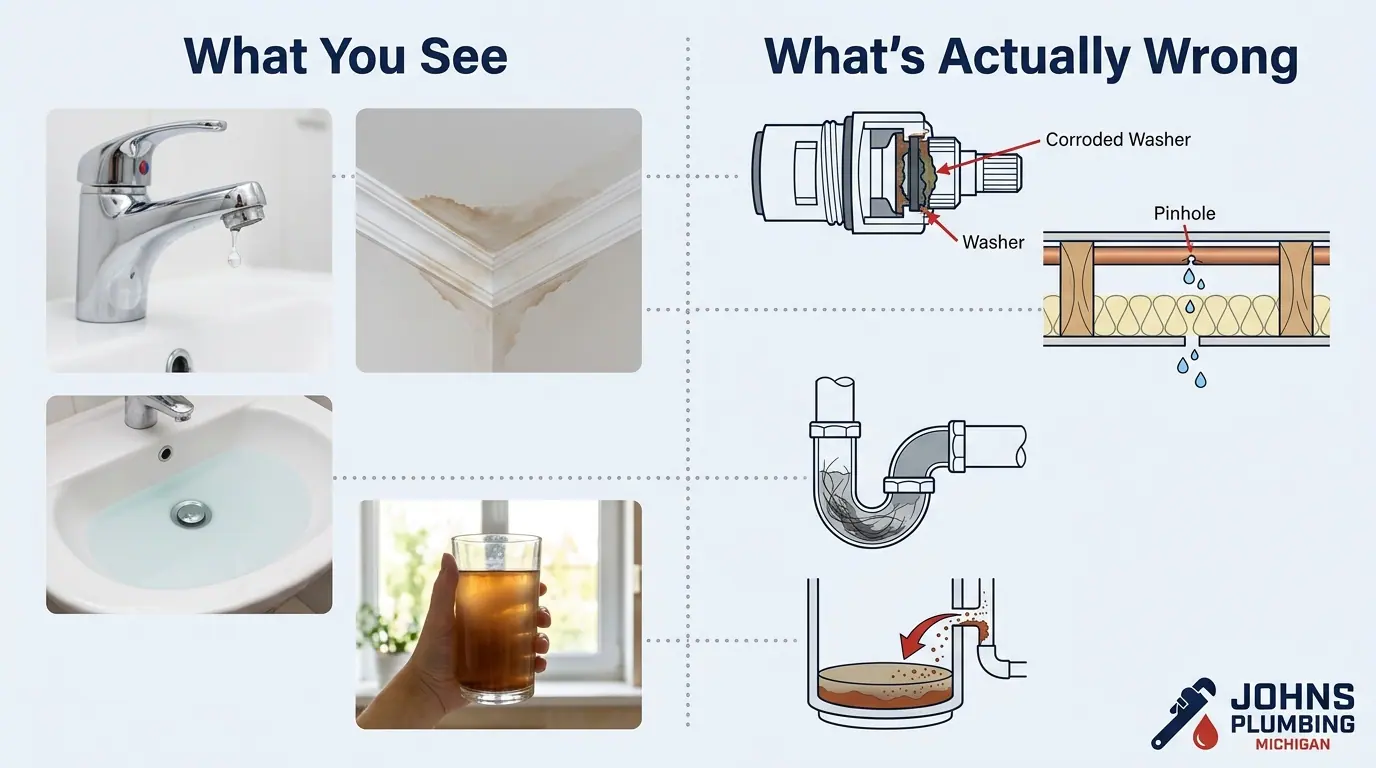
Residential plumbing symptom diagnosis visual guide

Rusty or brown water from cold taps signals corroded galvanized pipes, extremely common in Dearborn homes built between 1920 and 1970. The rust particles you see are iron oxide flaking off the pipe's interior.

This starts as occasional discoloration after periods of no use and progresses to constant brown water as corrosion narrows the pipes. Brown water from hot taps only indicates sediment buildup in your water heater tank.

Yellow or cloudy water from cold taps may indicate rust in municipal mains (temporary during water main work) or failing galvanized service lines. Green or blue water staining sinks and toilets shows copper pipe corrosion, often caused by aggressive water chemistry that dissolves copper over time.

Hard water minerals leave white crusty deposits on faucets, showerheads, and inside water heaters. This accelerates water heater failure and reduces fixture lifespans.

Schedule re-piping consultation if you have persistent rusty water from multiple cold water taps. Flush your water heater if hot water is brown. Address copper corrosion promptly, it indicates water chemistry problems that will worsen.

Not sure what's causing discoloration? Call (313) 736-9553 for professional water quality assessment.

Leak Indicators

Unexplained water bill increases of 20% or more often reveal hidden leaks. A family of four typically uses 12,000 gallons monthly, if your bill shows 15,000+ gallons without changed usage, you're losing roughly 100 gallons daily to leaks.

Check your water meter before bed, don't use water overnight, and check again in the morning. If the meter moved, you have a leak.

Wet spots on ceilings, walls, or floors indicate active leaks above or behind those surfaces. Ceilings develop brown staining and eventually sag from absorbed water. Walls feel damp or cool to touch.

Floors develop soft spots where subflooring absorbs water. Dearborn's clay and sandy soil shifts with seasonal moisture changes, stressing pipes under slabs and causing slab leaks that show up as warm spots on floors (hot water leaks) or constantly wet areas (cold water leaks).

Mold or mildew growth in areas without obvious water sources points to hidden leaks. That musty smell in your basement might be a pinhole leak in copper pipes behind finished walls or a slow leak at a solder joint. Foundation cracks with moisture seeping through can indicate exterior water line leaks saturating the soil.

Call (313) 736-9553 immediately for visible water damage, bulging ceilings, or foundation water pooling. Schedule leak detection within days for unexplained bill increases or persistent dampness. Hidden leaks cause progressive structural damage that becomes exponentially more expensive the longer they run.

Emergency Symptoms

Sewage backing up into bathtubs, sinks, or floor drains requires immediate professional response. This indicates complete main sewer line blockage and exposes your family to harmful bacteria and pathogens.

Evacuate the affected area and call (313) 736-9553 immediately. Do not use any plumbing fixtures until professionals clear the main line, additional water worsens the backup.

Natural gas smell (rotten egg odor) near gas lines, water heaters, or appliances demands instant action. Turn off the gas at the meter if you can safely reach it, evacuate everyone from the home, call 911 from outside, then call (313) 736-9553 for emergency gas line repair once the fire department clears the home.

Never attempt to locate gas leaks yourself. Gas is explosive and potentially fatal.

Burst pipes flood homes rapidly, especially during Dearborn's winter freezes when exposed pipes along exterior walls fail. Water spraying from copper or galvanized lines can release 10-20 gallons per minute. Shut off the main water valve immediately.

It's typically near where your main line enters the home. Call (313) 736-9553 for emergency burst pipe repair.

No water at all in winter could mean frozen supply lines that haven't burst yet. Don't let faucets run to thaw pipes. You risk flooding when ice melts. Call for professional frozen pipe thawing before the pipe bursts.

Match your symptom to its likely cause

Find the symptom closest to what you are seeing in Dearborn. Click to reveal the diagnosis and urgency level.

Select a symptom to see your diagnosis

Cost & Pricing Transparency for Plumbing Services in Dearborn, Michigan

Most residential plumbing service calls in Dearborn range from $114 to $380 depending on the job's complexity, access difficulty, and whether permits are required. Emergency calls typically cost $314 to $452 due to after-hours response and urgent prioritization. These ranges reflect Wayne County labor rates, material costs, and the additional time aging Dearborn homes often require when working with corroded galvanized pipes or tight basement access.

Service Call and Diagnostic Fees

Our standard service call fee is $89, which covers the technician's arrival, initial diagnosis, and written estimate. This fee applies to your total if you proceed with the repair.

Emergency calls after 6 PM or on weekends include a $75 priority response surcharge, bringing the diagnostic fee to $164. The service call includes camera inspection for drain or sewer issues, leak detection equipment use, and a detailed explanation of what's causing the problem and what repair options exist.

Drain Cleaning Costs in Dearborn

Kitchen and bathroom sink clogs typically run $150-$225 when the blockage sits in the trap or short drain line accessible with basic augering. Main line stoppages affecting multiple fixtures cost $250-$400 because they require longer cables, more time, and often hydro jetting to clear tree roots or grease buildup common in Dearborn's older clay sewer lines. Hydro jetting services start at $350 for residential lines.

Access affects pricing. Basement floor drains or crawlspace cleanouts take longer to reach than convenient exterior cleanouts.

Hard water mineral buildup in Dearborn pipes means drain cleaning sometimes reveals corroded line sections requiring spot repairs, which adds $180-$320 depending on pipe material and location. Video camera inspection adds $125-$175 but often saves money by pinpointing the exact problem location rather than exploratory digging.

Water Heater Repair and Replacement Pricing

Water heater repairs range from $180 for simple thermostat replacement to $450 for pressure relief valve, anode rod, and burner assembly work. Replacement costs depend on type and capacity: 40-50 gallon standard tank water heaters installed cost $1,100-$1,800 including the unit, labor, permits, and disposal of the old heater. Tankless water heater installations run $2,400-$4,200 because they require new gas line sizing, electrical circuits, and venting reconfiguration.

Wayne County requires permits for water heater replacement, adding $75-$125 to the project. Hard water in Dearborn shortens tank water heater lifespan to 8-10 years versus the national 12-year average, which affects long-term replacement planning. Emergency water heater service when you have no hot water in January includes the priority response fee but prevents frozen pipe risks while you wait for a scheduled appointment.

Leak Detection and Pipe Repair Costs

Simple visible leak repairs (under-sink supply line replacement, toilet supply valve replacement) cost $120-$240 depending on how corroded the connections are. Hidden leak detection using acoustic listening equipment or thermal imaging adds $150-$275 to locate the source before repair begins.

Pipe repairs vary widely by location and material. Copper pipe section replacement in accessible basement areas runs $200-$380 for 3-6 feet of line.

Wall or ceiling leaks requiring drywall access cost $450-$850 because they include pipe repair, drywall patching, and paint touch-up. Slab leaks under concrete require concrete cutting and restoration, bringing costs to $1,200-$2,400 for repair and $3,500-$6,500 for rerouting lines around the slab when multiple leaks exist.

Many Dearborn homes built between 1920 and 1970 have galvanized steel supply lines that corrode from inside, restricting flow and eventually leaking. Replacing short sections doesn't fix the underlying corrosion in the rest of the system. Whole-house repiping with PEX or copper costs $3,500-$7,000 depending on home size and pipe routing complexity but eliminates the recurring leak problem permanently.

Sewer Line Service Costs

Camera inspection of your main sewer line costs $175-$250 and identifies the exact problem. Tree roots, bellied pipe sections, cracks, or complete blockage. Sewer line cleaning including root cutting runs $350-$550 for standard residential lines.

Sewer line repair costs depend on method and depth. Spot repairs using traditional excavation cost $1,800-$3,500 for 10-15 feet of line replacement when the pipe sits 4-6 feet deep in Dearborn's clay and sandy soil.

Trenchless pipe lining repairs the line from inside without digging the entire length, costing $4,000-$8,000 for 50-100 feet but preserving landscaping and driveways. Complete sewer line replacement from house to street connection runs $4,500-$12,000 depending on distance (typically 40-80 feet in Dearborn) and whether permits require city inspection of the connection point.

Clay sewer pipes common in older Dearborn neighborhoods crack from freeze-thaw cycles and tree root pressure. A camera inspection determines whether spot repair will last or whether the entire line has reached replacement age.

Emergency and After-Hours Pricing

Emergency service between 6 PM and 7 AM weekdays or anytime weekends and holidays includes a $75 priority response fee covering immediate dispatch and technician availability. This applies to burst pipes, sewage backups, gas leaks, major leaks causing active water damage, and no-heat situations when water heater failure risks frozen pipes.

The emergency fee covers getting a technician to your door within 60-90 minutes. Repair costs after diagnosis follow standard rates.

We don't inflate parts or labor pricing for emergencies, just the response surcharge. A burst pipe repair at 11 PM costs the same $450-$750 (depending on pipe type and access) as the same repair at 11 AM, plus the $75 emergency fee.

What Affects Your Plumbing Service Cost in Dearborn

Permit requirements: Wayne County requires permits for water heater replacement, repiping, sewer line repairs, and fixture relocations, adding $50-$200 and 2-3 day inspection scheduling to major projects.

Home age and pipe access: Homes built before 1980 often have corroded galvanized pipes requiring careful handling, limited basement access requiring more time, and outdated configurations that complicate simple repairs. Extra labor time adds $40-$80 per hour.

Materials and parts: Standard residential-grade fixtures and materials are included in quoted prices. Upgrading to name-brand faucets, high-efficiency water heaters, or premium fixtures increases material costs $100-$400 depending on selections.

Job complexity: A straightforward toilet replacement in an accessible bathroom takes 90 minutes. The same toilet replacement in a cramped half-bath with corroded floor flange and water-damaged subfloor takes 4 hours and requires additional materials. We identify these factors during diagnosis before starting work.

Emergency timing: After-hours and weekend response includes the priority fee, but prevents secondary damage that makes repairs more expensive. A $75 emergency fee is cheaper than the $2,500 water damage restoration bill from a burst pipe that floods overnight.

Our Pricing Philosophy

We provide written estimates before starting work so you know exactly what repairs will cost. The estimate includes labor, materials, permits when required, and cleanup. We explain what's included and what would trigger additional costs, for example, a drain cleaning estimate notes that if camera inspection reveals broken pipe requiring repair, we'll pause and provide a repair estimate before proceeding.

No hidden fees. The price we quote is the price you pay unless scope changes with your approval. We accept all major credit cards, offer financing through [standard financing partner], and work directly with insurance companies on covered claims like burst pipe damage or sewer backups.

Call (313) 736-9553 for an accurate estimate based on your specific situation. We'll ask about symptoms, home age, and accessibility to provide a realistic cost range before arrival, then confirm exact pricing after on-site diagnosis.

Cost & Pricing Transparency in Dearborn, Michigan

Typical price ranges in Dearborn

Ranges reflect access difficulty, parts, time and whether a permit applies. Select a category below to view costs.

Sink or shower drain cleaning
$150 - $275
Main sewer line cleaning
$350 - $600
Sewer camera inspection
$275 - $400

Service Process & What to Expect in Dearborn, Michigan

When you call Johns Plumbing Michigan, you initiate a structured service workflow designed to fix your plumbing issue correctly the first time while keeping you informed at every step. Here's what happens from initial contact through job completion in Dearborn.

Scheduling Your Service

Call our office or submit a service request online. Our dispatcher collects key details: your address, the problem description, when it started, and whether it's an emergency. For emergency situations (burst pipes, sewage backups, no heat in winter) we dispatch immediately with typical arrival within 60-90 minutes anywhere in Dearborn.

For scheduled service, we offer same-day or next-day appointments with 2-hour arrival windows. You'll receive a confirmation call the morning of service with the technician's expected arrival time, usually narrowed to 30 minutes as they travel through Wayne County traffic.

Technician Arrival and Initial Assessment

Our licensed technician arrives in a marked service vehicle with Michigan plates and full equipment inventory. They'll introduce themselves, show their Michigan plumbing license upon request, and ask to see the problem area. In Dearborn homes, this often means basement access where main lines, water heaters, and older galvanized pipes run.

The technician conducts a diagnostic assessment using inspection cameras for drains, pressure gauges for water lines, and thermal imaging for hidden leaks. This assessment takes 15-30 minutes depending on problem complexity. For issues requiring permit approval in Wayne County (water heater replacements, re-piping, sewer line repairs) the technician notes this during assessment.

Written Estimate and Approval Process

Before any repair work begins, you receive a written estimate detailing the scope of work, materials required, labor hours, permit fees (typically $50-$200 for major installations), and total cost. The estimate breaks down what's included: parts, labor, cleanup, testing, and warranty coverage. You approve the work before the technician proceeds, no surprise billing, no hidden fees.

If the job requires permits, we explain the inspection timeline and coordinate with Wayne County building inspectors. For jobs requiring access to city water shutoffs or sewer connections, we handle those logistics. You're never obligated to proceed; if you choose to decline, you pay only the diagnostic fee.

Service process timeline showing five stages of plumbing service delivery from initial call through completion

During the Repair or Installation

Once you approve the estimate, work begins immediately for most jobs. The technician protects your floors with drop cloths, especially important in Dearborn's older homes with original hardwood. For water line work, they shut off supply at the main valve. For drain work, they contain wastewater.

You're updated on progress at natural break points, when a diagnosis changes, when unexpected conditions appear (corroded pipes, code violations from previous work), or when the job runs longer than estimated. Most repairs complete same-visit. Installations requiring permits pause for inspection before final connections.

Quality Testing and Verification

After repairs, the technician tests the system before calling the job complete. Drain lines get water-flow tests to confirm proper drainage and no backups. Water heaters run through heating cycles to verify ignition, temperature control, and pressure relief valve function. Leak repairs undergo pressure tests.

We watch for drips, check joints, and monitor pressure gauges. For sewer line work, camera inspection confirms the repair sealed properly and water flows without obstruction. You participate in final testing, watching fixtures operate and asking questions about what was fixed.

Cleanup and Warranty Explanation

The technician removes all debris, old parts, and packing materials. Work areas return to clean condition, no pipe shavings in basement drains, no drywall dust on floors. You receive warranty documentation covering parts and labor.

Most repairs carry 1-year labor warranty; major installations like water heaters include manufacturer warranties (6-12 years for tanks, up to 15 years for tankless units). We explain warranty coverage limits and what maintenance extends equipment life in Dearborn's hard water conditions.

Payment and Follow-Up

Payment is due upon completion. We accept cash, checks, all major credit cards, and offer financing options for larger jobs. You receive an itemized invoice matching the approved estimate. For permit work, we provide copies of inspection approval documents.

Within 48 hours, our office follows up to confirm satisfaction. If any issues arise post-service, call us immediately. Warranty work is prioritized same as emergency calls. For seasonal maintenance (pre-winter pipe insulation, spring sump pump checks), we send reminders based on your service history.

Ready to experience our process firsthand? Call (313) 736-9553 to schedule service in Dearborn today.

Risk Prevention and Maintenance in Dearborn, Michigan

Dearborn homeowners need preventive maintenance focused on frozen pipe protection, basement water management, and hard water mitigation. The city's harsh winters with prolonged sub-zero temperatures, aging housing stock built between the 1920s and 1970s, and hard water from municipal sources create specific failure modes preventable through seasonal preparation and targeted system care.

Winterization for Dearborn's Extreme Cold

Freeze protection starts in late October before Dearborn's first hard freeze. Disconnect and drain outdoor faucets, remove hoses, and shut off interior valves feeding exterior spigots. Wrap exposed pipes in unheated basements with foam insulation.

Focus on pipes running along exterior foundation walls where cold penetrates concrete. Open cabinet doors under sinks during cold snaps to let heated air circulate around pipes.

Leave a pencil-thin stream running from faucets on exterior walls during extreme cold (below 10°F). This small flow prevents static water from freezing inside pipes. The water cost is minor compared to burst pipe repairs averaging $800-$2,500.

Hard Water Maintenance Schedule

Dearborn's hard water accelerates mineral buildup inside water heaters and on fixtures. Flush tank water heaters every 6 months (April and October) to remove sediment that insulates the heating element and shortens tank life.

Drain 2-3 gallons through the bottom valve until water runs clear. For tankless units, descale annually using manufacturer-approved solution pumped through the system.

Install faucet aerator screens and shower head filters, cleaning them quarterly to maintain water pressure as calcium deposits accumulate. Consider whole-house water softener installation if you're replacing fixtures every 5-7 years instead of the normal 10-15.

Sewer Line Root Prevention

Clay sewer lines common in older Dearborn neighborhoods crack from freeze-thaw cycles, creating entry points for tree roots. Schedule video camera inspection every 3-5 years to catch root intrusion before it causes backups. If roots are present, mechanical cutting clears them temporarily but roots regrow within 2-3 years.

Copper sulfate root treatments slow regrowth but don't prevent it. Homes with mature trees (silver maples, willows, poplars) within 50 feet of the sewer line should inspect more frequently. Replacing aging clay lines with modern PVC eliminates the problem permanently.

Basement Flooding Risk Management

Test your sump pump before spring snowmelt (March) and before major storms. Pour 5 gallons of water into the pit. Pump should activate within seconds and discharge outside.

Clean the inlet screen and check that the discharge line runs at least 10 feet from your foundation. Install a battery backup system if your basement has finished living space or stored valuables.

Dearborn's combined sewer system overwhelms during heavy storms, so homes in low-lying areas near the Rouge River should consider a backup sump pump and perhaps overhead sewage ejector pump protection.

Annual System Inspection

Licensed plumbers should inspect water heaters, main shut-off valves, and visible supply lines annually. Water heaters 8+ years old warrant replacement consideration before failure occurs, especially if you notice rust-colored water or rumbling sounds. Test main water shut-off valve annually by closing and reopening it.

Seized valves fail during emergencies. Check for pinhole leaks on copper pipes (green corrosion spots) and flaking rust on galvanized steel pipes indicating interior corrosion. Homes built before 1980 should have water lines evaluated for replacement planning.

Preventive maintenance costs hundreds; emergency repairs cost thousands. Call (313) 736-9553 to schedule your annual plumbing inspection and protect your Dearborn home from preventable failures.

Risk Prevention and Maintenance in Dearborn, Michigan

Service Area Coverage in Dearborn, Michigan

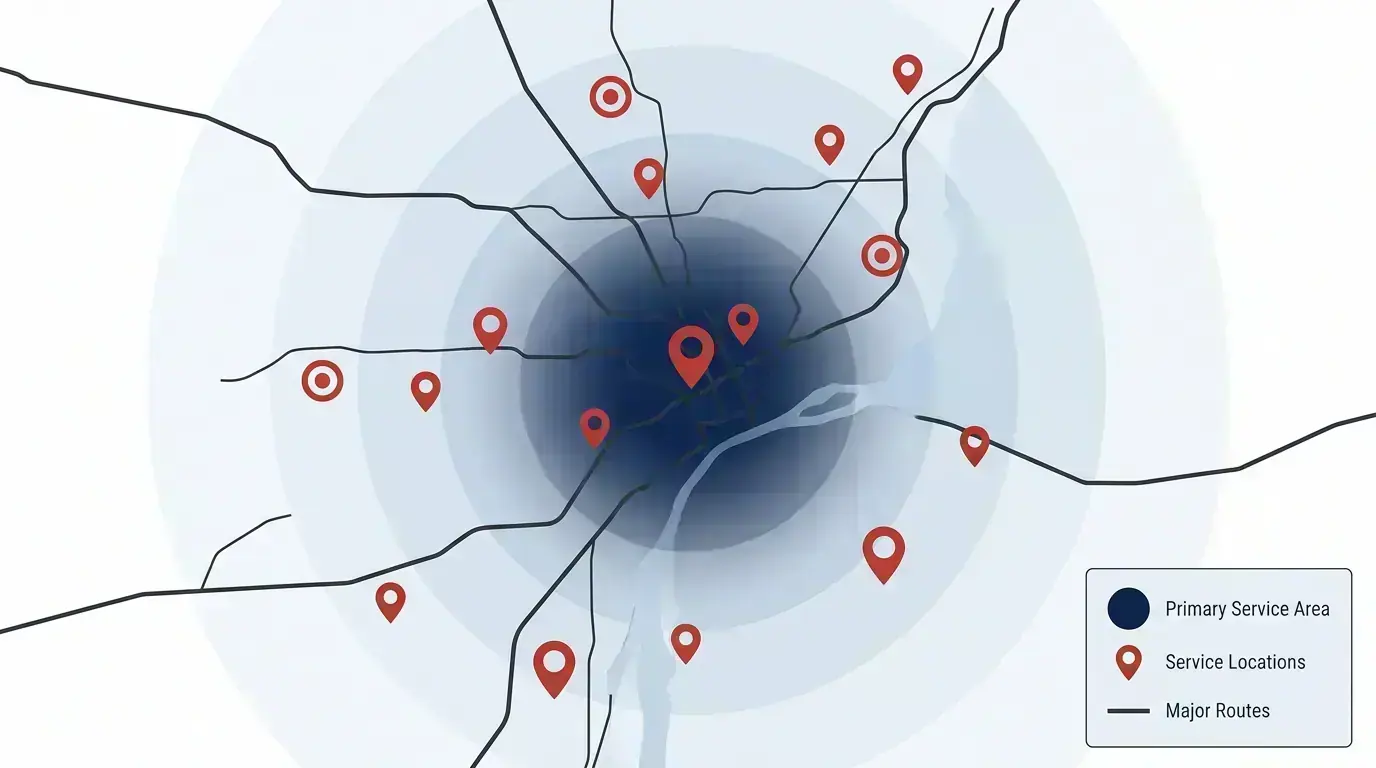
Johns Plumbing Michigan provides residential plumbing services throughout Dearborn and across Wayne County. We cover all six ZIP codes within Dearborn (48128, 48120, 48126, 48124, 48121, and 48123) serving over 107,000 residents across the city. Our service radius extends approximately 15 miles from Dearborn's center, allowing us to respond quickly to homes near the Rouge River watershed, along Michigan Avenue's commercial corridor, and in residential neighborhoods surrounding Ford Motor Company's facilities.

We regularly serve nearby communities including Melvindale (about 3 miles from Dearborn), Dearborn Heights (3.3 miles), Allen Park (3.7 miles), Lincoln Park (5.1 miles), River Rouge (5.3 miles), Inkster (5.4 miles), Ecorse (5.8 miles), Garden City (6.6 miles), Taylor (6.6 miles), and Southgate (7.5 miles). Our familiarity with Wayne County's infrastructure patterns (aging clay sewer lines near waterways, galvanized pipes in pre-1980 housing, and combined sewer systems that affect multiple connected municipalities) means we understand the plumbing challenges your neighborhood faces regardless of which side of city boundaries you're on.

Geographic factors matter for plumbing service in this area. Homes closer to the Rouge River face higher basement flooding risk during spring snowmelt.

Properties in older residential sections built between the 1920s and 1970s typically have galvanized supply lines and clay sewer connections requiring different diagnostic approaches than newer construction. Areas near I-94 and Michigan Avenue benefit from faster emergency response times due to highway access, while neighborhoods with narrow streets or shift-change traffic near Ford facilities may see slight arrival delays during peak hours.

Serving all of Dearborn and Wayne County. Call (313) 736-9553 to confirm we cover your specific address and get immediate scheduling for your plumbing needs.

Service Area Coverage in Dearborn, Michigan

Local Plumbing Challenges in Dearborn, Michigan

Dearborn's plumbing infrastructure faces three major challenges: frozen pipes from harsh winters, basement flooding from combined sewer overflow, and hard water mineral buildup. The city's position at the downstream end of Wayne County's regional sewer network, combined with homes built between the 1920s and 1970s, creates recurring failure modes not seen in newer Michigan developments.

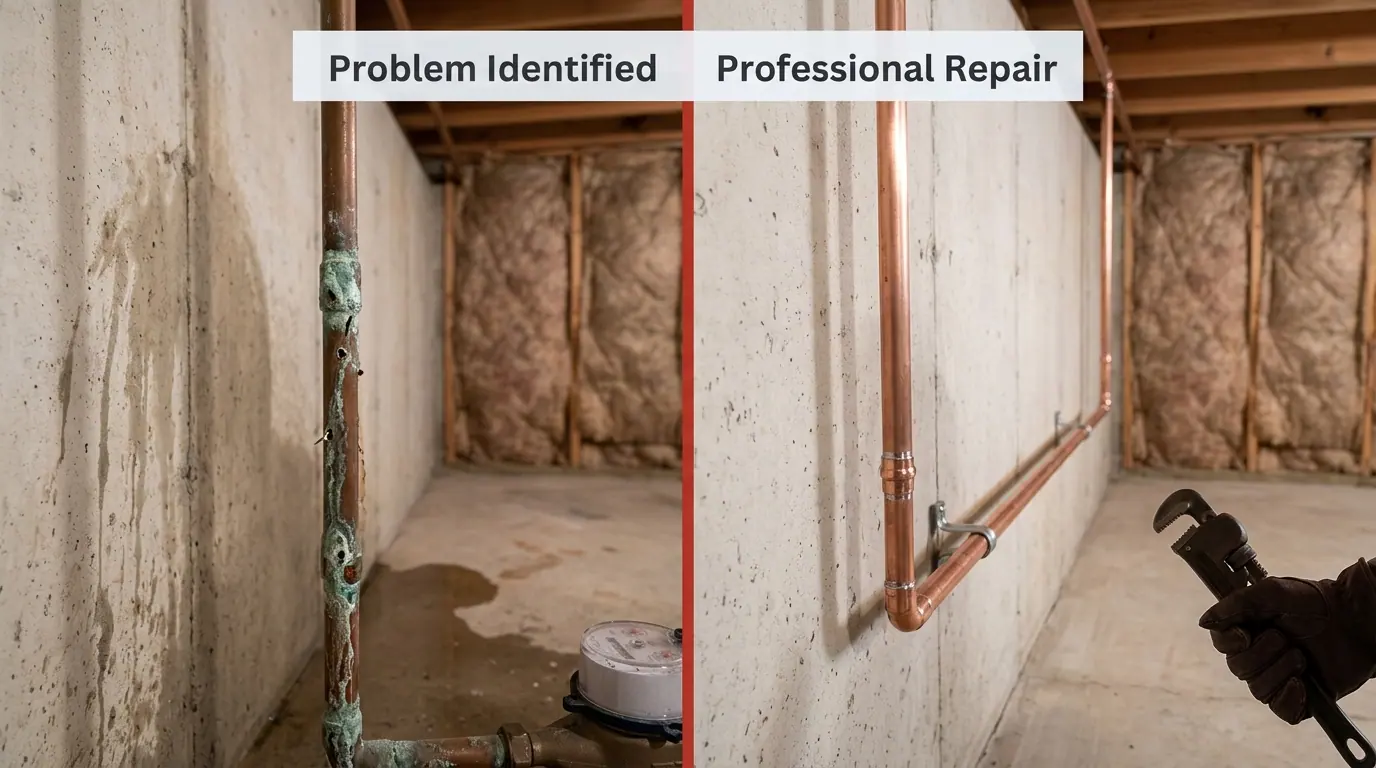
Frozen pipes occur most frequently in Dearborn homes with basements where supply lines run along exterior foundation walls. The city's January cold snaps, often sustained periods below 10°F, cause uninsulated or poorly insulated pipes to freeze solid. When water freezes, it expands with enough force to crack copper, split galvanized steel, and rupture PEX.

The thaw brings flooding. Homes built before 1960 are particularly vulnerable because original construction standards didn't anticipate modern insulation requirements. Exposed pipes in unheated crawl spaces, exterior hose bibs without frost-free valves, and supply lines in attached garages fail first during cold weather.

Basement flooding happens when Dearborn's combined sewer system, designed to handle about three inches of rainfall per day, gets overwhelmed during intense storms or rapid spring snowmelt. The Rouge River watershed drains through Dearborn, and homes near the river or in low-lying areas experience higher water tables that saturate soil around foundations.

Clay and sandy soil throughout the city shifts with seasonal moisture changes, cracking older concrete foundations and creating seepage points. When heavy rain coincides with snowmelt, the combined load sends water back through floor drains and basement fixtures across multiple neighborhoods simultaneously.

Hard water from Dearborn's municipal system contains elevated levels of calcium and magnesium that precipitate out as scale inside pipes, water heaters, and fixtures. Over time, typically 10 to 15 years in Dearborn homes, mineral buildup restricts water flow in supply lines, reduces water heater efficiency, clogs aerators, and shortens fixture lifespan.

Tankless water heaters are particularly susceptible to scale accumulation on heat exchangers, requiring annual descaling maintenance that traditional tank units don't need. The combination of hard water and aging galvanized pipes accelerates interior corrosion, creating pinhole leaks and brown water issues.

Common plumbing problems in Dearborn homes showing frozen pipe damage and mineral buildup

Sewer line failures stem from aging clay tile pipes installed before 1970 that crack from freeze-thaw cycles and soil movement. Once cracked, tree roots from maples, oaks, and willows infiltrate joints, expanding the gaps and creating blockages.

Homes in older Dearborn neighborhoods near established trees experience root intrusion more frequently than properties in newer subdivisions with PVC sewer lines. Camera inspections often reveal root masses completely filling 30 to 40 feet of main sewer line, requiring hydro jetting or trenchless replacement.

Dealing with frozen pipes, basement flooding, or hard water damage in Dearborn? Call (313) 736-9553 for solutions tailored to Wayne County homes and Dearborn's specific infrastructure challenges.

DIY vs Professional Plumber: When to Call a Dearborn Plumber

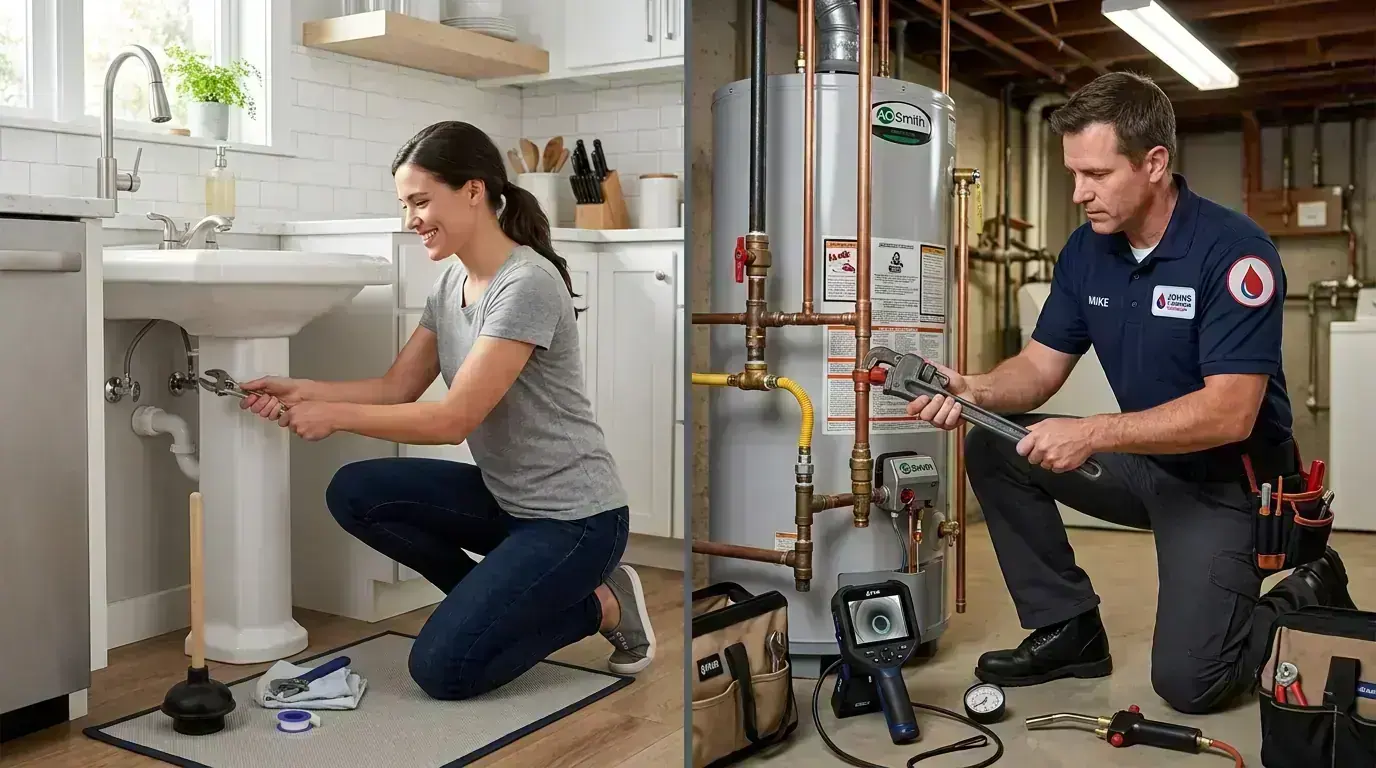
Simple plumbing tasks like unclogging a sink with a plunger or replacing a toilet flapper are safe DIY repairs, but work requiring permits, involving gas lines or main water systems, or affecting hidden plumbing in Dearborn's aging housing stock needs licensed professional service to protect your home, insurance coverage, and safety.

DIY-Appropriate Tasks:

Unclogging drains with a plunger or hand-operated drain snake works for surface clogs in sinks, tubs, and toilets. Stop if the clog resists after several attempts, forcing it risks pipe damage. Replace faucet aerators or showerheads when mineral buildup from Dearborn's hard water reduces flow. These screw-on parts come off with adjustable pliers and require no pipe work.

Tighten visible pipe connections under sinks using a wrench when you notice minor drips. If tightening doesn't stop the leak, call a professional. The threads may be corroded.

Professional-Only Scenarios:

Water heater work requires permits in Wayne County and involves gas lines, electrical connections, and pressure relief systems. DIY installation voids manufacturer warranties and violates Michigan code. Gas line repairs or installation demand licensed work. Gas leaks create explosion and carbon monoxide risks that insurance policies specifically exclude from DIY coverage.

Main water line or sewer line work requires permits, specialized equipment for buried systems, and pressure testing. Amateur repairs often fail inspection and require complete rework. Re-piping or pipe replacement needs code compliance for material choices, proper venting, and pressure ratings. Opening walls or floors to access pipes requires permits and triggers inspection of related systems.

Decision Framework:

If work requires a permit → call (313) 736-9553 for licensed service that passes Wayne County inspection. If it involves gas lines or main water systems → call a professional immediately. These failures create health hazards and void insurance.

If it requires opening walls, floors, or specialized tools like pipe cameras → call (313) 736-9553 to prevent structural damage and ensure proper repair. If it affects insurance-covered systems like water heaters or main lines → use licensed professionals to protect your coverage.

For work requiring permits or involving gas lines and main systems, call (313) 736-9553 for licensed Dearborn service. Not sure if your issue is DIY-safe? Call (313) 736-9553 for a free assessment. We'll tell you honestly if you can handle it yourself.

DIY vs Professional Plumber in Dearborn, Michigan

Licensed & Insured Plumber Requirements in Michigan

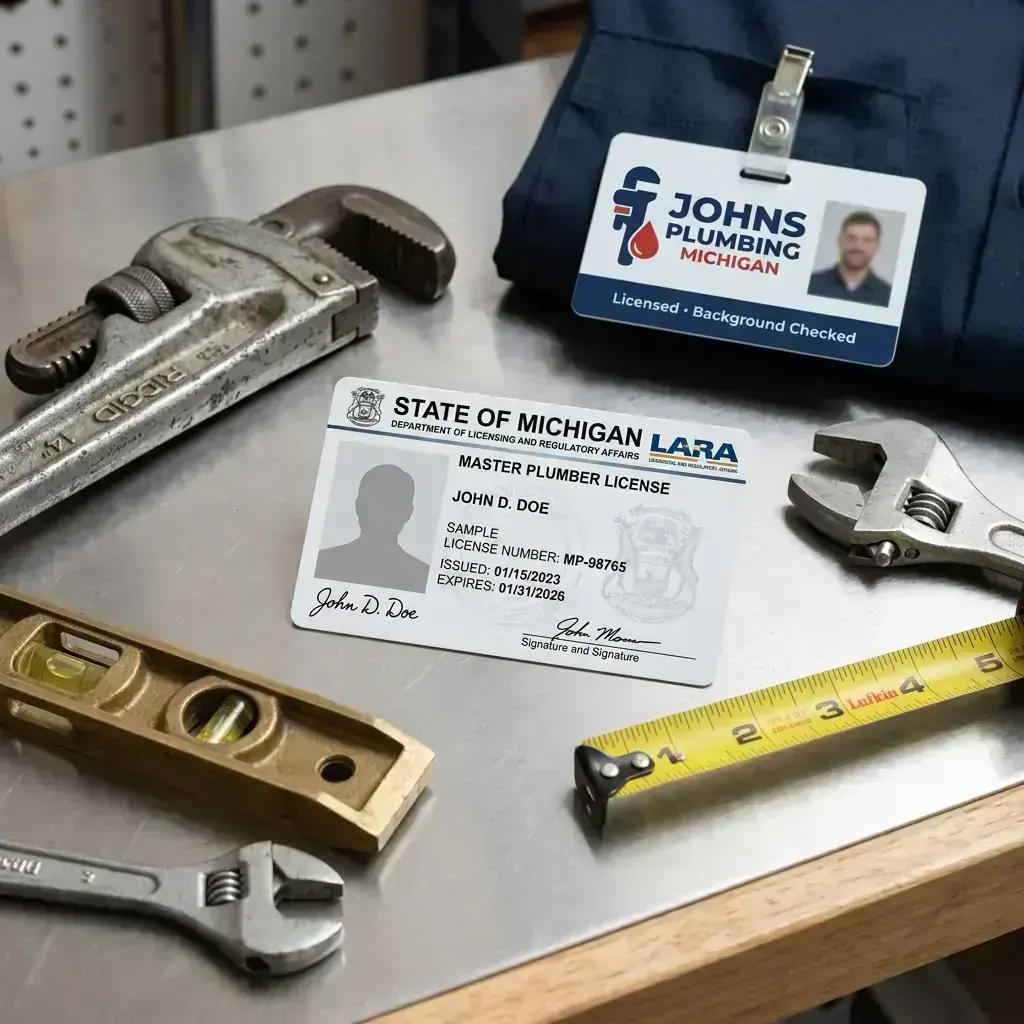
Michigan law requires plumbers hold a state-issued license from the Department of Licensing and Regulatory Affairs (LARA). Journeyman Plumbers complete a four-year apprenticeship plus pass a state examination before working independently.

Master Plumbers need two additional years of Journeyman experience and must pass a separate Master examination before supervising other plumbers or pulling permits. These requirements protect Dearborn homeowners from unlicensed handymen who illegally advertise plumbing services without proper training, insurance coverage, or code compliance knowledge.

Verify any plumber's credentials through LARA's public license lookup before they begin work. Request the technician's license number when scheduling service, legitimate plumbers provide it immediately.

The LARA database confirms active license status, issue date, and any disciplinary actions. This verification takes two minutes and prevents hiring someone whose work won't pass Wayne County inspection or meet insurance claim requirements.

Insurance requirements include general liability coverage and workers compensation. Liability insurance protects you if plumbing work causes water damage to your home or neighboring properties.

Workers compensation coverage means you're not financially responsible if a technician is injured on your property. Unlicensed contractors rarely carry either policy, leaving homeowners exposed to lawsuits and medical bills that can exceed the cost of proper service by thousands of dollars.

Michigan code violations from unlicensed work create serious problems when selling Dearborn homes. Buyers' inspectors flag unpermitted installations, forcing expensive re-work that delays closings. Homeowners insurance may deny claims for damage caused by unlicensed plumbing repairs.

Licensed Master Plumber serving Dearborn. Call (313) 736-9553 to verify our credentials before we arrive.

Licensed & Insured Plumber Requirements in Dearborn, Michigan

Nearby Cities We Serve

Johns Plumbing Michigan serves Dearborn as our primary service base and responds throughout Wayne County. We cover Melvindale (3 miles), Dearborn Heights (3 miles), Allen Park (4 miles), Lincoln Park (5 miles), River Rouge (5 miles), Inkster (5 miles), and Ecorse (6 miles). Our technicians also reach Garden City, Taylor, Detroit, Southgate, and Wyandotte, all within a 15-mile radius of Dearborn.

Response times average 60-90 minutes for emergencies throughout this service area, with faster arrival in communities along I-94 and Michigan Avenue corridors. Call (313) 736-9553 to confirm coverage for your specific location and schedule same-day service.

Nearby Cities We Serve in Dearborn, Michigan

FAQ

How much does emergency plumbing service cost in Dearborn?

Emergency plumbing in Dearborn typically costs $314 to $452, with a range of $107 to $777 depending on the problem's severity and timing. After-hours calls (nights, weekends, holidays) include premium response fees. Burst pipe repairs, sewage backups, and gas leak responses fall into the higher range due to urgent prioritization and extended labor hours common with Dearborn's aging pipe systems.

Why do so many Dearborn homes have frozen pipe problems?

Dearborn's location near the Rouge River creates moisture-heavy winter air that penetrates basement walls where supply lines run along exterior foundations. Prolonged January and February cold snaps below 10°F freeze pipes faster than in drier inland Michigan cities. Homes built before 1980 often lack adequate basement insulation around pipe runs, and many still have original galvanized or copper lines positioned in vulnerable exterior wall cavities.

Do I need a permit for water heater replacement in Dearborn?

Yes. Wayne County requires permits for water heater installations, ranging from $50 to $200 depending on tank capacity and fuel type.

The permit process includes inspection to verify proper venting, gas line connections, temperature-pressure relief valve installation, and drain pan placement. Licensed plumbers handle permit applications and schedule required inspections as part of installation service.

How long does sewer line repair take in Dearborn?

Traditional excavation sewer repairs take 1-2 days for access, replacement, backfill, and restoration. Trenchless repairs complete in 4-8 hours with minimal yard disruption.

Timeline depends on soil conditions, Dearborn's clay soil slows digging but holds trench walls better than sandy areas. Tree root removal adds 2-4 hours for cutting and clearing before pipe work begins.

What causes the sewage smell in my Dearborn basement?

Sewage odors indicate either a dry floor drain trap (allowing sewer gas to enter), a cracked sewer line below the basement slab, or a blocked vent stack. Dearborn's combined sewer system can push odors back through floor drains during heavy storms when the system reaches capacity.

Pour water into floor drains monthly to keep traps sealed. Persistent smells require camera inspection to locate cracks or blockages.

How quickly can you respond to a plumbing emergency in Dearborn?

We typically arrive within 60-90 minutes for emergency calls throughout Dearborn and Wayne County. Response times depend on current call volume, traffic on Michigan Avenue or I-94, and your specific location within the city. We prioritize burst pipes, gas leaks, and sewage backups for fastest response.

Questions not answered here? Call (313) 736-9553 for immediate assistance with any Dearborn plumbing issue.

Johns Plumbing Michigan serves Dearborn homeowners with fast, reliable residential plumbing solutions throughout Wayne County. From frozen pipe emergencies in January to routine water heater replacements, our licensed technicians understand the specific challenges Dearborn's aging housing stock and harsh Michigan winters create. Call (313) 736-9553 now for same-day service. We typically arrive within 60-90 minutes for emergencies and provide upfront pricing before starting any work in Dearborn or the surrounding area.

Call (313) 736-9553 · Dearborn